

Having played the djembe for nearly 20 years, I have fitted and replaced heads on more than a dozen instruments. This short guide will help you recognize wear and preserve your drum’s unique sound.
Here you will find simple advice for diagnosing a loose head, cracks, or a loss of tone. By following these tips, you will quickly become self-reliant and able to work on your percussion instrument without relying on a repair shop.
Understanding tension, head quality, and maintenance will save you time and preserve the lifespan of your drum. For a step-by-step guide to completely replacing the head, see this practical resource: replace a djembe head.
Signs that it is time to work on your instrument
Regular inspection prevents unpleasant surprises. Check the head and tension before each session. A well-maintained instrument makes playing more accurate and enjoyable.
Visible wear on the head
If you notice cracks or tears on the head, act quickly. After 2 to 3 years of regular use, the head often loses its ability to vibrate normally.
Loss of tension and altered sound
Insufficient rope tension can also affect sound quality. A slack head produces a dull tone and a less dynamic playing response.
- Changes in humidity and environmental conditions loosen the head over time.
- A drum in good condition produces a clear sound, especially in a group.
- Keep an eye on its durability: replacing the head is part of a djembe’s life.
“Maintaining tension and replacing the head when necessary extends the instrument’s life.”
Djembe repair: the most common problems
A regular visual check is often enough to spot signs of wear on your instrument. Inspect the head, shell, and ropes before each session to preserve the djembe’s sound quality.
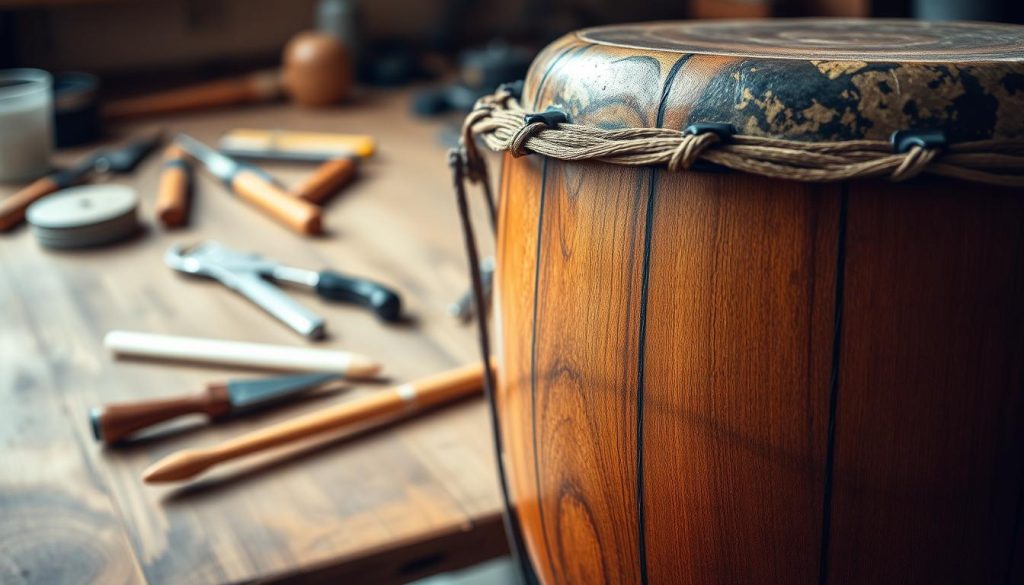
Common problems affect the shell, which may develop visible cracks, and the head, which weakens after several years of use. Direct exposure to sunlight or high humidity weakens the head and alters its tone.
- Protection: use a suitable case to limit impacts and temperature changes.
- Maintenance: regular care preserves the sound and quality of your percussion instrument.
- Inspection: every part of the djembe, from the rim to the ropes, influences the overall sound.
Following these tips will help you keep your djembe in good condition and extend the life of your musical instrument. For a complete replacement guide, see replacing the head.
“Regular maintenance is the best investment in sound quality.”
Methods for repairing a punctured or cracked head
With a little preparation, a localized repair can restore your instrument without altering its structure.
Materials needed for a quick repair
You will need a piece of skin from the same source, scissors, and a strong adhesive suitable for leather.
- Prepare the area: use a soft cloth to clean around the hole.
- Cut the patch: make sure to cut a piece of skin of the same thickness to preserve quality and tone.
- Glue: apply the adhesive to both the patch and the head, then press firmly for the stated amount of time.
- Check: once the adhesive is dry, check the rope tension so that the djembe head regains an even tone.
This method can extend the lifespan of the current head and avoid the immediate installation of a new one.
“If you find that the repair is not enough, replace the head to restore a clear sound.”
Guide to completely replacing the head
Completely replacing the head requires a methodical, careful approach to ensure faithful sound.
Before fitting a new head, make sure the shell is in good condition and free of dust. A typical djembe measures about 60 cm high and 34 cm in diameter; choose a head suited to these dimensions.
After removing the old head, clean the inside of the drum and inspect the ropes. Check the condition of the shell and replace worn ropes to ensure durability.
- Position the new head precisely to distribute the tension evenly.
- Leave it to dry for at least 24 hours: this is crucial for the tension to stabilize and for optimal sound quality.
- Protect the instrument with a case while it dries to limit the effects of humidity.
“Careful fitting and regular maintenance will keep your djembe in good condition for many years.”
The importance of tanning and cleaning before fitting
Careful pretreatment of the head lays the foundation for optimal resonance. Tanning strengthens the material and limits the impact of humidity during transport.
Soaking is crucial before fitting a new head. Soak the new head in clean water for 5 to 8 hours to achieve the best possible flexibility.
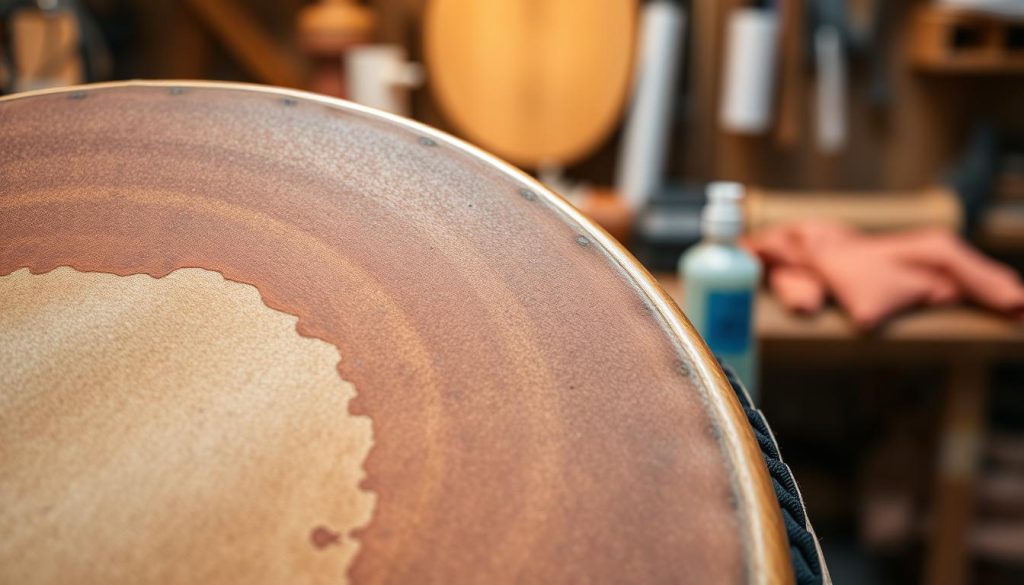
Benefits of tanning for durability
Tanning increases the durability of your African drum. A well-tanned head withstands climatic changes better.
Cleaning and soaking steps
Clean the inside of the shell with a soft cloth to remove dust and residue. These impurities can also affect the final sound quality.
- Soak the new head for 5 to 8 hours for greater flexibility before fitting.
- Thoroughly clean the djembe head and the inside of the drum.
- Check the grip and tension to achieve the best possible tone.
Patience and a methodical approach are the foundation of a clean installation. By preparing the head correctly, you ensure clear sound and a lifespan of several years.
Techniques for preserving tension and sound quality
To maintain a stable sound, adopt simple habits that protect your instrument’s tension and head.
Check the tension of the ropes before each session. Even tension preserves the djembe’s sound quality and prevents distortion.
Use ropes about 5 mm in diameter for a good balance between support and flexibility. This size protects the head while providing lasting tension.
Care for the djembe head: clean it gently and avoid sudden changes in humidity. These variations change the tension and affect the tone.
- Regular checks: test the tension at several points on the head to maintain an even sound.
- Frequent adjustments: tighten the ropes gradually instead of increasing the tension all at once.
- Protection: store the instrument away from sunlight and sources of moisture to preserve the quality of the head.
These tips extend the life of your percussion instrument and preserve a rich harmonic response over time.
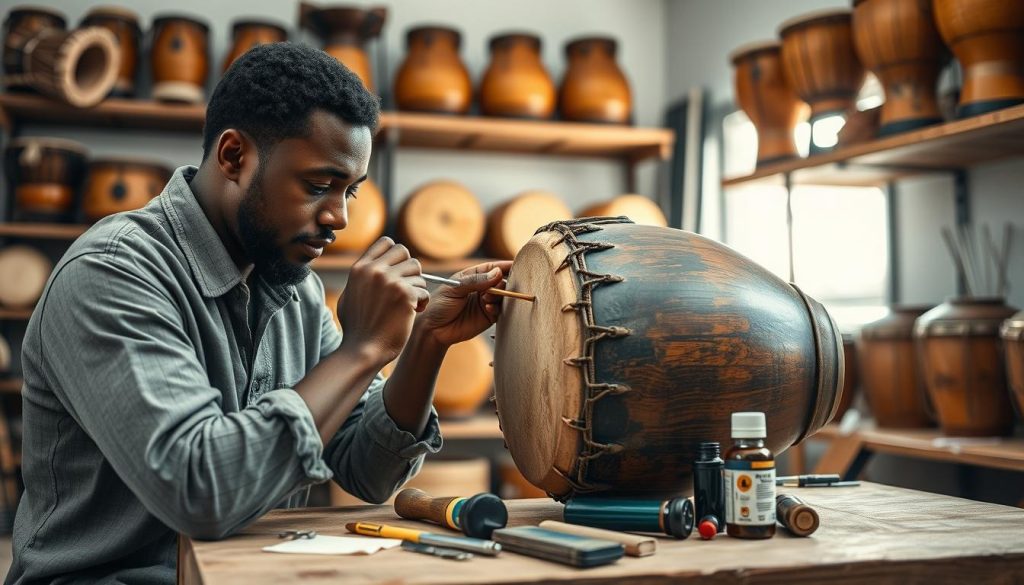
“A well-tuned instrument is the foundation of a reliable and expressive performance.”
For a complete guide to changing the head, see replacing the head to explore these best practices in greater depth.
Tips for protecting the wooden shell and finish
Protecting the shell extends its lifespan and preserves your instrument’s sound quality. Regular maintenance prevents irreversible cracks and maintains stable tension when you play the djembe.
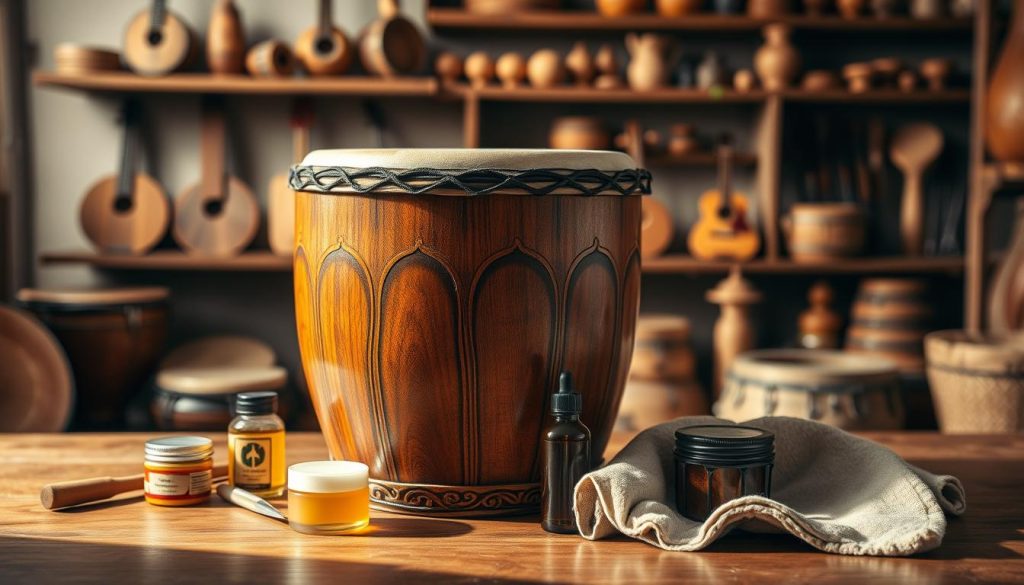
Managing humidity to prevent warping
Managing humidity is crucial. Store your djembe away from sudden changes to maintain good tension and consistent sound quality.
After each session, wipe the shell with a soft cloth. This simple step removes perspiration and dust, two factors that harm the wood’s quality.
- Sun protection: avoid direct exposure to sunlight, which dries out and cracks the wood.
- Conditioning: apply a mixture of linseed oil and turpentine every 1 to 2 years to preserve its durability.
- Storage: use a quality case to protect the instrument from excessive humidity during long periods without playing.
“Regular shell maintenance ensures that your instrument remains in good condition for many years.”
| Action | Frequency | Benefit |
|---|---|---|
| Cleaning with a soft cloth | After each djembe session | Preserves the finish and prevents salt buildup |
| Applying linseed oil and turpentine | Once a year or every 2 years | Strengthens the wood and improves its durability |
| Using a case | During long-term storage | Protects against humidity and impacts |
By following these maintenance tips, you will keep your djembe in good condition and ensure consistent sound performance over time. For detailed instructions on caring for the shell and ropes, see this practical guide: shell and rope maintenance.
When to call a professional for your drum
A qualified technician ensures precise retensioning and restores the instrument’s sound. If you are unsure about fitting a new head yourself, a professional can help you achieve the best possible sound quality.
Consulting an African percussion expert ensures the correct rope tension on the djembe head. They will also check the overall condition of the instrument and identify hidden problems that threaten its durability.
The cost may exceed €100, but it is often a worthwhile investment in the djembe’s longevity and tone. Before dropping it off, clean the drum with a cloth to make the craftsperson’s work easier.
- Tip: entrust your percussion instrument to a craftsperson familiar with each type of instrument to ensure a suitable repair.
- A professional’s maintenance advice will help you maintain head tension and protect the African drum from changes in humidity.
- Expert work remains the best possible solution for preserving your djembe through many years of playing music.
“Entrusting your instrument to a specialist is an investment in sound quality and durability.”
For additional advice on shell and rope maintenance, read this guide before making a decision.
Conclusion
In summary, a few simple steps are enough to extend the life of your instrument and maintain a rich tone.
Regular maintenance helps extend the lifespan of the head and shell. Follow our advice to prevent damage from humidity changes and impacts.
Use a suitable case and adopt brief maintenance routines after each session. These steps help keep the djembe ready to play and true to its sound.
By following these tips, you will protect your instruments and enjoy music for longer with a well-tuned drum.