
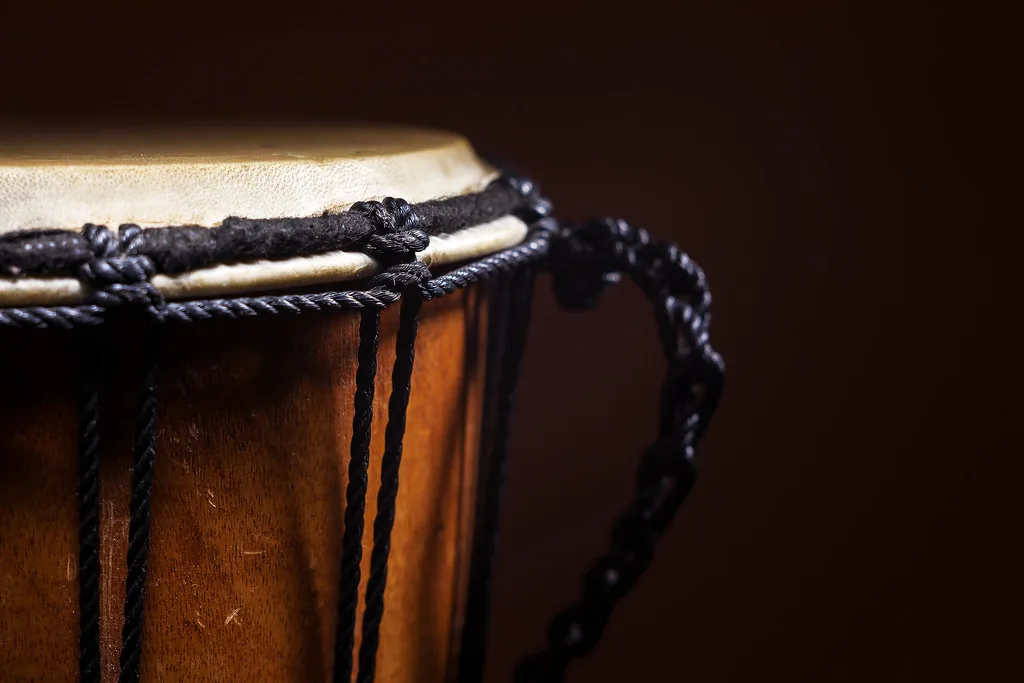
Buying an instrument can seem confusing. Drawing on nearly 20 years of experience, our experts explain the prices and guide you toward the best choice for your budget.
The market ranges from small models costing around €20 to exceptional pieces priced at more than €500. Understanding this price range means examining the quality of the wood, the head (often goatskin), the size and the manufacturing technique.
Whether you are a beginner, a parent looking for a children’s instrument or an experienced percussionist, this article explains the price ranges and options (tension, ropes and case) to make your selection easier.
For a detailed analysis of price ranges and purchasing advice, read our complete guide to djembe prices.
How much should you budget for a good djembe?
From small industrial production runs to handcrafted pieces, price differences are often substantial. An instrument’s cost depends primarily on the quality of the wood, its size and its head.
The materials make the difference: a solid mahogany shell or a carefully applied finish increases the value. A properly treated head ensures a richer tone and better resonance.
Very affordable entry-level models are available, while handcrafted djembes can cost well over €500. Each model has unique characteristics: the wood species, head tension and hand-applied finishes all affect the result.
Practical advice: set your budget and compare the available options before buying. For a detailed analysis of the price ranges, see our resources on djembe prices. If you are looking for lessons and information about the musical context, also see our salsa lessons.
- Key point: a well-crafted head and shell provide a better sound.
- Choose according to your level and budget.
The criteria that determine an instrument’s value
Quality can be assessed through both touch and sound. The origin of the wood, the treatment of the head and the craftsmanship strongly influence an instrument’s value. These factors explain the difference between entry-level models and handcrafted pieces.
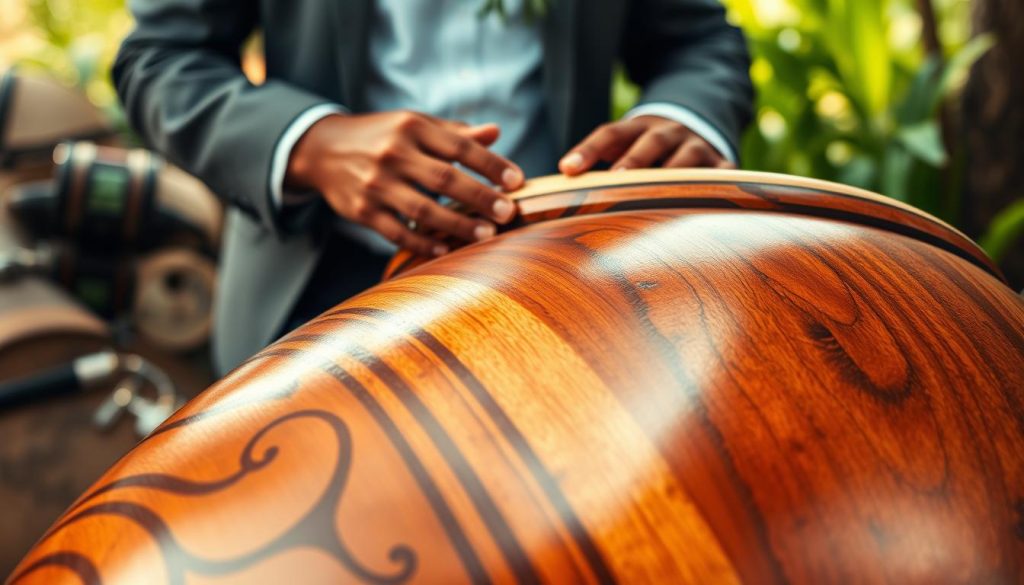
Wood quality and fine wood species
Solid wood such as mahogany, iroko or doussie provides deep resonance and greater power. Shells carved from mahogany provide better projection and a richer tone.
Geographical origin and artisanal expertise
Instruments from Mali, Senegal or Guinea benefit from centuries-old expertise. A djembe handmade by a West African artisan often ensures authenticity and durability.
Head type and surface treatment
A manually treated goatskin head makes it possible to adjust the tension and improve resonance. Properly fitted ropes and a high-quality head produce clear sounds and provide a longer service life.
- Choice of materials: directly affects durability and acoustic performance.
- Handcrafted construction: added value and a higher price.
| Criterion | Effect on sound | Typical materials | Impact on price |
|---|---|---|---|
| Wood | Resonance, projection | Mahogany, iroko, doussie | High if solid and dry |
| Head | Clarity, sustain | Treated goatskin | Medium to high depending on quality |
| Construction | Authenticity, precision | Handmade, West African workshops | Substantially higher |
| Finishes | Appearance, protection | Oils, varnishes | Variable |
Options for small budgets and beginners
If portability and learning are your priorities, compact models offer a good balance between quality and price. Smaller sizes are easy to carry on a school trip or to a workshop.
Practical recommendation: choose an instrument measuring 20 to 30 centimeters for children under 10. This size makes the instrument easier to learn and handle.
Choosing children’s models
Good to know: avoid buying a djembe taller than 30 cm if it costs less than €50. These instruments often lack adequate head tension and a sturdy wooden shell.
- Entry-level models often come with a case. They are suitable for discovering percussion without exceeding a tight budget.
- For regular use, choose a wooden or synthetic model depending on how often it will be transported.
- Many schools offer suitable instruments with an estimated lifespan of two to five years, depending on use.
A basic starter model may be sufficient for the initial learning period. You can then move on to a better-made instrument if you begin playing regularly.
Investing in a mid-range model
With a budget of €50 to €100, you can find mid-range models suitable for regular practice. These djembes, which are often between 30 and 50 centimeters tall, provide better projection and a more dynamic response.
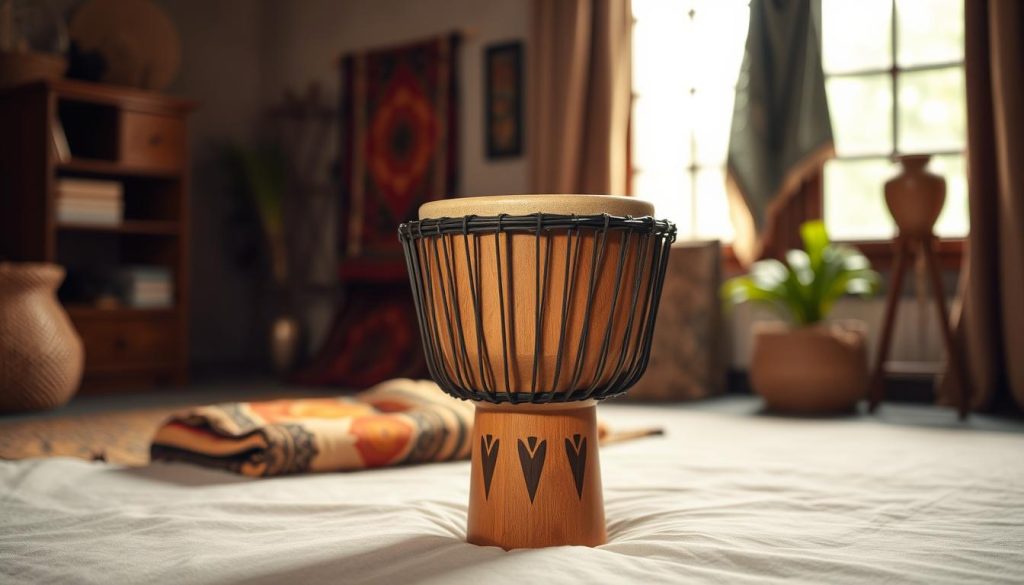
Instruments in this range frequently feature a high-quality goatskin head. The result is richer resonance and greater power during percussion sessions.
- Adjustable tension: tension-adjustment options that refine tuning and sound quality.
- Durability: sturdier construction than entry-level models and a longer service life.
- Materials: woods such as mahogany for a balanced shell and good projection.
Investing in this segment supports technical progress and provides excellent value for your budget. To compare offers and see examples of models, read our guide to djembe prices.
The handcrafted and professional instrument segment
For stage and recording use, handcrafted instruments remain the benchmark. These pieces meet the needs of musicians seeking quality, power and authenticity.
The benefits of solid wood for resonance
Solid wood provides deep resonance and excellent projection. A mahogany shell enhances power and sustain.
Handcrafted models carved from dry wood provide a stable tone on stage. They are suitable for demanding concerts and recording sessions.
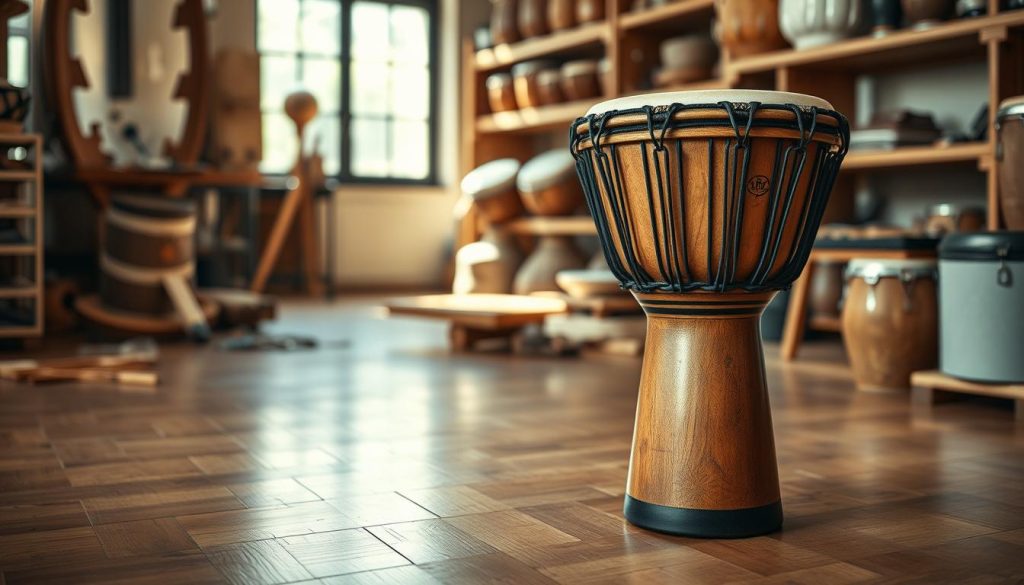
Customization and decorative finishes
Construction in West Africa can take 15 to 20 days. This time allows the craftsperson to adjust the tension, fit the ropes and install the goatskin head.
“A handmade djembe reveals a tone that cannot be found in mass-produced instruments.”
- Thick heads (up to 4 mm) for greater power.
- Custom carvings and finishes for greater authenticity.
- A robust rope system that maintains tension over time.
| Benefit | Effect | Recommended use |
|---|---|---|
| Solid wood | Resonance, projection | Concerts, studio |
| 4 mm goatskin head | Power, durability | Professional use |
| Handmade (15 to 20 days) | Finish, authenticity | Demanding artists |
Understanding the cost of essential components
Knowing the actual cost of heads, ropes and cases prevents unpleasant surprises during use.
The head directly affects resonance and power. A quality goatskin head for a medium-sized instrument costs around €30.
Professional synthetic heads often cost more than €100. Experts in African percussion disagree about their sound.
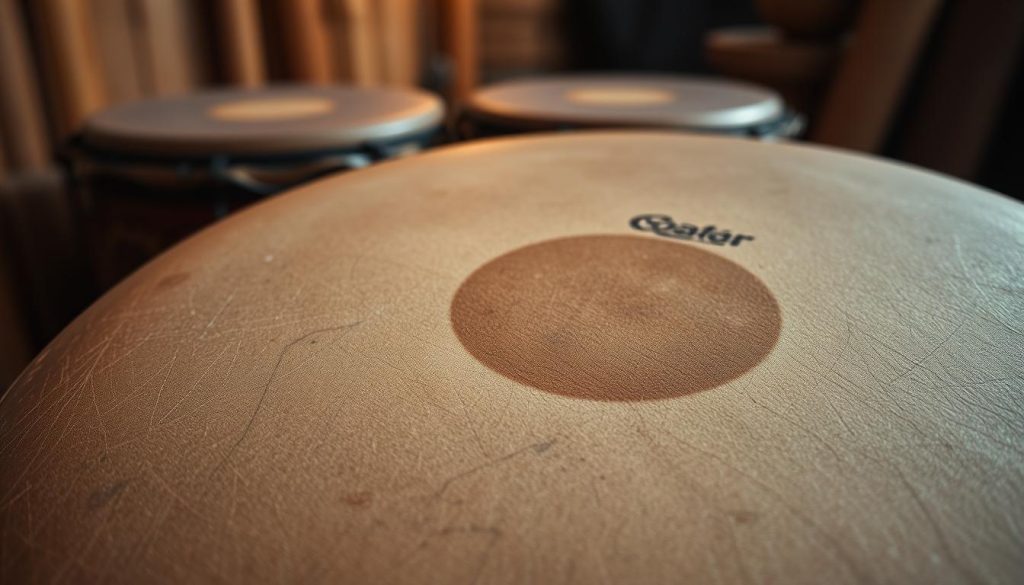
The ropes and tension play a key role. Incorrect tension weakens the sound.
- Tip: Instruments du Monde offers suitable ropes, cases and replacement parts.
- For schools, understanding these costs helps with maintenance budgeting.
| Component | Estimated cost | Impact |
|---|---|---|
| Goatskin head | About €30 | Sound quality |
| Synthetic head | > €100 | Durability and debate over quality |
| Ropes and case | €10 to €40 | Tension and protection |
Proper maintenance of the materials extends a djembe’s service life and preserves its quality.
Conclusion
The final decision often depends on finding the right balance between sound quality and a reasonable investment.
Summary: choose an instrument by assessing the wood, the head and the tension. Handcrafted models from West Africa provide durability and tonal richness.
Consider your budget based on the intended use: children, recreational playing or the stage. Regular maintenance of the head and ropes preserves the sound.
For practical assistance and verified offers, read our guide to Instruments du Monde and refine your selection.