
With nearly 20 years of experience in the world of the djembe, I can help you understand what affects the price and the final result. This article will help you choose the best option for your instrument.
The choice of head, its tension, and preparation of the shell determine the sound. A properly fitted head improves resonance, tone, and overall quality. Craftspeople, specialist stores, and local services offer different options depending on size, thickness, and tanning.
Whether you are a beginner or an experienced percussionist, you will discover simple ways to increase durability and avoid unnecessary costs at a luthier. By following this advice, you will be able to manage maintenance, selection, and fitting so that you can restore a rich, authentic sound.
Signs that it is time to replace the head
Recognizing signs of wear prevents unpleasant surprises during a rehearsal or concert.
Simple inspection: examine the surface for cracks, tears, or thinning areas. If you notice any breaks, act quickly to preserve your instrument’s sound quality.
Physical wear and tears
- Visible cracks or loose fibers present a risk of failure.
- After 2 to 3 years of regular use, the head often loses some of its strength.
- A damaged head reduces the djembe’s value and overall durability.
Loss of tension and altered sound
Loss of tension changes the tone and resonance. A slack head prevents the highs and lows from projecting clearly.
If the head will no longer stay in tune despite several attempts, its fibers are worn out. Preventive replacement remains the best option for protecting the djembe and ensuring a consistent playing experience.
How much does it cost to replace a djembe head?
The price varies considerably depending on the size of the djembe and the tanning method chosen by the craftsperson.
For a medium-sized djembe, a quality head costs approximately €30. This is a reasonable investment for maintaining good resonance and stable tension.
Larger models often require bigger heads.
In this case, the price may exceed €50, depending on the source and finish.
It is not advisable to buy very short instruments, measuring less than 30 cm, at a low price.
Their heads are often poor quality and reduce sound projection.
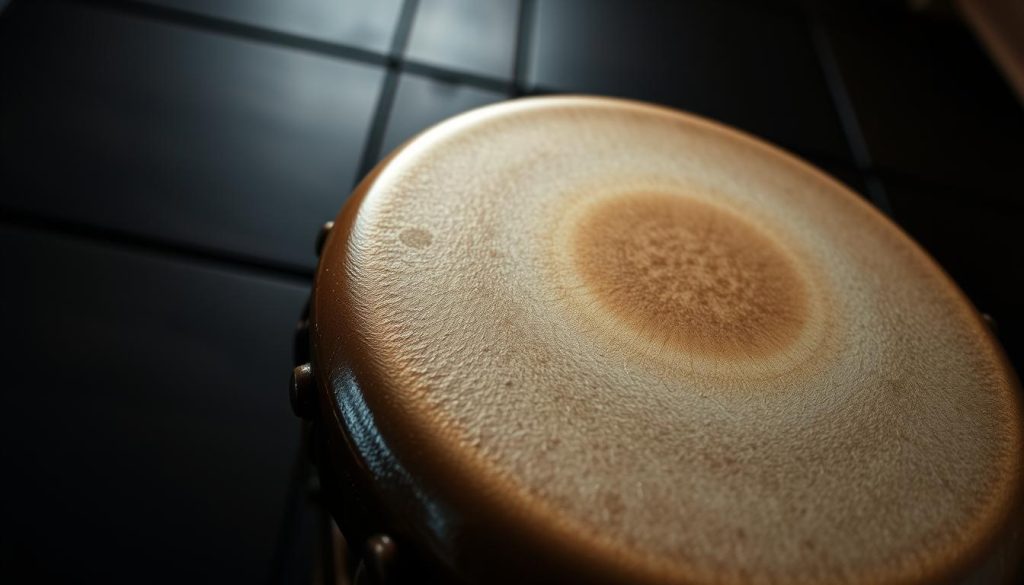
“Investing in a well-prepared head improves tone, service life, and harmonic richness.”
- Check the size of the shell before ordering to avoid mistakes.
- The thickness and type of tanning largely determine the final price.
- Synthetic heads are available, but experts prefer goatskin for its sound.
| Type | Size | Estimated price | Advantage |
|---|---|---|---|
| Standard-quality head | Medium | Approximately €30 | Good balance between sound and durability |
| Large head | Large | > €50 | Better projection and harmonics |
| Synthetic head | Varies | Varies | Stable despite humidity, different sound |
If you are unsure, compare the options offered by specialist services.
Experienced percussionists will be able to choose a head suited to their playing style.
For more technical details and practical advice, consult our guide to repairing or replacing a head.
Methods for repairing a cracked head
In an emergency, a quick repair can extend the use of your djembe without immediately replacing the head.
Materials needed for a quick repair
Prepare a piece of hide from the same animal and a very strong adhesive designed specifically for leather.
- Patch: choose the same thickness and a similar tanning method to limit changes in tone.
- Adhesive: choose a leather formula that can withstand tension.
- Have precision scissors ready to shape the patch to the curve of the shell.
Place the patch over the crack under firm tension. Make sure it covers the damaged area and conforms to the curve of the djembe.
Let it dry for several minutes, then gradually retension the head. This method preserves sufficient quality and durability for long enough to keep playing.
This repair is ideal if you need to play soon, but it cannot match a new head fitted by a professional.
For a complete repair or replacement guide, visit our page on how to repair or replace a head.
Preparation and measurements before fitting
Preparation determines the sound you will achieve. Measuring, treating, and cleaning the head before fitting helps prevent unpleasant surprises and extends the instrument’s life.
Measuring the dimensions
Measure the shell’s outside diameter precisely. Choose a head that extends 10 to 20 cm beyond the fastening area to ensure proper tension.
Also check the thickness with a caliper: it affects the final tone and tension.
How tanning improves durability
Tanning strengthens the head and stabilizes its sound when humidity changes.
In variable climatic conditions, choose a treated head to improve durability without sacrificing quality.
Cleaning and soaking
Clean the inner surface gently and without harsh products. Thorough cleaning ensures a perfect fit on the shell.
Before fitting, soak the head in clean water for 5 to 8 hours. After installation, let it dry in the shade for at least 24 hours to set the tension.
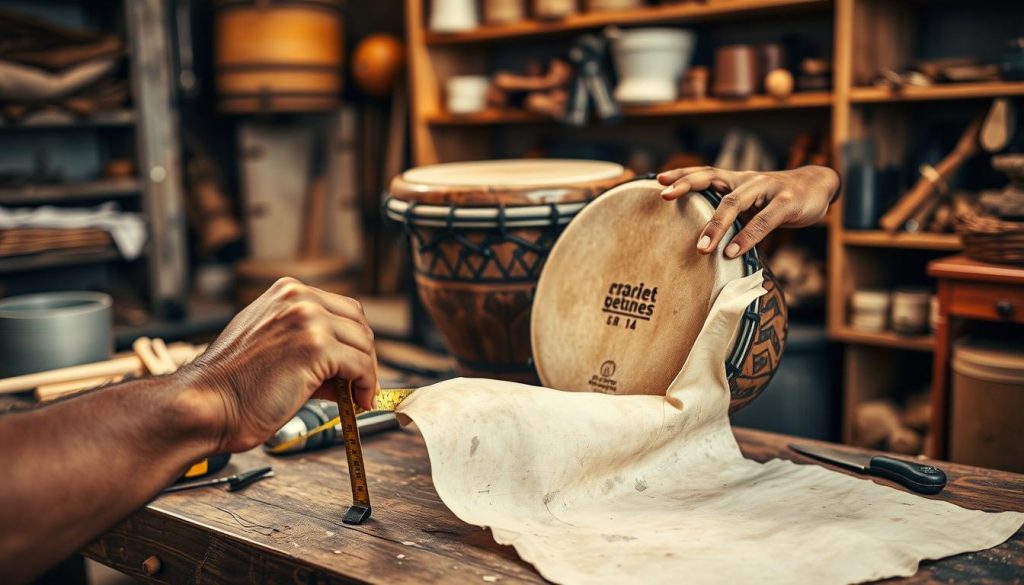
Patient preparation ensures better sound stability.
- Measure the size and thickness precisely.
- Tanning is recommended to improve durability.
- Allow for 5 to 8 hours of soaking and 24 hours of drying after fitting.
For a detailed guide to fitting and choosing a head, visit our page on how to repair or replace a head.
Technical steps for replacing the head
A successful installation begins by positioning the head precisely on the hoop, without wrinkles or misalignment.
The head is then tensioned by tightening the nylon ropes around the metal hoops. Work one round at a time and follow the correct sequence to distribute the tension evenly.
Check the surface regularly: the head must remain even to ensure good sound quality. An area that is tighter than the others produces a poor tone.
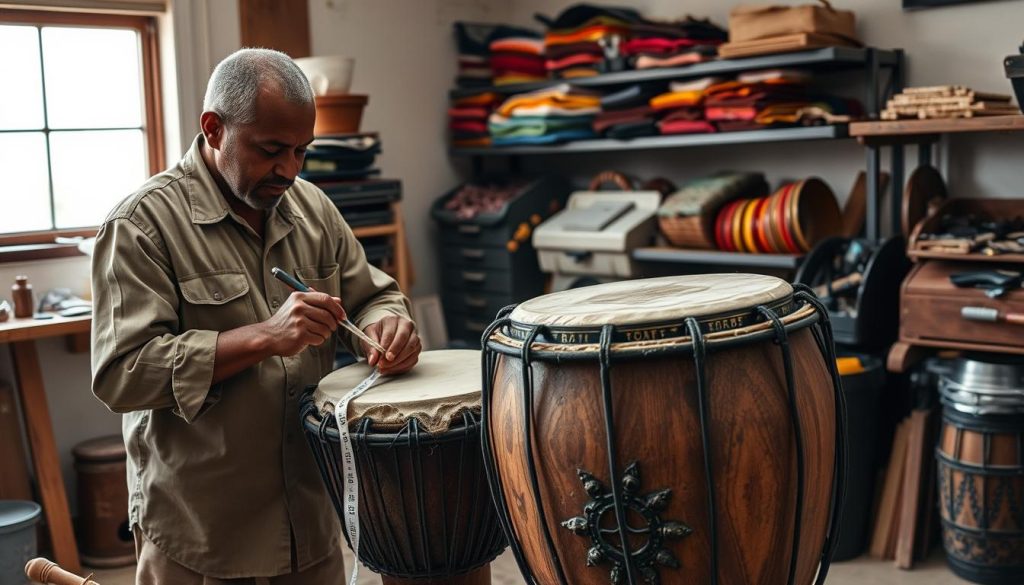
Each round of rope changes the final tension; proceed gradually to protect the shell.
- Begin with light, symmetrical tightening.
- Tune gradually to avoid excessive stress.
- Monitor the tension during the first few weeks: the head often loosens.
- If necessary, follow a tutorial on tuning the djembe.
With careful work, this process restores the power and clarity of this musical instrument. An independent musician can therefore maintain their instrument and optimize its sound for future sessions.
Hiring a professional for restoration
Entrusting the restoration to a professional often ensures a stable and durable result for your djembe.
If you doubt your abilities, contact local music stores offering specialist services. Their workshops can select an appropriate head and adjust its tension precisely.
A luthier or craftsperson may charge more than €100 for a complete replacement. This price reflects the labor, the quality of the head, and the care given to the djembe.
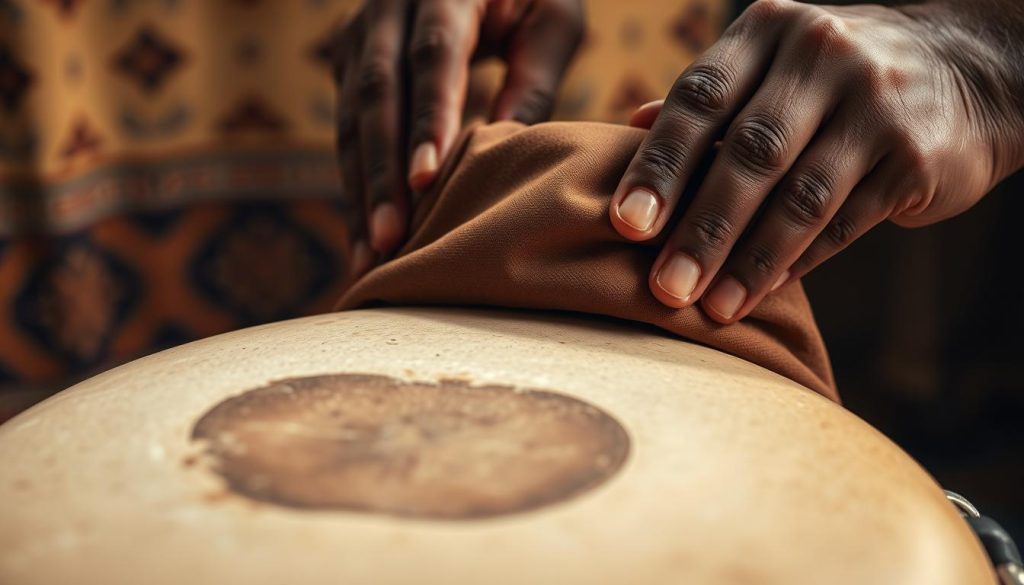
- Percussionists recommend contacting music schools to find experts.
- Festivals and music stores are ideal places to meet technicians in person.
- Online workshops offer an alternative if there is no African-percussion specialist nearby.
Entrusting a valuable instrument to a professional protects its sound and extends its life.
For valuable djembes, hiring an expert remains a worthwhile investment. The result optimizes the sound, tone, and longevity of the shell.
Conclusion: caring for your instrument
Regular maintenance is essential for preserving a clear, lasting sound.
This article summarizes the simple steps for checking your djembe and its head. Frequent inspection helps determine whether a repair will suffice or replacement is necessary.
The choice of head directly affects tone and quality. Careful fitting stabilizes the tension and makes your djembe more reliable in concerts or rehearsals.
Preserve the head and protect your instruments from temperature fluctuations. Proper maintenance reduces costs and extends the life of djembes.
In practice, a few periodic checks and adjustments to the head will ensure you are always ready to play. If in doubt, entrust your djembe to a technician specializing in percussion instruments.