

You are looking for the right djembe to play with confidence. After acquiring more than 20 instruments over the course of my career, I explain here how to choose a model suited to your playing needs.
Choosing involves assessing the head, wood, and tension. The goatskin, shell shape, and material (mahogany or a lighter wood) affect projection and range.
In this article, we will look at the different options: specialist shops, stores, craft markets, suppliers, and second-hand instruments. For a practical guide and useful places to shop, see this helpful page: djembe buying guide.
Where to Buy a Quality Djembe
Comparing the available options helps you identify a reliable, well-made instrument. Start by checking the head tension and the condition of the wood. Test the projection and tuning stability to determine whether the model suits your needs.
Musicians should also examine the shape and size. A well-tensioned goatskin head offers better response. The choice of wood, such as mahogany, affects playing comfort and durability.
Look at the finish and rope system. A good djembe has an even head and sturdy construction. Consider your budget and the product range: some models come with a case or warranty, making regular playing easier.
- Test the tension and playability in relation to your body size.
- Compare several models to assess their projection.
- Prioritize materials and long-term stability.
| Criterion | What to check | Impact on playing |
|---|---|---|
| Head | Tension and absence of cracks | Projection and tone |
| Wood | Material, density, and finish | Comfort and durability |
| Size & weight | Suitability for your body size | Ease of playing and stability |
| Accessories | Case, warranty, and service | Protection and peace of mind when purchasing |
The Advantages of Specialist Online Stores
Specialist online stores make it easier to compare models through detailed product pages. They bring together numerous products and clear technical information.
Comparing Models
Platforms offer filters for wood, size, and head type. You can compare projection, tension, and playing comfort.
Instruments du Monde lists more than 50 models, helping you find a good balance between quality and budget.
Warranty and Customer Service
Reputable websites offer a warranty and expert maintenance support. The statutory 14-day right of withdrawal protects you after purchase.
Key benefits:
- A wide choice of solid-wood models for better sound.
- A choice of natural heads, often made from goatskin.
- Advice on tension, tuning, and head durability.
- Access to percussion instruments suited to every use.
To browse a catalog rich in models and details, visit Instruments du Monde.
Exploring In-Store Purchasing Options
Nothing replaces trying an instrument in person at a store. Testing its projection and tone on site helps you choose a model suited to the stage or home practice.
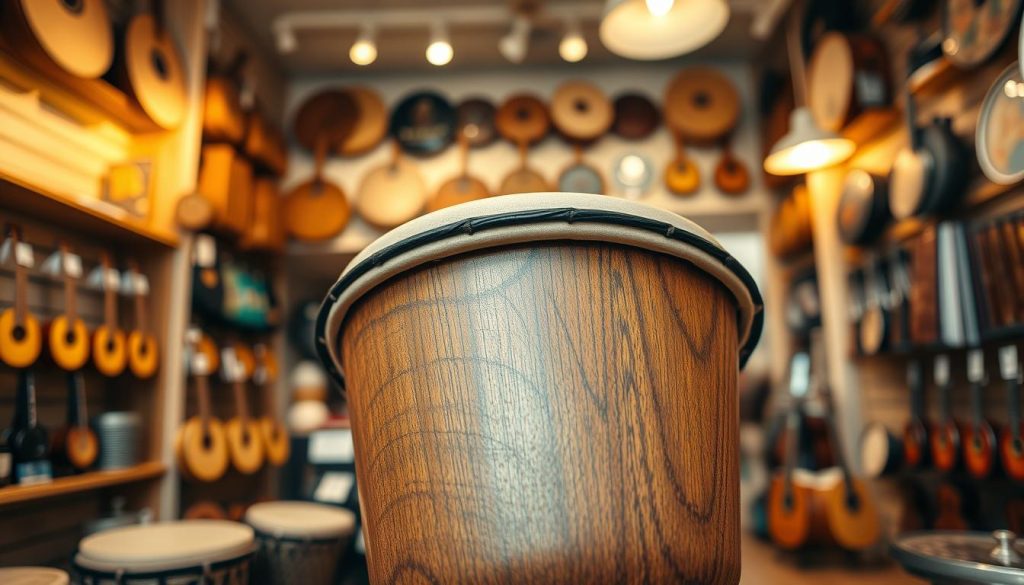
Local stores often support artisans who make instruments by hand. You can feel the wood, check the head tension, and quickly compare several quality levels.
Advice from the salesperson is valuable, especially for beginners and children. They can direct you toward an instrument that is easy to carry and accessories for African percussion instruments that protect your investment.
“Trying an instrument in person reveals qualities that a product page cannot show.”
- Test the sound projection and response under your hands.
- Ask to see handcrafted models, which are often more robust for stage use.
- Compare your budget with the after-sales service; customization may be worth the additional cost.
To find reliable addresses and product recommendations, see the selection offered by Instruments du Monde.
What to Know About Second-Hand Instruments
A careful examination of the wood and head helps prevent unpleasant surprises when buying a second-hand instrument. Inspect the shell for cracks, repairs, or thinned areas. Solid wood provides greater stability and better projection.
Points to Watch During Inspection
Check the rope tension and the quality of the natural head. A worn goatskin head reduces projection and affects playing comfort.
Inspect the joint between the head and the hoop, then try several strokes. Listen to the resonance: a good instrument retains a clear tone despite its age.
“A well-maintained second-hand instrument can offer the best value for money.”
- Check that the wood is even and free from cracks.
- Test the tension and tuning to verify their stability.
- Prioritize mahogany models if you are looking for durability and comfort.
- Compare several instruments to find the best choice for your needs.
| Component | What to check | Effect |
|---|---|---|
| Wood | Cracks, repairs, and density | Stability, projection, and longevity |
| Head | Thickness, cracking, and tension | Tone, playing comfort, and response |
| Rope & hoops | Even tension and corrosion | Tuning stability |
Tip: for advice and inspected models, see the selection from Instruments du Monde.
Technical Criteria for Selecting a Durable Instrument
Choosing the right materials largely determines the instrument’s longevity and sound.
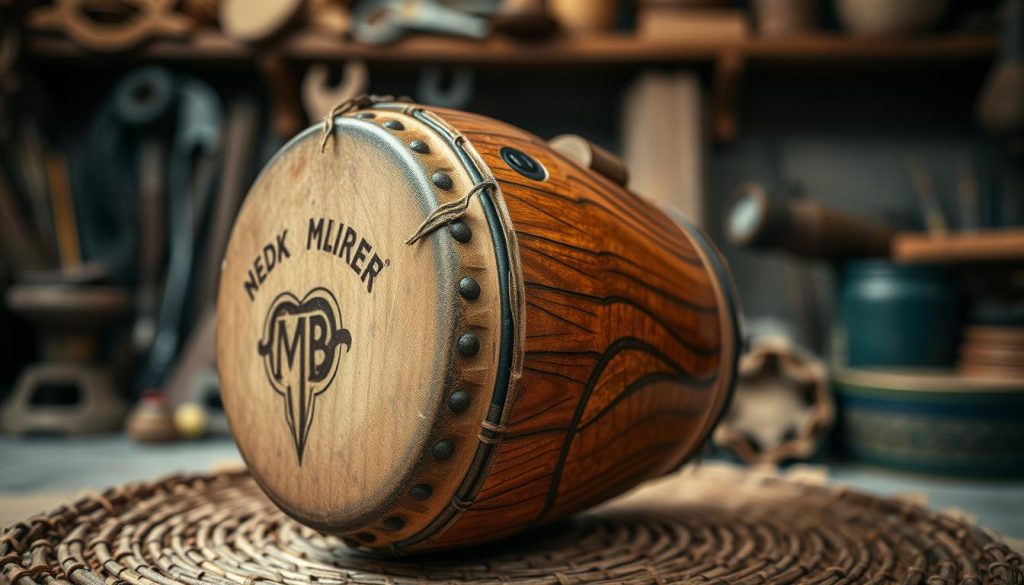
The Importance of Solid Wood
Solid wood, such as mahogany or iroko, improves projection and harmonic richness.
These dense woods provide better stability on stage and greater durability. Professional artisans often favor these materials for premium models.
Quality of the Natural Head
A natural head, particularly goatskin, affects the precision of attacks and the depth of the bass.
A good head provides a warm tone and dynamic response. However, for traveling musicians, synthetic heads remain a stable option in changing weather conditions.
Tension and Rope System
Consistent tension, maintained by high-quality rope, keeps the instrument in tune over the long term.
Check that the rope tension is even and that tuning is straightforward. Proper tension protects the head and optimizes projection.
“A carefully considered combination of wood, head, and tension produces a reliable model for regular playing.”
- Choose a size suited to your body for greater comfort and stability.
- Compare materials and models to understand the choices made by artisans.
- Consider your budget and intended use: stage, rehearsal, or family music-making.
Matching Your Drum to Your Playing Level
The right instrument mainly depends on your experience and musical goals.
For beginners, an entry-level model will suffice. These instruments generally cost between €50 and €100.
Choosing this type of model lets you try playing without investing too much.
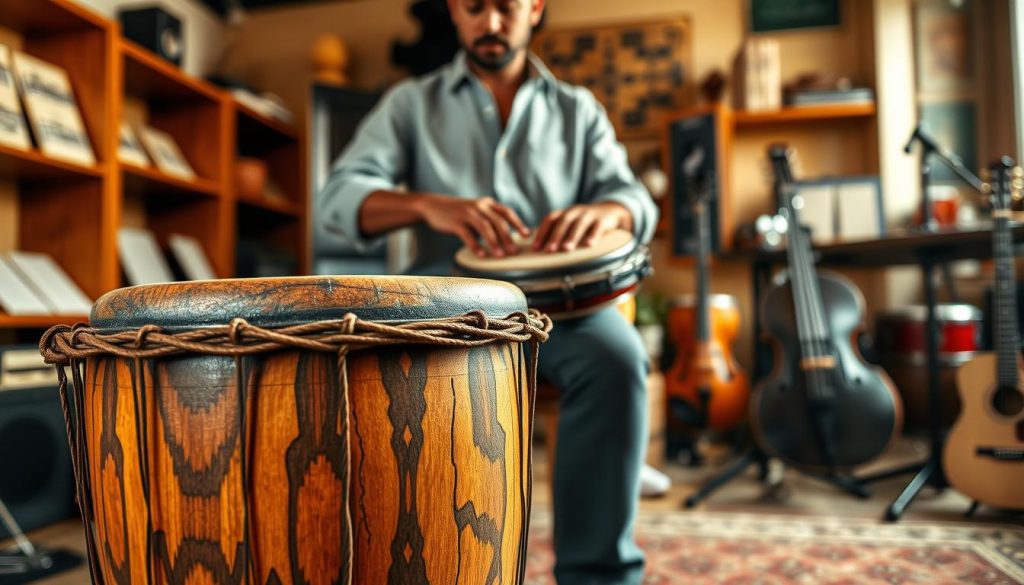
For experienced musicians, choose premium solid-wood models. They provide better projection and greater harmonic richness.
The size of the djembe should match its intended use: workshops, rehearsals, or stage performances. Artisans often recommend natural heads and stable rope systems to maintain proper tension.
- Comfort and body size affect the choice of model.
- Tuning stability distinguishes entry-level instruments from premium ones.
- Match your budget to the duration and intensity of your playing.
| Level | Typical price | Recommended materials | Key benefit |
|---|---|---|---|
| Beginner | €50–€100 | Lightweight wood, synthetic heads | Ease of use and low cost |
| Intermediate | €100–€300 | Wood with a natural head | Better projection and comfort |
| Advanced / professional | > €300 | Solid wood, natural head | Harmonic richness and durability |
Instruments du Monde offers models suited to every level, from African percussion instruments for children to drums for stage use.
Essential Accessories to Protect Your Investment
A padded case protects a solid-wood djembe from impacts and changes in humidity. It prevents cracks and preserves the finish.
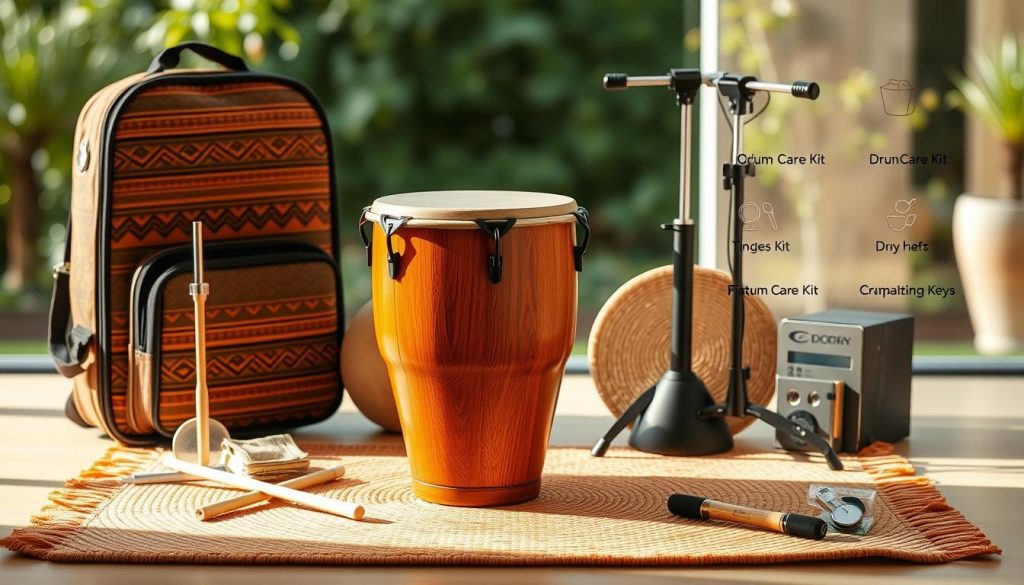
A suitable strap makes the instrument easy to carry. For mobile musicians, it is essential for traveling to rehearsals or performances.
Keep replacement heads on hand, particularly a natural or goatskin head, to maintain the drum’s harmonic richness and projection.
Foot protectors reduce wear on the wood and improve stability while playing. A tuning kit lets you adjust the tension and maintain a consistent sound.
“Investing in professional accessories extends the instrument’s life and preserves its resale value.”
- Choose robust accessories compatible with mahogany and other wooden models.
- Synthetic heads offer a durable solution if you want to reduce maintenance.
- For more practical advice, see this guide to choosing a djembe.
Conclusion
In conclusion, focus above all on the balance between the shell and head when judging an instrument’s quality.
The wood-and-head combination affects projection and long-term durability. Size and ergonomics determine comfort and everyday usability.
To learn how to choose, try several models and seek expert advice. The Instruments du Monde team can help you test and compare them.
This article has presented the essential technical criteria for making the best choice. By applying this advice, you can let your playing needs guide you toward the right djembe and heads.