
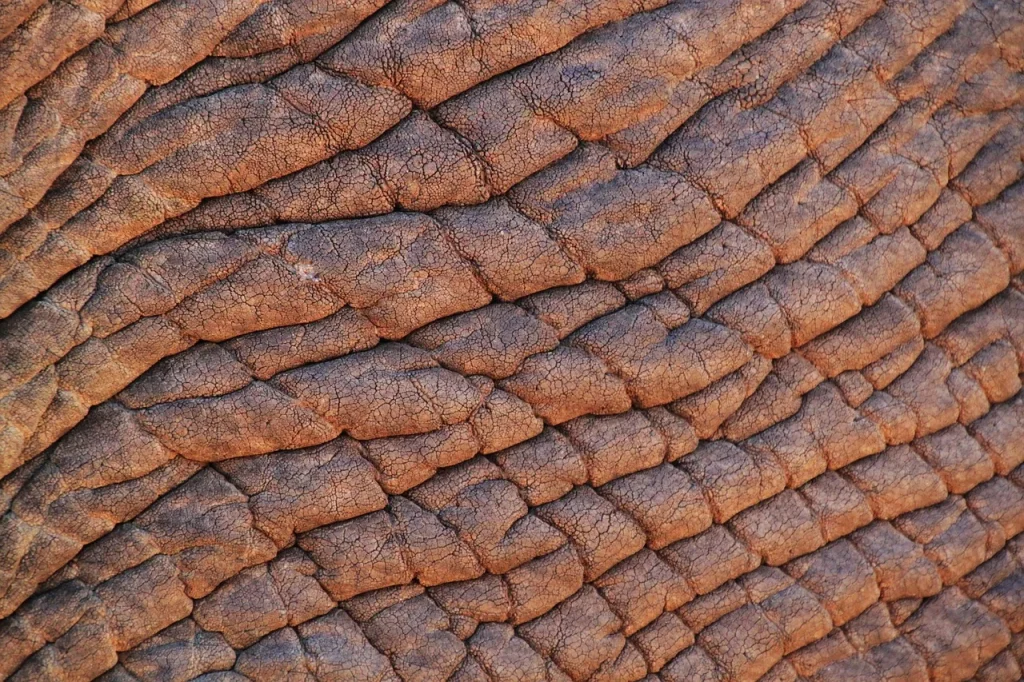
Choosing the right drumhead directly affects the sound of your instrument. I discovered the djembe more than 20 years ago and have often watched these instruments being made by hand.
In this article, I present the main types of drumheads and their characteristics. You will find practical advice to help you make a thoughtful purchase suited to your playing style.
Here, I explain the differences between goat and cowhide heads, as well as synthetic options. My goal is to help you make the best choice for your needs and playing environment.
To learn more, visit this dedicated page, which complements this practical guide.
Why the choice of drumhead is crucial for your djembe
The material and tension of the drumhead transform the instrument’s response. The quality of the head affects the djembe’s pitch, clarity, and harmonic richness.
The tension applied directly changes the pitch and definition of the sound. If the tension is too low, the bass notes will sound muddy. If it is too high, the treble may become harsh.
Every djembe head has its own vibrational properties. These characteristics shape the timbre and determine how easy the instrument is to tune.
- Resonance depends as much on the head as on the shell.
- A suitable head improves projection and power.
- High-quality heads maintain more stable tension over time.
“The right drumhead makes tuning easier and reveals the instrument’s musical potential.”
To compare natural and synthetic options, visit this page about types of djembe drumheads.
Which drumhead should you choose for a djembe? Natural options
Natural drumheads produce very different tonal colors depending on their origin. This choice affects your instrument’s timbre, projection, and durability.
Goatskin
Goatskin
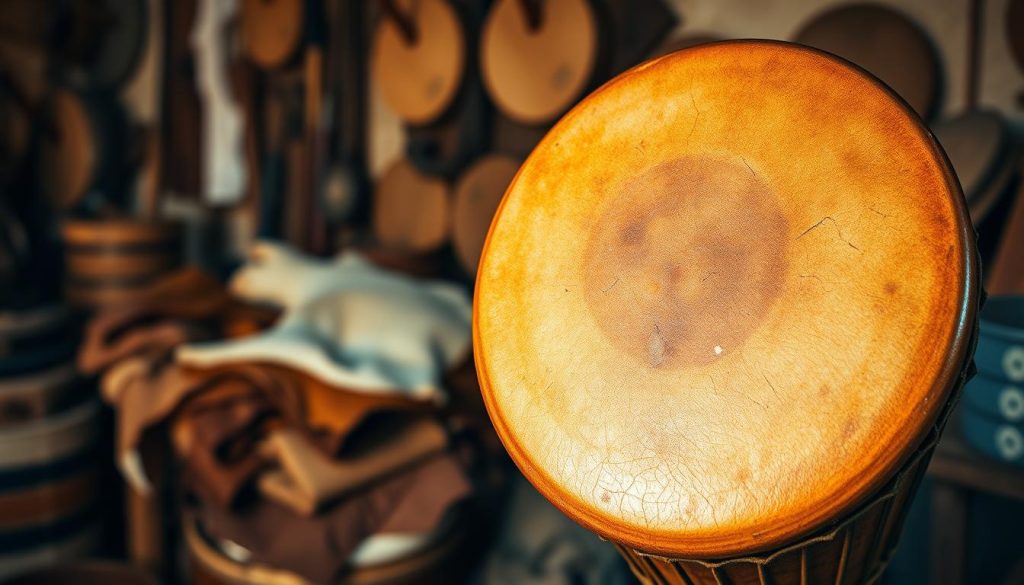
Thin and responsive, goatskin produces a warm, authentic timbre. West African artisans have used it for generations.
It is ideal for precise rhythms and clearly defined solos. Its price remains affordable, and it is easy to care for as long as the head is protected from changes in climate.
Cowhide
Thicker cowhide offers powerful projection. It is often fitted to premium models intended for outdoor performances.
Its durability is a real advantage when touring. On the other hand, its timbre may be less refined than that of goatskin.
Deer and antelope
Deerskin provides expressive nuances that are appreciated in solos. Rare antelope skin offers distinctive acoustics, but it raises ethical and budgetary concerns.
A good natural drumhead can last up to five years if it is protected from sudden temperature changes.
- The choice of drumhead depends on the playing style and striking techniques.
- The rope and its tension complete the acoustic result.
- The price varies according to rarity and quality.
Synthetic drumheads: a modern, durable alternative
Switching to a synthetic head can be a game changer for concerts and tours. On average, these models are three times more durable than natural heads and are not affected by changes in humidity.
Practical advantages: greater durability, stable tension despite changes in climate, and minimal maintenance. They are often more affordable as well, making them easier to purchase for beginners or people on a tight budget.
Premium versions imitate the timbre of goatskin while providing the consistency sought by traveling musicians.
To compare the options and find reliable products, visit this dedicated resource: synthetic drumheads and alternatives.
Synthetic drumheads ensure consistent performance in any venue.
| Characteristic | Synthetic drumheads | Natural drumheads | Practical impact |
|---|---|---|---|
| Durability | Very high (3×) | Moderate | Longer life on tour |
| Sensitivity to humidity | Unaffected | Sensitive | Fewer adjustments |
| Price | Affordable to premium | Varies according to origin | Accessible for small budgets |
| Timbre | Imitates goatskin, but is less rich | Rich and natural | Choice depends on playing style |
How thickness affects sound projection
The thickness of the drumhead radically changes how sound projects through a room. Thin heads, approximately 0.5 mm thick, provide crystal-clear nuances and responsiveness that is ideal for solos.
Conversely, heads measuring 1.5 to 2 mm emphasize deep bass and power. Mamady Keïta illustrates the difference well: a slap on a thin head cuts through the mix, while a bass note on a thick head envelops the listener.
Adjusting tension to suit the musical style
Rope tension must be adjusted precisely to balance pitch and timbre. Test the tension across the entire surface to ensure an even response to every strike.
Practical advice:
- For fast rhythms and solos, choose a thin head with high tension.
- For outdoor performances, a thick head with moderate tension withstands humidity and climate variations more effectively.
- If you are unsure when making a purchase, consult an artisan or follow this buying guide tailored to your needs.
Thickness directly affects timbre, projection, and price. Choosing the right combination of thickness and tension lets you shape your own sound according to your preferred styles and techniques.
Techniques for tuning your instrument accurately
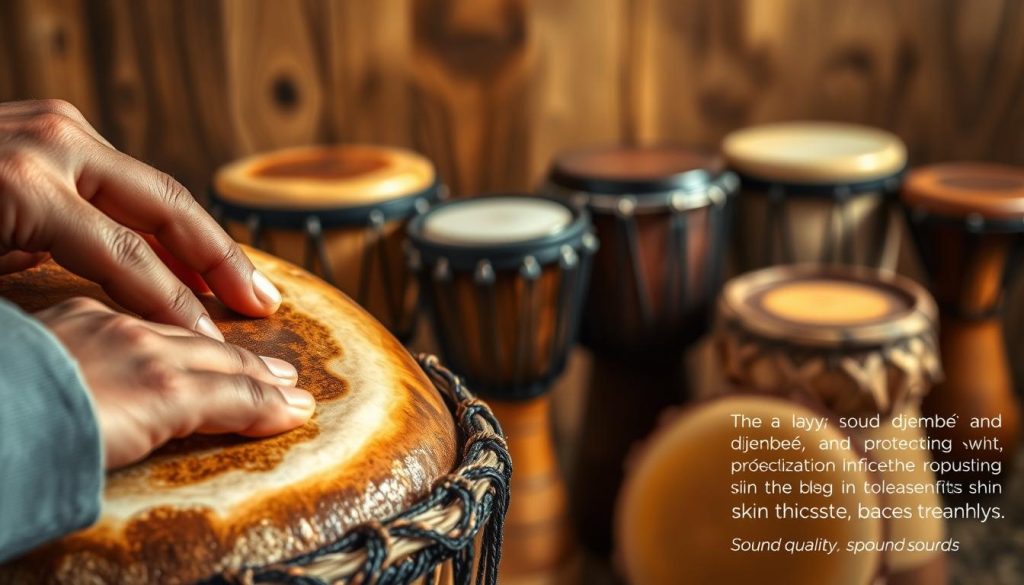
Tuning your instrument correctly requires a methodical approach and careful listening. Begin by identifying the different areas of the head, then work on one rope at a time.
The striking method
Strike the center of the head and listen to the resulting pitch. Gradually adjust the rope tension until you obtain the desired note.
This direct method allows you to hear changes in pitch after every adjustment.
The listening method
Use an audio reference—a tuning fork, an app, or an already tuned djembe—to equalize the rope tension across the entire surface.
This ensures even tuning and works well for premium instruments that require stable tension.
“Rope tension directly affects pitch; adjust it patiently to achieve balanced resonance.”
- For accurate tuning, strike the center and listen carefully to the pitch.
- Equalize the rope tension using an audio reference.
- Practice tuning techniques patiently and make gradual adjustments.
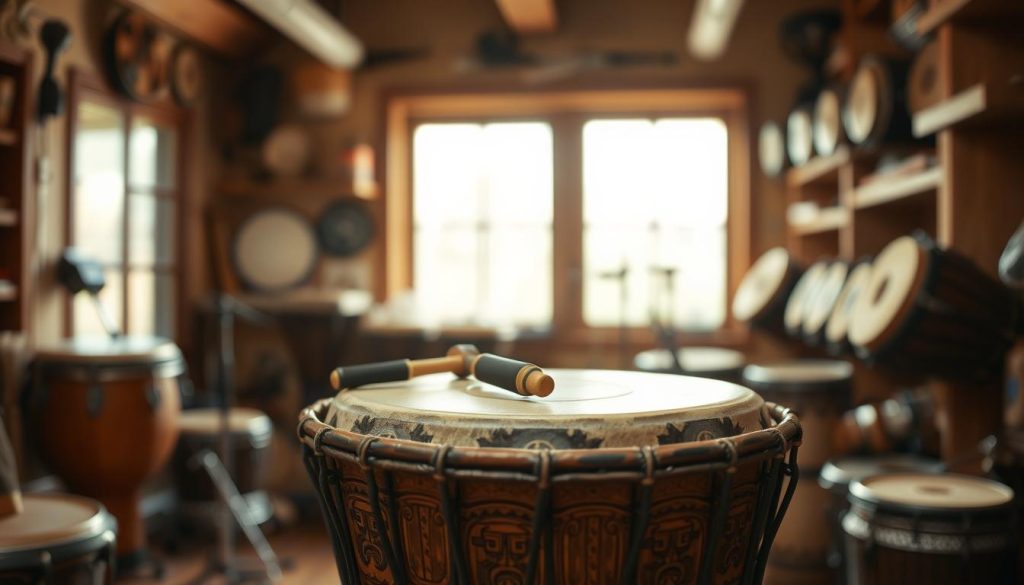
If you are a beginner, follow this practical tutorial on how to tighten the drumhead for clear, step-by-step instructions.
Care advice and common repairs
Simple maintenance measures can prevent many expensive repairs. Wipe the surface with a dry cloth after every session and keep it out of direct sunlight.
Monitor the humidity and climate in the storage area: an excessively dry room dries out the head, while an overly humid room makes it stiff. These changes affect the tension and sound.
Maintaining proper rope tension helps prevent tears, especially on a premium djembe head. Check the tuning before every concert or rehearsal.
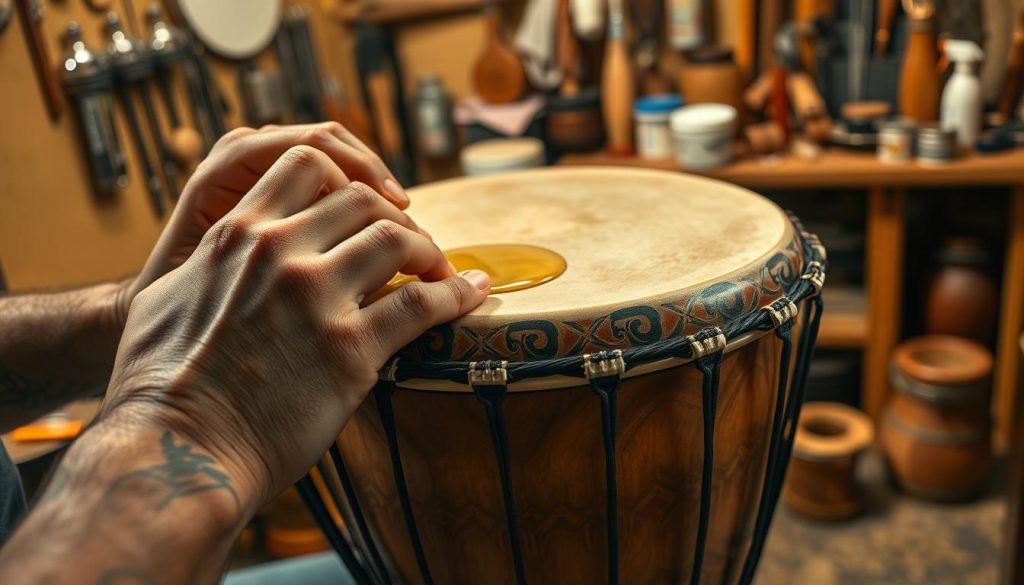
If the head cracks, Bostik 2402 adhesive is recommended. This adhesive repairs the skin effectively without altering the nuances of its timbre.
- Purchase a specialist adhesive for quick repairs.
- For complex repairs, contact Atelier du Percussionniste in Paris.
- Regular maintenance extends the instrument’s life and helps maintain its resale value.
Regular maintenance includes checking the tuning, protecting the instrument from climate variations, and carrying out repairs promptly.
Conclusion: finding the ideal drumhead for your playing
The best drumhead is the one that suits your playing habits and local conditions.
Consider your style, budget, and the humidity of your surroundings. Whether natural or synthetic, every option changes the projection and timbre. Try a goatskin head and a synthetic version before making a purchase.
Regular maintenance and precise tuning ensure a long service life and better performance. Ask artisans for advice to refine your choice, and adjust the tension to suit your rhythms and solos.
This article has guided you through the different types of drumheads and their characteristics to make your next purchase easier. Take the time to try them: the right head will transform your musical practice.