
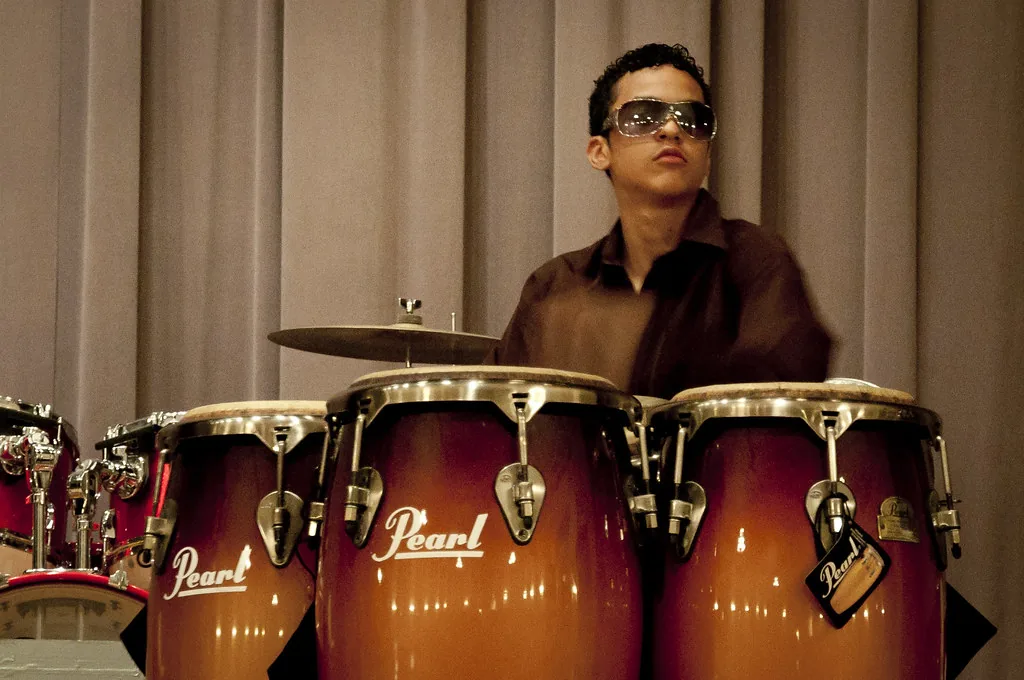
Salsa is a musical genre and partner dance of Cuban origin. Musical instruments play an essential role in creating the captivating, passionate rhythms that accompany the dancers’ movements. Here are some of the most important instruments in salsa:
The role of claves and clave rhythm in salsa
Claves are considered among the most essential instruments in salsa music. They are often used to learn the salsa rhythm and serve as the orchestra’s “metronome.” All the other musical instruments rely on the rhythm of the claves to play in sync.
Salsa musicians generally learn the rhythm through the claves. In addition to the claves, the timbales play an important role in maintaining the salsa orchestra’s rhythm. They provide “rhythmic cues” within a song and help the other musicians keep time.
The clave rhythm
Claves consist of two cylindrical wooden sticks that are struck together to produce a clear, rhythmic sound. They are played by holding one stick between the thumb and middle finger of the left hand while striking it with the second stick.
Claves are the heart and soul of salsa music. They give the entire composition its rhythm and structure, allowing the musicians to play in perfect sync.
The clave rhythm is based on a five-stroke pattern incorporated into many salsa styles. It is a rhythmic cycle that guides the musicians during their performance and allows dancers to follow the music precisely.
The salsa orchestra
A salsa orchestra consists of numerous musical instruments that combine to create a captivating rhythmic atmosphere. Each musician plays a crucial role in building the musical ensemble, but the claves and timbales are the pillars of salsa rhythm.
In addition to claves and timbales, a salsa orchestra generally includes instruments such as congas, bongos, trumpets, saxophones, pianos, and basses. Each instrument adds a unique dimension to salsa music, contributing to its energy and complexity.
| Instrument | Role in the salsa orchestra |
|---|---|
| Claves | Provide the basic rhythm and guide the other musicians |
| Timbales | Maintain the tempo and add “rhythmic cues” to the music |
| Congas, bongos | Add percussive rhythms and percussion solos |
| Trumpets, saxophones | Play melodies and add rhythmic accents |
| Pianos, basses | Provide harmony and musical structure |
The salsa orchestra works collaboratively, with each musician bringing their own expertise and passion to the performance. Together, they create a powerful, captivating sound that energizes dancers on the floor.
The importance of improvisation in salsa
Improvisation plays a key role in salsa music. After the melody or sung lyrics have been introduced, the musicians are often invited to improvise. Wind instruments such as the saxophone, flute, and trombone, along with the piano and percussion, contribute to the development of improvisation. Some salsa artists, such as Ray Barretto, Tito Puente, and Chivirico Dávila, are known for their energetic, passionate improvised solos.
“Improvisation is the soul of salsa. It is where musicians can truly express themselves and showcase their creativity. It is a form of instant communication between the members of the chorus and the soloists, making every performance unique and full of surprises.” — Manuel Hernandez, renowned salsa musician.
Improvisation allows musicians to take liberties with the music, explore new ideas, and create magical moments on stage. It is a form of artistic expression that requires both technique and sensitivity. When a musician improvises, they add their own touch to the music, creating an authentic experience for listeners. Improvisation is also a way to showcase individual talent while remaining in harmony with the other members of the ensemble.
Improvisation and the chorus
In salsa music, improvisation is not limited to soloists. Members of the chorus also play an important role in improvisation. They may add spontaneous vocal harmonies, respond to instrumental solos, or even improvise their own melodic phrases. The chorus adds another layer of texture to the music and creates a dynamic interaction with the soloists. It is a true artistic collaboration that brings salsa to life.
Wind instruments, piano, and percussion—the pillars of improvisation
Wind instruments such as the saxophone, flute, and trombone have a special place in salsa improvisation. Their expressive tones and ability to play complex melodies make them ideal choices for improvised solos. In addition, the piano, with its harmonic versatility, and percussion, with its captivating rhythms, also contribute to improvisation by providing musicians with a solid, inspiring foundation. These instruments create an engaging backdrop for improvisation, allowing artists to express themselves fully.
| Wind instruments | Piano | Percussion |
|---|---|---|
| Saxophone | Acoustic piano | Congas |
| Flute | Electric piano | Bongos |
| Trombone | Timbales |
Hidden messages in salsa lyrics
Salsa songs are much more than catchy melodies. They often convey profound messages and address a variety of topics drawn from everyday life. The lyrics explore themes such as love, seduction, politics, and social issues, providing a rich space for expressing opinions and emotions.
Salsa lyrics may contain subtle messages or social and political criticism concealed behind metaphors or wordplay. Artists often strive to express their ideas and opinions in ways that encourage reflection and spark dialogue about important issues. These socially conscious songs invite listeners to question the world around them and express their own opinions.
One of salsa’s greatest strengths is its ability to convey powerful messages through captivating melodies. The lyrics often tell stories about life, revealing everyday realities and highlighting social issues. Salsa is a form of expression that makes it possible to discuss serious topics while inviting listeners to dance and have fun.
Salsa songs can also be a means of raising awareness and inspiring social action. Some socially conscious songs call for justice, equality, and greater awareness of the problems facing society. Artists use lyrics to champion causes, stimulate debate, and encourage listeners to become actively involved in the struggle for a better world.
Whether through poetic lyrics, metaphors, or direct descriptions of reality, salsa songs provide a space where opinions can be shared, debated, and amplified. They reflect a diversity of viewpoints and experiences, creating music that goes far beyond mere entertainment.
Examples of socially conscious salsa songs:
- “Pedro Navaja” by Rubén Blades addresses the theme of urban violence.
- “Lágrimas Negras” by Miguel Matamoros evokes the suffering associated with slavery.
- “Calle Luna, Calle Sol” by Héctor Lavoe condemns social and economic inequality.
With its powerful messages and socially conscious songs, salsa music gives a voice to those seeking to express their opinions and bring about social change.
The different styles of salsa
Salsa encompasses several subgenres, each with its own rhythm and musical arrangement. The best-known styles include salsa dura, characterized by energetic, fast-paced rhythms, and salsa romántica, which emphasizes emotional expression and romantic ballads. Another popular style is timba, a blend of salsa with elements of jazz, funk, and hip-hop. Each salsa style has its own essence and audience.
Salsa dura is a dynamic, hard-hitting style that emphasizes fast rhythms and the excitement of dance. Percussion instruments such as congas and timbales are brought to the forefront, creating a vibrant, captivating atmosphere. Salsa dura songs are often full of energy and encourage dancers to let loose on the dance floor. It is a style much loved by salsa enthusiasts seeking thrills and an exhilarating dance experience.
Salsa romántica is a softer, more romantic style of salsa that emphasizes emotional expression and sentimental ballads. Its musical arrangements often feature gentle brass, melodious strings, and poetic lyrics. This salsa style is ideal for partner dancing and creates a romantic, passionate atmosphere on the dance floor. Salsa romántica songs often evoke themes of love, desire, and seduction, creating an intimate and sensual mood.
Timba is a more modern, fusion-oriented salsa style that incorporates elements of jazz, funk, and hip-hop. It is particularly popular in Cuba and is known for its complex rhythms and innovative use of instruments. Timba offers a dynamic, stimulating musical experience, harmoniously blending Cuban traditions with contemporary influences. Timba dancers enjoy the rhythmic challenges and bold movements offered by this unique style.
| Salsa style | Characteristics |
|---|---|
| Salsa dura | Energetic, fast-paced rhythms, percussion instruments, dynamic songs |
| Salsa romántica | Emotional expression, romantic ballads, melodious arrangements |
| Timba | A blend of salsa, jazz, funk, and hip-hop, complex rhythms, musical fusion |
Conclusion
Salsa is much more than simply a dance or party music. It is a cultural expression that brings people together through rhythm and passion. Musical instruments play an essential role in creating salsa’s captivating rhythms, while song lyrics convey powerful and subtle messages. Salsa continues to evolve and spread around the world, captivating dancers and music lovers with its vibrancy and infectious energy. Whether you are a beginner or a longtime enthusiast, salsa invites you to join the party and let the music carry you away.
FAQ
What are the most important salsa instruments?
Musical instruments play an essential role in creating salsa’s captivating rhythms. The most important instruments include claves and timbales, which help maintain the salsa orchestra’s rhythm.
How are claves used in salsa?
Claves are considered among the most essential instruments in salsa music. They are often used to learn the salsa rhythm and serve as the orchestra’s “metronome.” All the other musical instruments rely on the clave rhythm to play in sync.
What is the role of the clave in a salsa orchestra?
The clave plays an essential role in maintaining the salsa orchestra’s rhythm. It provides a “rhythmic cue” within a song and helps the other musicians keep time.
What role does improvisation play in salsa?
Improvisation plays a key role in salsa music. After the melody or sung lyrics have been introduced, the musicians are often invited to improvise. Wind instruments such as the saxophone, flute, and trombone, along with the piano and percussion, contribute to the development of improvisation.
Which instruments are used for improvisation in salsa?
Wind instruments such as the saxophone, flute, and trombone, along with the piano and percussion, contribute to the development of improvisation in salsa.
What topics are addressed in salsa lyrics?
Salsa lyrics often tell stories inspired by everyday life. They address topics such as love, seduction, politics, and social issues. The lyrics may contain powerful and subtle messages, expressing ideas and opinions that are difficult for the uninitiated to decipher.
What are the different styles of salsa?
Salsa encompasses several subgenres, each with its own rhythm and musical arrangement. The best-known styles are salsa dura, salsa romántica, and timba, a blend of salsa with elements of jazz, funk, and hip-hop.
What is the essence of salsa?
Salsa is a cultural expression that brings people together through rhythm and passion. Musical instruments play an essential role in creating salsa’s captivating rhythms, while song lyrics convey powerful and subtle messages.