
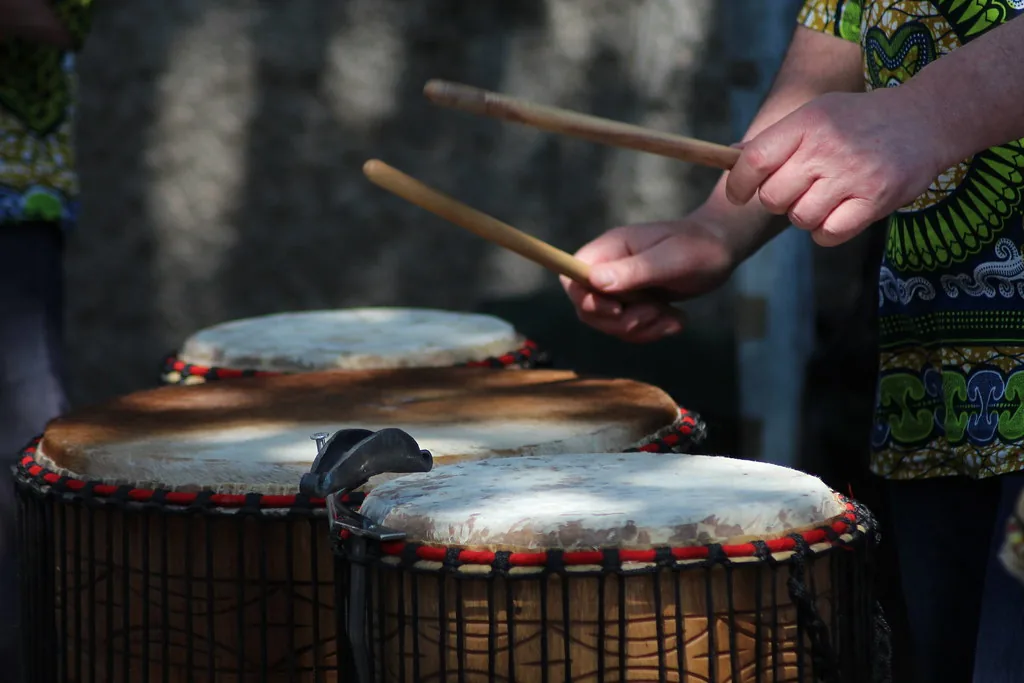
This Mandinka drum embodies the rhythmic soul of a region. Its hollowed wooden shell has a goblet shape and is topped with a goatskin head tightened by ropes.
Played with bare hands, this percussion instrument produces rounded bass notes and sharp slaps. The tension of the head changes the timbre and volume according to its adjustment.
This short article introduces its history, shell size, and use in ceremonies. For technical details and buying advice, see a specialist buying guide on choosing the shell and head.
To explore the cultural context and Malinke rhythms, this historical resource explains their festive and ritual uses: traditional references.
The Origins and History of the Guinean Djembe: Characteristics and Traditions
Its history reaches back to the heart of the Mandinka Empire, founded by Soundiata Keïta in the 13th century. This vast empire extended from Guinea to eastern Mali and northern Côte d’Ivoire. It laid the foundations of music associated with ceremonies and celebrations.
The Mandinka Empire and the Birth of the Drum
Rhythmic practice developed into polyrhythmic ensembles. The drum is only rarely played alone: it interacts with the doundounba, sangban, and kenkeni.
Myths and Legends Surrounding Its Creation
Oral accounts recount the genealogies of craftspeople and griots. These myths reinforce the instrument’s social role in the West African region.
- International expansion: thanks to Fodéba Keïta and the African ballets of the 1950s, the instrument won over the world.
- Learning: in the 1980s, masters such as Famoudou Konaté opened centers in Europe and Japan.
- Heritage: Mandinka music, found as far away as Burkina Faso, remains the foundation of modern practices.
To learn more about its origins and history, read this detailed feature: origins and history.
Anatomy and Traditional Craftsmanship of the Instrument
Everything begins with a solid block of wood, worked to reveal the instrument’s voice. The shell is carved from a single piece of a species such as lengue, iroko, mahogany, or dugura. This material determines the resonance and warmth of the sound.
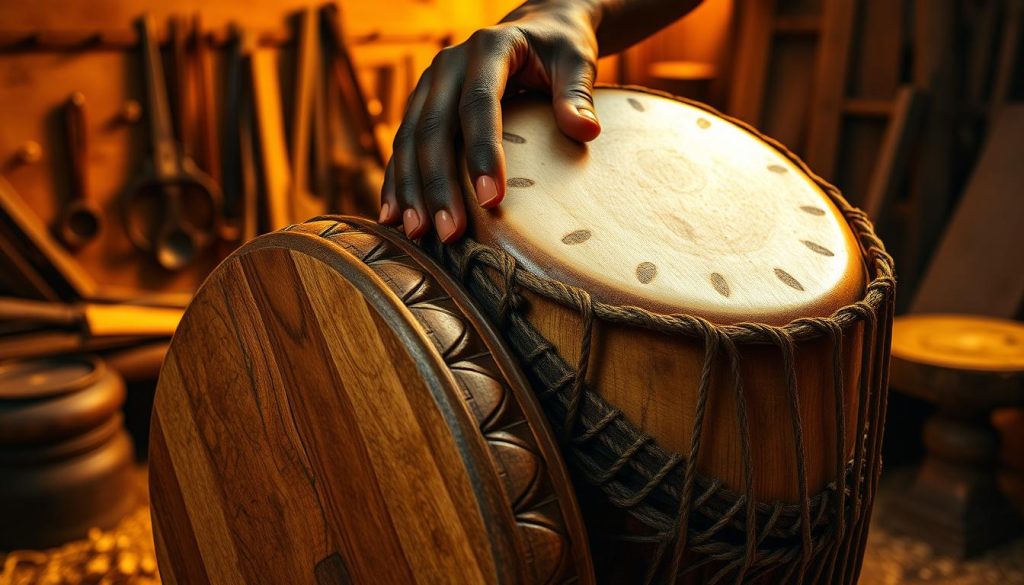
Choosing the Materials and the Blacksmith’s Role
The blacksmith selects the wood and then carves the shape: the foot, voice, and profile of the shell. The voice is the size of the middle section and receives special ceremonial attention.
- Assembly: the goatskin head is fitted and then secured around the ring with strong ropes.
- Fastening: three iron rings have commonly been used since 1977 to stabilize the head tension.
- Durability: this type of assembly withstands the climatic variations of Burkina Faso.
Every instrument remains unique, far removed from industrial percussion instruments. For practical advice on purchasing and maintenance, see this practical guide.
Mastering Striking Techniques and Fundamental Sounds
A precise strike turns the instrument into an expressive voice. This section describes the movements used to produce the bass, tone, and slap.
The Bass at the Center of the Head
The bass is produced by striking the center of the head with the whole hand and the thumb raised.
The palm muffles the sound if it touches the head; keep it slightly arched to produce a deep bass note.
The Tone and Finger Precision
The tone is played at the edge of the head. The fingers should remain together.
Keep the palm from touching the head so that the sound remains clear.
The Malian and Guinean Slap
The slap uses the surface of the fingers and one-third of the palm to produce a sharp sound.
Suitable head tension and the correct finger angle create a crisp attack.
“Hand position matters more than force: precision first, power second.”
- Position: carefully adjust the angle of the hand for each area of the head.
- Equipment: the iron rings and ropes must be adjusted to maintain stable head tension.
- Role: the instrument’s voice is amplified by the foot and by the shape of the wooden shell.
To work on patterns and incorporate these sounds into fundamental rhythms, practice slowly and then increase the speed.
The Drum’s Global Expansion and Modern Evolution
Its international journey began with ballet companies and continues in modern pop.
The African ballets of Fodéba Keïta first introduced the instrument to the world. Masters such as Famoudou Konaté spread its teaching beyond Africa.
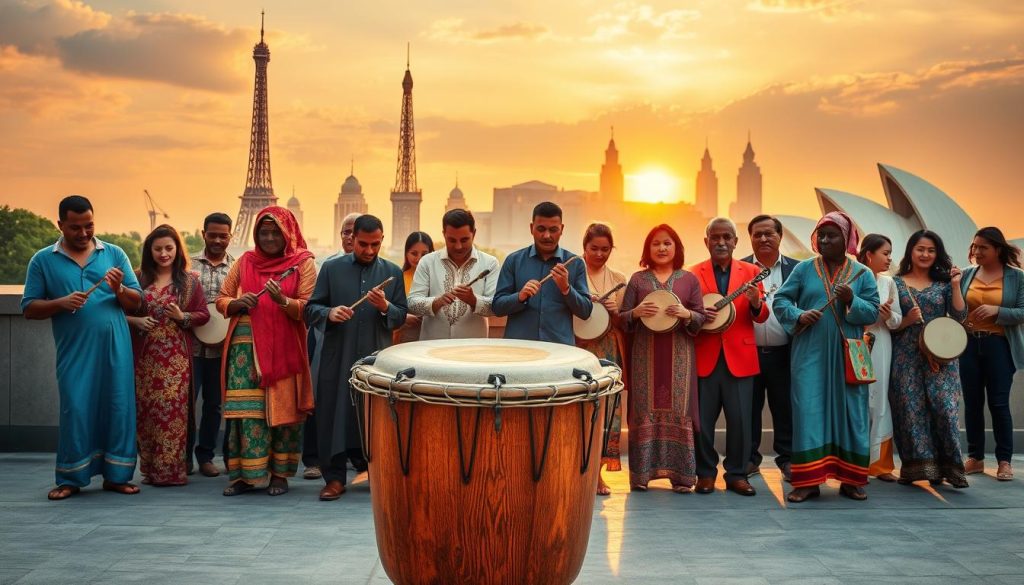
The traditional wood and goatskin construction remains the benchmark for purists.
However, its evolution has given rise to industrial models. Brands such as REMO offer fiber shells and synthetic heads unaffected by humidity.
“The edge, palm, and fingers still define the sound, even in a contemporary setting.”
| Type | Materials | Common use |
|---|---|---|
| Traditional | Solid wood, goatskin, ropes | Ceremonies, learning workshops |
| Industrial | Fiber, synthetic heads, metal rings | Outdoor stages, modern studios |
| Hybrid | Wood and synthetic components | Fusion music, pop rock, educational workshops |
In 2002, Noel “Toca” Rivera incorporated the djembe into pop rock while touring with Jason Mraz, demonstrating the grace of this instrument alongside electric instruments.
French artists such as Christina Goh have also used this drum as the rhythmic foundation of their albums since 2010.
To learn more about its origins and journey, read this article on its origins and history.
Conclusion: The Djembe’s Cultural Heritage
This rhythmic heritage spans the centuries and brings communities together around a shared pulse. Born in the Mandinka Empire, the instrument continues to energize stages and celebrations across West Africa.
The percussion instrument is rarely played alone during ceremonies; it interacts with other voices. Mastering the strikes reveals the instrument’s technical richness, from bass notes to high-pitched slaps. Hand movements transmit a living body of knowledge.
Thanks to its carved wood and stretched head, this object retains an authentic soul. It has won over the world and inspires contemporary musicians. To learn more about its origins and meaning, read this cultural guide.