
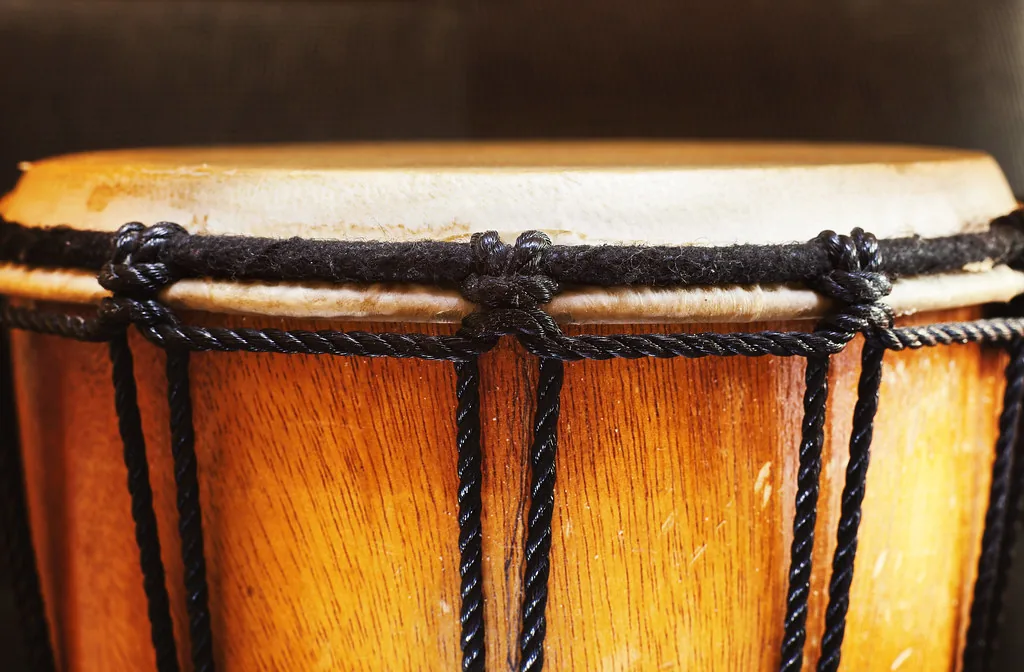
An iconic percussion instrument, this drum comes from West Africa and fascinates musicians around the world. I have played this instrument for more than 20 years and have experienced its benefits for the body and mind.
Handcrafted construction, with carefully selected wood and a high-quality skin, gives it an exceptional sonic identity. This construction contributes to rich artistic expression and powerful nonverbal communication.
In this article, we explore how this instrument connects generations and traditions. To better understand its origins, visit our page about its origins and history.
Traditional Djembe: What Makes It Unique
The combination of a hollowed shell and a stretched skin produces an astonishingly rich range of sounds.
This instrument stands out for its ability to produce deep bass notes and clear high notes. Its handcrafted design directly affects its dynamics and acoustic response.
In practice, the djembe often goes far beyond a purely rhythmic function. It becomes a sonic language capable of crossing borders.
“A drum can unite people without a word, through rhythm and emotion.”
- Versatility: a musical instrument suited to both solos and ensembles.
- Expressiveness: variations in timbre depending on force and attack.
- Culture: a social and spiritual bond during ceremonies and gatherings.
To learn more about its history, visit our page about its origins and history. Playing offers far more than a simple pastime: it nurtures creativity and collective music.
The Secrets of Its Construction and Handcrafted Instrument Making
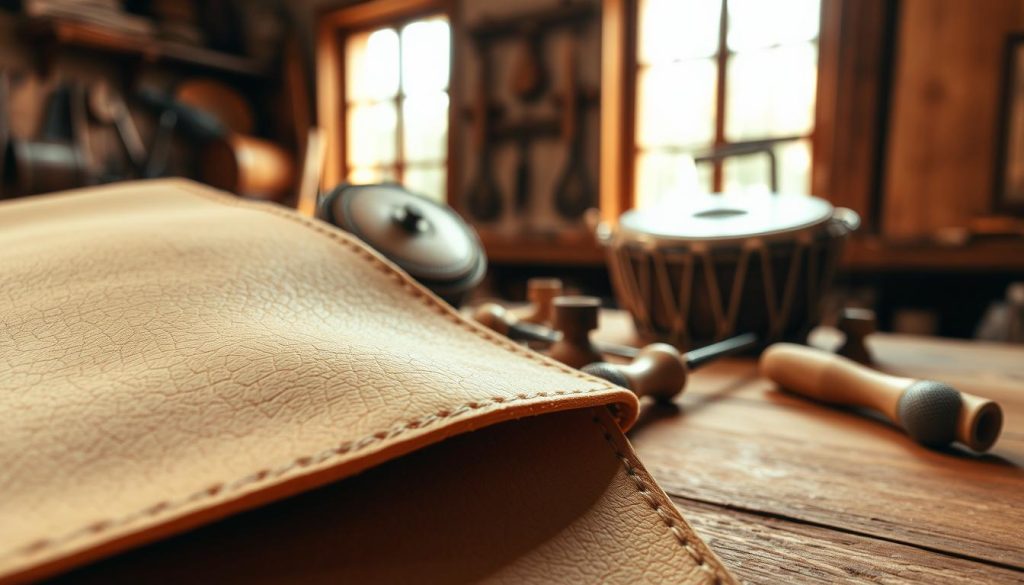
Craftsmanship begins with selecting the wood, a crucial step for resonance. Artisans favor dense species, often carved from a single trunk, to ensure good projection and tonal stability.
Choosing the Wood Species
A well-chosen shell transmits harmonics and supports the bass notes. The wood influences tone color and durability. Carvers adjust the thickness and shape to optimize the shell.
The Importance of Goatskin
The goat skin determines the clarity of the attacks and the sustain. A high-quality skin offers both flexibility and resistance to wear. Installing and adjusting the ropes maintains the necessary tension.
- Tuning techniques: replacement, heating, and gradual adjustments.
- Learning: mastering the knots and tension takes time.
- Passion: each piece bears traces of its origins and local craftsmanship.
| Component | Role | Effect on Sound |
|---|---|---|
| Wood species | Structure and resonance | Rich bass, sustain |
| Goatskin | Vibrating surface | Clear high notes, attack |
| Ropes and tension | Holding the skin in place | Pitch stability, dynamics |
A Cultural Pillar at the Heart of West Africa
At the heart of West African communities, this instrument sets the rhythm for life’s defining moments. It accompanies rites, ceremonies, and celebrations, releasing vibrations that strengthen social bonds.
The Role of Griots in Oral Transmission
Griots preserve collective memory. They use the drum to pass down traditions, stories, and messages across generations.
Through percussion and voice, communication becomes musical. Masters such as Mamady Keita, Amadou Kiénou, and Famoudou Konaté have shown how this heritage can touch the world.
In workshops and onstage, this instrument offers far more than a simple melody. It embodies a form of cultural expression shared among several cultures.
“Rhythm tells the story of a people and unites those who listen.”
- Transmission: oral memory carried by griots.
- Ambassadorship: international promotion by great artists.
- Communion: rituals in which vibrations bring participants closer together.
The Unexpected Benefits of Rhythmic Practice
Playing a rhythm as a group quickly transforms social dynamics and individual well-being.
Regular practice improves sociability. Playing together builds trust. Participants form strong bonds through nonverbal communication and shared energy.
Effects on the heart: scientific studies confirm a genuine benefit.
- In 2008, Dr. Michael Miller of the University of Maryland demonstrated that playing the djembe promotes blood-vessel dilation and cardiovascular health.
- Research conducted in 2016 by the University of Oxford found better motor and auditory connectivity among musicians.
Playing also acts as a form of therapy against stress. Sessions release endorphins and improve mood. Repeating the rhythm helps regulate breathing and tension.
In short, this instrument does far more than produce music: it supports health, strengthens group communication, and nurtures a shared culture.
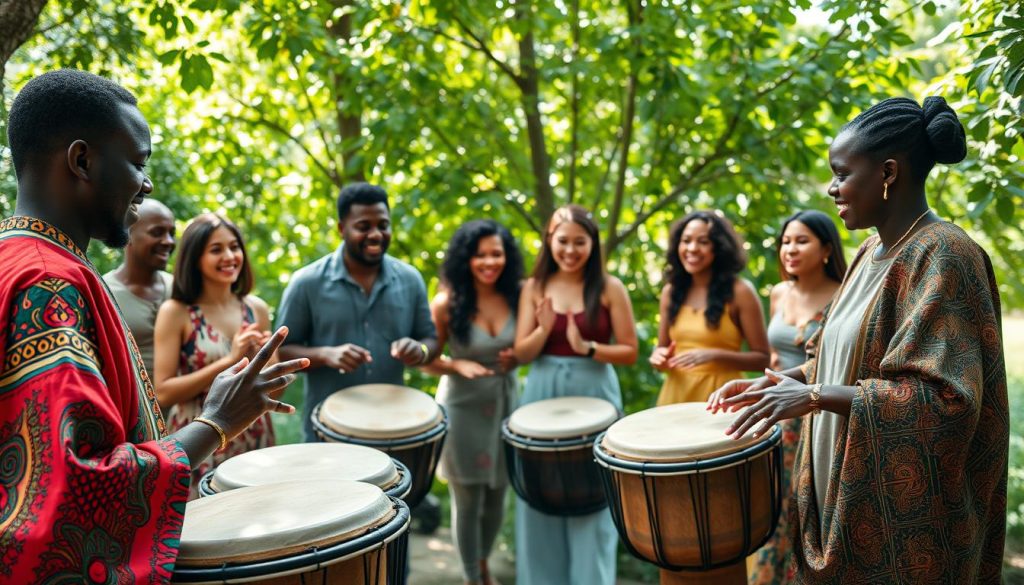
To develop your technique and play in a group, explore our step-by-step technique guide.
Mastering the Basic Techniques for Beginners
Starting with the basic movements speeds up learning and gives the percussionist confidence.
Tone and Slap are the two essential attacks on the skin. The Tone produces a rounded sound, while the Slap delivers a sharp high note. Practice them slowly, then increase the speed.
Kuku, Mendiani, Soli, and Dununba rhythms provide practical frameworks. They help structure your progress on this instrument and develop an understanding of how the hands interact.
- Hand coordination: alternate your dominant and nondominant hands to improve accuracy.
- Skin tension: check and adjust it before each session to obtain a stable sound.
- Regular practice: short, frequent sessions produce better results.
“Mastering the basics transforms a movement into musical expression.”
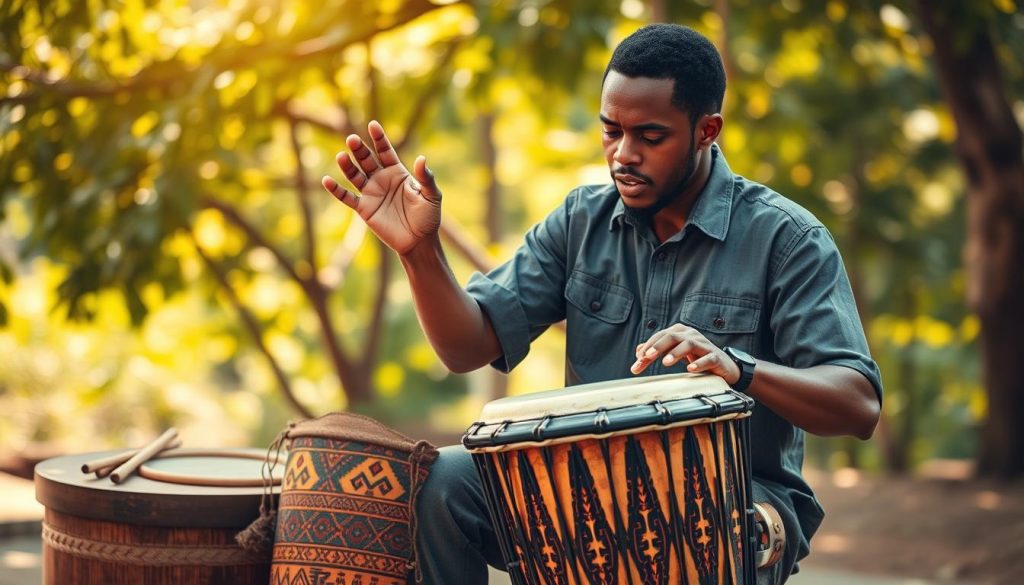
For buying advice and a beginner’s guide, see our recommended resource. By practicing these techniques, your sense of rhythm and understanding of music will improve quickly.
| Technique | Purpose | Practical Tip |
|---|---|---|
| Tone | Clear midrange sound | Relaxed fingers, strike near the edge |
| Slap | Sharp high notes | Loose wrist, open hand |
| Coordination | Rhythmic accuracy | Exercises with each hand separately |
| Skin tension | Sound stability | Check before playing |
Conclusion
Ultimately, its vibration carries a living heritage onto our contemporary stages. This percussion instrument connects West Africa with the rest of the world through shared vibrations.
This article has shown the importance of the wood, goat skin, and ropes for tension and sound quality.
Beyond music, this instrument embodies a living culture, present in rites and ceremonies. A passion for this art preserves its origins and nurtures new forms of expression.
To learn more about its roots, explore the origins of the djembe. Choosing a high-quality instrument means becoming an active guardian of tradition.