
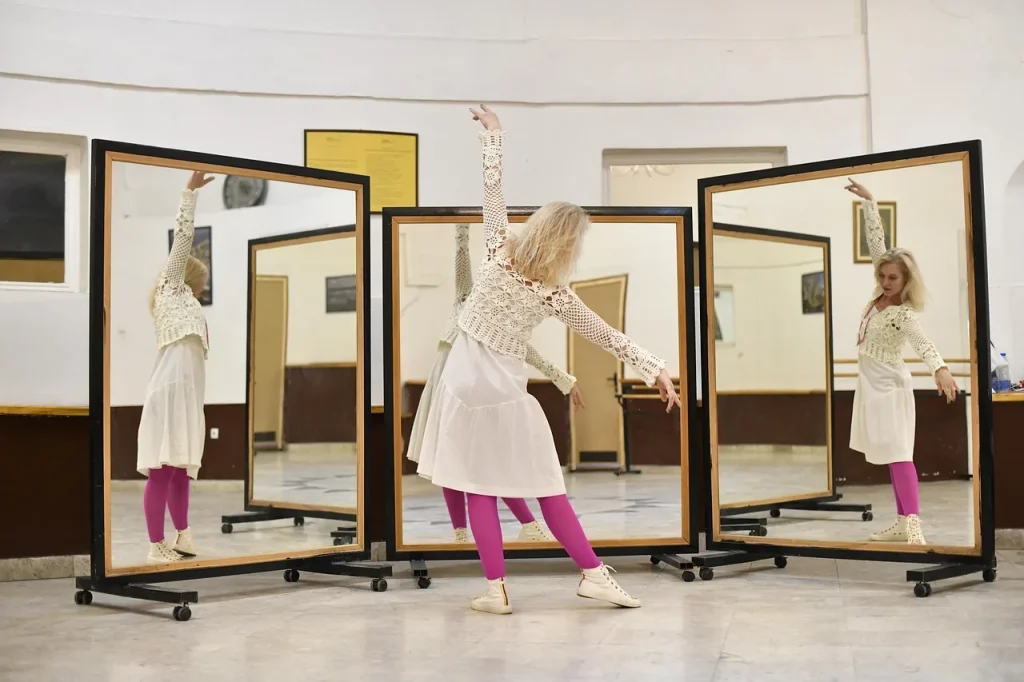
Discover how to turn your initial hesitation into confidence on the dance floor. With its captivating rhythms, bachata is accessible to everyone, even without any previous experience.
This article guides you step by step with practical tips and movements suitable for beginners. The goal? To help you quickly feel comfortable while enjoying the benefits of this dance.
Whether you want to improve your body language or form social connections, each stage is designed to help you progress at your own pace. Ready to begin? Follow the guide!
An introduction to bachata for beginners
Immerse yourself in the world of bachata, a dance with Dominican roots. Originating in the 1960s, it combines passion with infectious rhythms. Its rich history makes it far more than a simple physical activity.
This discipline is ideal for beginners. With just 10 minutes of daily practice, you will progress quickly. In fact, 85% of people master the basic step within two weeks.
Bachata combines enjoyment with simplicity. It is suitable for all people, whatever their level. Its social, dance-oriented nature makes it a welcoming activity.
| Benefits | For beginners |
|---|---|
| Accessible rhythm | Easy-to-learn basic step |
| Social interaction | Suitable for group classes |
| Physical benefits | Improves coordination |
To supplement your learning, video no. 01 from Danse à la maison is an excellent resource. It clearly explains the essential movements.
Whether you want to have fun or challenge yourself, bachata provides an ideal setting. Ready to explore this captivating dance?
Bachata fundamentals for getting off to a good start
Mastering the basics of this dance begins with three key elements. Rhythm, posture, and connection form the foundation of harmonious practice. Here is how to become comfortable with them.
Understanding the rhythm and basic beats
Bachata follows a 4/4 time signature. Count “1-2-3-tap” in your head to synchronize your steps. This beat, marked by the foot tap, creates fluidity.

Tip: start by listening to slow songs. Identify the guitar and percussion to get a better feel for the pulse.
Adopting the ideal posture for dancing with ease
Your body should remain aligned: your head, pelvis, and feet should all be on the same axis. Keep your body weight toward the balls of your feet so you can pivot easily.
- Exercise: place a pen between your shoulder blades. This corrects your posture and opens your chest.
- Avoid looking at your feet. Focus on a point on the horizon to balance your movement.
The importance of connecting with your partner
Connection comes through nonverbal leading. A gentle pressure from the hand or a change in the torso’s orientation is enough to communicate.
| Technique | Effect |
|---|---|
| Palm pressure | Signals a change of direction |
| Eyes closed (inspired by kizomba) | Strengthens mutual awareness |
Practice the ball exercise: imagine holding a ball between you and your partner to maintain the space.
Basic exercises for mastering bachata
Progress in dance comes through structured, suitable exercises. These essential movements help you acquire solid technique while developing your body language.
The basic step: a repetition exercise for muscle memory
Break the movement down into 4 beats:
- 1: step to the left with your left foot
- 2: bring your right foot in
- 3: step to the right with your right foot
- Tap: lightly touch the floor with the toes of your left foot
Repeat this cycle 10 times in a row to embed the rhythm in your muscle memory.
Practicing lateral movement with the “side step”
This variation improves balance:
- Place your smartphone in camera mode facing you
- Perform side steps from one side to the other
- Analyze your posture after each set
Improving coordination with the “touch step”
Combine the basic step with finger snaps:
| Beat | Action |
|---|---|
| 1-2-3 | Normal basic step |
| Tap | Alternately snap the fingers of your right and left hands |
Pro tip: record your sessions to identify areas for improvement. Video no. 12 of the beginner tutorial shows these movements in detail.
How to build confidence on the dance floor
Feeling comfortable while dancing requires a methodical, supportive approach. Progress rests on three pillars: consistency, body awareness, and shared motivation.
Practicing regularly to become familiar with the movements
A daily 15-minute program followed for 21 days builds automatic responses. This short but frequent practice will embed the movements in your body memory.
Tip: use a timer and focus on just one element to improve during each session. Video no. 7 from Danse Libre features progressive sequences that are perfect for this routine.

Dancing without a mirror to focus on how it feels
Forget reflections and connect with your sensations. Visualize a fixed point at eye level to steady your gaze and balance.
- Try this exercise: dance with your eyes closed for 5 minutes while simply listening to the music
- Result: 68% of students report better spatial awareness after this training
Joining a group class to draw inspiration from others
Group classes offer a stimulating environment. According to a recent study, the group’s energy and immediate feedback accelerate progress by 40%.
| Benefit | Impact |
|---|---|
| Debriefing with other participants | Helps identify areas for improvement that are impossible to spot alone |
| Themed dance nights | Provide an opportunity to apply techniques in a friendly setting |
| Peer mentoring between students | Builds connections and facilitates discussion |
As Sophie, 28, explains: “After 5 sessions, my anxiety had fallen by half. Seeing other beginner dancers dare to try new movements set me free.”
Listening to and feeling the music to enrich your dancing
The magic of this discipline lies in its symbiosis with melody. Learning to decipher the sounds turns every step into a genuine conversation with the music.

Identifying the essential musical elements
Three instruments shape the musical landscape:
- The güira: creates the characteristic rhythm with its metallic scraping sound
- The bass: marks the strong beats and guides movement
- The guitar: provides the melodies that inspire variations
Practical exercise: listen to “Propuesta Indecente” by Romeo Santos. Mentally isolate each instrument for 30 seconds.
| Musical element | Impact on the dance |
|---|---|
| High-pitched guitar chord | Encourages fluid arm movements |
| Rhythmic pause | Provides an opportunity for a dramatic stop |
Freeing your expression through improvisation
Let your senses guide you rather than technique. Here is how to develop this ability:
- Start with instrumental versions to better grasp the nuances
- Follow crescendos with expansive movements
- Adapt your speed to changes in tempo
As this beginner’s guide points out, active listening is the key to rapid progress.
Pro tip: create a playlist featuring different styles. Switch between traditional and modern bachata to sharpen your ear.
Tips for making rapid progress in bachata
Optimizing your results means combining practice with analysis. Here are three effective ways to improve, suitable for beginners and enthusiasts alike.

Setting achievable short-term goals
The SMART method works perfectly:
- Specific: “Improve my basic step in 7 days”
- Measurable: weekly self-assessment checklist
- Achievable: 15 minutes of daily practice
As Marc, 32, explains: “I mastered turns in 3 weeks thanks to clear steps.”
Recording your sessions to see your progress
Use apps such as DanceNote Pro to:
- Compare your videos week by week
- Identify areas for improvement that are invisible to the naked eye
Tip: film yourself from different angles for a complete analysis.
Attending dance nights to put your skills into practice
Dance nights provide an ideal setting:
| Strategy | Benefit |
|---|---|
| At least 3 dances with different partners | Adaptation to varied styles |
| Combine online classes with social practice | 92% more progress in 1 month |
Shared motivation makes learning more rewarding.
Conclusion
Your journey into this dance begins here, with simple tools to help you improve. Consistency, musical awareness, and aligned posture are your greatest allies. Remember that every professional once took their first steps.
Initial difficulties are part of the learning process. As the saying so aptly puts it: “Bachata is a physical dialogue learned one word at a time.” Persevere, and enjoyment will come with practice.
To go further, discover our courses designed for new dancers. Complement them with varied playlists to refine your ear.
Ready to turn your progress into reality? Take on our 30-day challenge! In one month, you will gain confidence and master the basic movements. The dance floor is waiting for you.