
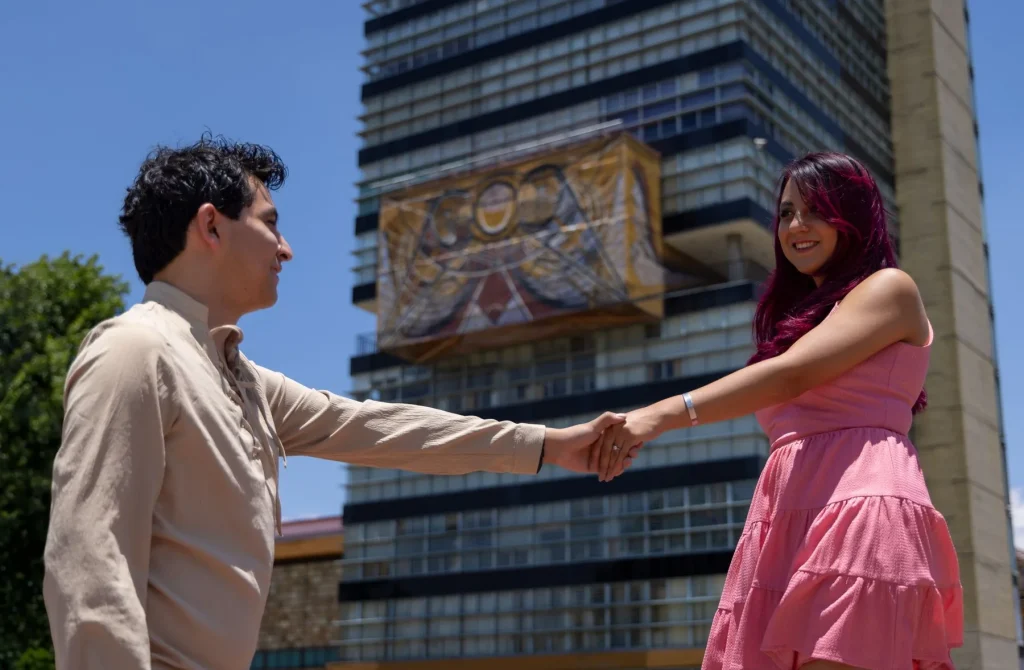
Bachata is a Latin dance celebrated for its sensuality and accessibility. Originating in the Dominican Republic, it features fluid movements and an infectious rhythm. Whether you are a complete beginner or an enthusiast, this discipline offers a unique experience.
This article guides you step by step through mastering the basics. You will discover how to coordinate your steps with the music, improve your technique, and gain confidence. Regular practice is essential for making rapid progress.
To expand your knowledge, read this complete guide. It explains the fundamentals and offers tips tailored to beginners. Follow our advice and let this captivating dance sweep you away!
Introduction to bachata: a vibrant Latin dance
Immerse yourself in the captivating world of a Latin dance born under the Caribbean sun. Bachata enthralls dancers with its unique blend of passion and simplicity, making it ideal for discovering tropical rhythms.
A rich cultural heritage
Emerging in the Dominican Republic in the 1960s, this discipline has its roots in working-class communities. Three iconic instruments define its sound:
- The guitar for nostalgic melodies
- The bongo for vibrant percussion
- The güira for its signature groove
Initially marginalized, bachata has won over the entire world. With more than 500 million streams in 2023, it now rivals major international music genres.
An ideal starting point
Among Latin dances, this discipline stands out for its accessibility. Compared with salsa or kizomba, its simplified rhythmic structure makes it quick to learn.
These are its main advantages for newcomers:
- Natural movements that develop coordination
- A slow-to-medium tempo that lets you progress at your own pace
- A friendly atmosphere in classes and at social events
As this analysis explains, its modern evolution incorporates a variety of influences while preserving its authentic spirit.
Understanding the bachata rhythm
The heart of bachata lies in its distinctive musical structure. Without command of its timing, the steps lose their fluidity. Learning to count the beats is therefore essential.

The 8-count structure (1-2-3, 5-6-7)
Unlike other Latin dances, this discipline follows an 8-count cycle. The count is divided into two parts:
- 1-2-3: side steps to the left
- 5-6-7: side steps to the right
The fourth count, known as the tap, is a pause during which the hips move naturally. To practice, listen to “Obsesión” by Aventura: the guitar clearly marks each beat.
The role of the “tap,” or hip movement
This silent count is not a mistake but a breath in the music. It allows you to:
- Rebalance your body
- Add sensuality to the movements
- Prepare for a change of direction
Many people neglect this step, making the dance look jerky. Use a metronome to work on your timing.
The 3 basic steps for getting started
Mastering the fundamentals opens the door to this captivating discipline. These simple movements create a solid foundation for dancing gracefully. Focus on precision before speed.
1. The side step (left-right)
This basic step follows the 8-count rhythm. Keep your feet 30 cm apart for good balance. First move toward the left side on counts 1-2-3, then toward the right on counts 5-6-7.
2. Forward and backward
This essential variation adds energy. Step forward with your right foot first, then bring your left foot in. Reverse the movement to step backward. Your hips should move naturally with every weight transfer.
3. The step with a bounce
Here, the emphasis is on hip movement. On the fourth count, bend your knees slightly and accentuate the hips. This detail adds fluidity and style.
| Step type | Learning time | Key advice |
|---|---|---|
| Side step | 1 hour | Keep your shoulders steady |
| Forward-backward | 1 hour 30 minutes | Control the length of your steps |
| With a bounce | 2 hours | Isolate the hip movement |
To see these movements in action, the Fuego Latino tutorial provides clear demonstrations. Most students make these basic steps automatic after 2 to 3 hours of practice.
Tip: start slowly in front of a mirror. Check the alignment of your feet and the regularity of your breathing. Fluidity will come with repetition.
Posture and connection with your partner
Proper posture and a subtle connection are the foundations of successful dancing. In bachata, every movement begins in the body and is communicated through the couple via a nonverbal dialogue.

Body position and bent knees
The angle of your arms should remain between 90 and 110 degrees to ensure comfortable leading. Keep your knees slightly bent: this improves balance and fluidity.
Three exercises will help you perfect your posture:
- Stand with your back against a wall to align your shoulders and pelvis
- Practice weight transfers without moving your feet
- Use a mirror to check the angle of your arms
Maintaining harmonious visual and physical contact
Hand pressure should be light (500 to 700 grams), like holding an egg without breaking it. Contact that is too firm restricts movement; contact that is too loose breaks the connection.
Tips for natural interaction:
- Respect personal space (about 50 cm)
- Synchronize your breathing with your partner’s
- Lead with your palms rather than your fingers
If you become out of sync, adjust without speaking. A nod or a smile is often enough to recover the rhythm.
Common beginner mistakes and how to avoid them
Your first steps in this discipline may involve a few missteps. Identifying these mistakes helps you progress more quickly and enjoy yourself more.

Forgetting the fourth count (the “tap”)
A Fuego Latino study found that 73% of beginners neglect this essential pause. Yet the tap gives the dance its character.
Here is how to incorporate it naturally:
- Use the “TAP-TAP” method: whisper the word on every fourth count
- Record yourself with your smartphone to spot missed taps
- Listen to slow songs such as “Propuesta Indecente” to feel the musical phrasing clearly
Stiff hip movements
Many people remain too stiff, especially around the hips. This rigidity prevents the fluidity that characterizes the discipline.
Three effective exercises:
- Practice in front of a mirror while isolating the movement of your pelvis
- Make circles with your hips to slow music
- Alternate sessions with and without shoulder movement
“After one month of targeted corrections, my students improve their fluidity by 40%,” says Marco, a teacher in Paris.
To improve, regularly film your practice. Compare it with videos of professionals to identify differences. Your progress will then become visible and motivating.
Practicing effectively at home
Turning your personal space into a dance studio is an excellent way to improve. With the right methods, you can develop your rhythm and technique without leaving home.
Exercises for practicing rhythm on your own
Start by clearing an area of about 2 × 2 meters. Remove fragile objects and choose a nonslip floor. Here are three simple exercises:
- March in place while counting 1-2-3, 5-6-7
- Use the Dance Rhythm app to visualize the tempo
- Practice the foot movements without music, then gradually add sound
The Pomodoro method works well: 25 minutes of practice followed by a 5-minute break. This helps you stay focused without becoming tired.
Slow music for practice
Choosing suitable songs speeds up your progress. A 15-track playlist featuring music below 100 BPM lets you break down each movement clearly.
Some recommendations:
- “Darte un Beso” – Prince Royce (95 BPM)
- “Te Espero” – Joan Soriano (88 BPM)
- “Carita de Inocente” – Romeo Santos (92 BPM)
“Practicing at slow tempos helps build a solid foundation. Speed will come naturally.”
Take the Fuego Latino #BachataHome challenge. Share your weekly progress to stay motivated. You will see a clear improvement in 30 days.
Remember to warm up your joints before every session. Stretch afterward to avoid muscle soreness. Regular, safe practice delivers the best results.
Improving through classes or workshops
Taking group classes significantly accelerates your learning. According to a Fuego Latino study, students progress 40% faster in a group than they do alone. Shared energy and immediate corrections make all the difference.

Benefits of group classes
Workshops offer unique advantages:
- Immediate feedback between dancers
- Greater motivation from the community
- Exercises suited to different levels
“I overcame my shyness in 3 weeks thanks to the supportive atmosphere.”
Choosing a good teacher
You can recognize a qualified teacher by:
- Their certifications (from the French Dance Federation, for example)
- Their teaching methods adapted to adults
- Their attention to technical details
Studios often offer free trial sessions. Use one to see whether you connect well with the instructor before committing.
Exploring the different styles of bachata
Bachata offers a broad range of rich and varied styles. Each approach reflects a unique culture and sensibility, allowing dancers to find their own form of expression.
Dominican or sensual bachata
Dominican bachata, the original form, features:
- Closer, faster steps
- Less distance between partners (30 to 40 cm)
- Complex footwork
By contrast, sensual bachata, which originated in Spain, emphasizes:
- Fluid, wave-like movements
- A more pronounced physical connection
- Artistic figures
“In Europe, the sensual version accounts for 68% of classes, compared with 22% for the Dominican style.”
Adding variations once you have mastered the basics
After 3 to 4 months of practice, explore these variations to expand your repertoire:
| Style | Distinctive feature | Representative champion |
|---|---|---|
| Moderna | Fusion with urban pop | Daniel and Desiree |
| Traditional | Simple steps, musical accents | Joan Soriano |
Natural progression involves specialized workshops. Schools often offer modules devoted to each style, with instructors such as Marco Zazueta teaching Dominican technique.
Start by adding one new figure each week. Alternate between variations to develop a well-rounded understanding. Mastery comes with time and experience.
Tips for dancing at social events
Your first social event can be a memorable experience if you follow the right advice. These events are the ideal opportunity to put what you have learned into practice in a friendly setting.
Overcoming your initial nervousness
85% of participants prefer to be invited through simple eye contact. To manage stress:
- Practice 4-7-8 breathing (inhale for 4 seconds, hold your breath for 7 seconds, then exhale for 8 seconds)
- Arrive 30 minutes early to acclimate
- Choose slow songs to begin
A pre-event checklist ensures that you are properly prepared:
| Item | Recommendation |
|---|---|
| Clothing | Loose-fitting clothes and smooth-soled shoes |
| Hygiene | Shower and antiperspirant |
| Safety | Anti-blister cream and a bottle of water |
Respecting social conventions
Respect for social etiquette ensures harmonious interactions. Accepted nonverbal signals include:
- A nod to invite someone
- A hand over the heart to decline politely
- A smile to say thank you
“A close-knit community grows from mutual respect among dancers of every level.”
Behaviors that must be avoided:
- Pressuring someone to accept an invitation
- Correcting your partner
- Taking up too much space
Conclusion: your bachata journey starts here
Your rhythmic adventure is about to begin. With these solid foundations, you now have the tools to explore this passion with confidence. Every great dancer began with a first step.
To visualize your progress, Fuego Latino offers summary infographics. They bring together the essential points to remember.
Professionals encourage you to take the plunge: “After three months of regular practice, 90% of our students dance confidently at social events”. Set achievable goals and celebrate every victory.
Ready to begin? Book a free trial class today. Join our online community to exchange advice and best practices. Your musical journey is waiting for you!