
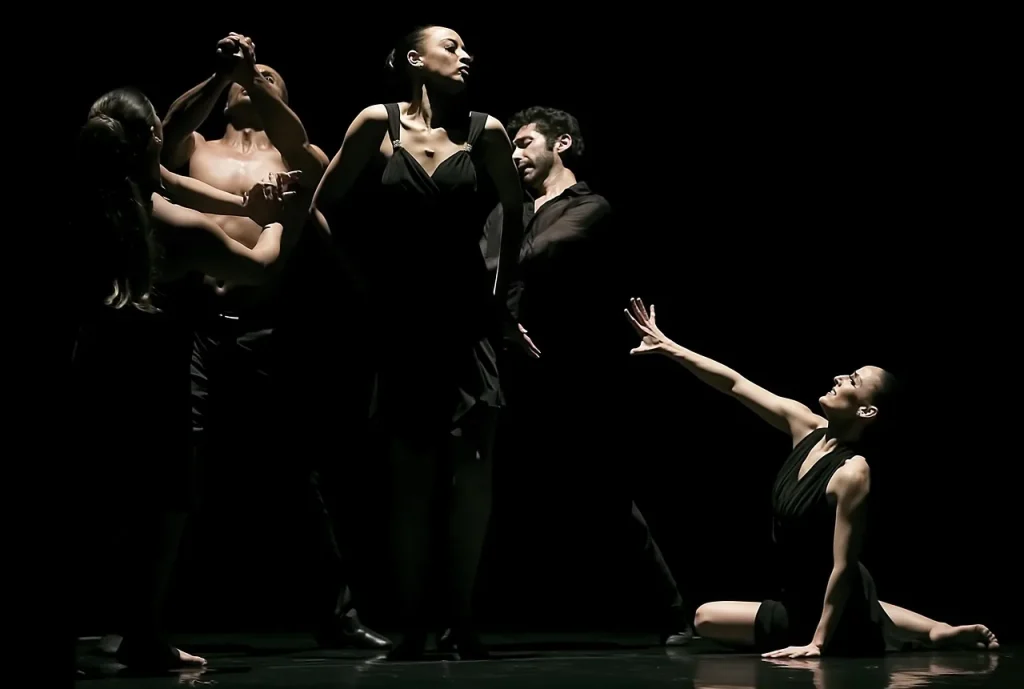
Born in the working-class neighborhoods of the Dominican Republic, this discipline has won over the entire world. Initially regarded as a marginal art form, it has been officially recognized as one of the Latin dances since the 2010s.
Its popularity continues to grow in France. According to the French Dance Federation, the number of practitioners increases by 15% every year. This growth shows its appeal as both a leisure activity and a social pursuit.
Three pillars are essential to thriving in this practice: technique, mutual respect and safety. These elements ensure a harmonious experience, whether in class or at social events.
Whether you are a beginner or an experienced dancer, understanding these fundamentals will help you progress while sharing unique moments. Discover how to master the basics and feel comfortable on the dance floor.
Introduction to bachata and its world
With its captivating rhythm, this practice is attracting more and more enthusiasts in France. Specialist schools are meeting this growing demand with classes suited to every level.
According to the Ministry of Culture, 78% of establishments now offer this option. Beginners account for 60% of those enrolled, demonstrating its accessibility.
The musical structure is based on a tempo of 120 to 144 BPM. Beats 4 and 8 are emphasized, creating a distinctive pulse. Here are a few iconic songs:
- Obsession – Aventura
- Darte un beso – Prince Royce
- Propuesta indecente – Romeo Santos
Unlike salsa (180 to 250 BPM), the slower rhythm makes the steps easier to learn. This difference explains its popularity among newcomers.
| Style | Average BPM | Difficulty level |
|---|---|---|
| Bachata | 120 to 144 | ★☆☆☆☆ |
| Salsa | 180 to 250 | ★★★☆☆ |
At social dances, the atmosphere is warm and inclusive. Participants combine practice with enjoyment, without the pressure to perform.
“Ninety percent of my students feel they have improved within the first month. This creates a natural desire to continue.”
This discipline therefore offers the perfect balance between technical learning and relaxation. It is a combination that explains its meteoric rise.
Essential bachata basics for beginners
Before getting started, understanding the key elements makes learning easier. A methodical approach prevents bad habits and speeds up progress.
The basic step and musical counting
The fundamental movement follows a simple pattern: left-right-left-tap, then right-left-right-tap. Counting the beats (from 1 to 8) helps synchronize the steps with the music.

- Transfer your body weight onto each foot without becoming stiff.
- Practice slowly before increasing the tempo.
- Avoid looking at your feet so that you maintain your balance.
Key positions: open and closed
Dancers have two options:
| Position | Distance | Use |
|---|---|---|
| Closed | 20 to 30 cm | Close-position figures |
| Open | 50 to 70 cm | Turns and arm movements |
The closed position promotes connection, while the open position allows greater creativity.
The role of leading and connection
Good leading relies on subtle pressure (200 to 500 g). Three types of contact work:
- Hand to hand for directions.
- Chest to chest for rotations.
- Forearm against the shoulder blade for tilts.
“The key is to pay attention. A fluid connection grows out of mutual awareness.”
Avoid common mistakes such as pulling on your partner’s arms or anticipating movements. Allow yourself to be guided naturally.
Bachata as a Ballroom Dance: Rules and Etiquette for Shining at Socials
Mastering the art of the dance floor requires a precise understanding of group dynamics. A study by the French Dance Federation reveals that 93% of collisions can be avoided by respecting invisible lanes.
Line of dance and dance lanes
Experienced dancers follow a circular, counterclockwise flow. This unwritten rule prevents collisions while maintaining a speed of 0.5 to 1 m/s.
| Area | Purpose | Advice |
|---|---|---|
| Outer | Traveling | Stay 1 m from the edge |
| Center | Stationary figures | Limit them to 30 seconds |
Adapting to the space and other couples
In a crowded setting, calculate your personal space as follows: extend your arms; if you touch someone, reduce your movements by 50%. Peripheral vision becomes your greatest ally.
- Always pass on the left
- Signal changes of direction with light pressure
- Avoid sudden backward movements
Figures to avoid in crowded settings
Some figures become dangerous when the density exceeds 2 couples/m². These are the main ones to avoid:
- Aerial dips (risk of falling)
- Splits (take up too much floor space)
- 360° rotations (unpredictable radius)
“A harmonious dance floor is like a well-organized highway: everyone maintains their path while remaining attentive to others.”
By applying these principles, you will help create an atmosphere in which enjoyment and safety coexist naturally.
Respecting your partner and the music
A successful experience depends on balancing technique and sensitivity. According to a 2023 Dansomania survey, 68% of practitioners consider failing to respect the music a major obstacle.

Creating an atmosphere of trust and safety
Actively listening to your partner involves subtle cues. Observe their breathing and muscle tension to adjust your lead.
If a mistake occurs, follow this procedure:
- Smile to ease the tension
- Adjust the movement
- Compensate with a simple figure
- Forget the incident
Dancing in harmony with the music
Synchronizing your hips with the offbeats gives your style character. Try this exercise:
- Isolate the bongo rhythm
- Step on the strong beats
- Add body waves on the “and” counts
In advanced classes, work on interpreting different styles, such as sensual or moderna.
“A good dancer experiences the music before dancing to it. Their body becomes the instrument.”
Avoiding corrections and criticism
Adapting your level to that of a beginner requires patience. Here is how to proceed:
| Stage | Action |
|---|---|
| 1 | Simplify the figures |
| 2 | Slow the tempo |
| 3 | Prioritize enjoyment |
An apology should interrupt the dance for no more than 3 seconds. This preserves its flow while maintaining mutual respect.
Good manners on the dance floor
Dance-floor etiquette plays a key role in the collective experience. According to a recent study, 82% of practitioners prefer to be invited with a simple glance rather than verbally.

How to invite someone and politely decline
The traditional phrase “May I have this dance?” remains the most elegant. When declining, maintaining a pleasant relationship requires tact:
| Situation | Appropriate response |
|---|---|
| Tiredness | “Thank you, but I’d prefer to rest for a while.” |
| Different level | “I’m afraid I may not be able to keep up with you.” |
Handling collisions and apologizing gracefully
The safety-square technique limits collisions: imagine an invisible frame around you and your partner. If you bump into someone:
- Stop immediately
- Make eye contact and smile
- Offer a brief apology (“Sorry!”)
Sharing the space and avoiding monopolizing it
Follow the rule of dancing no more than 2 songs with the same partner. To share the space harmoniously:
- Alternate between the center and outer areas
- Adapt your figures to the crowd density
- Leave 50 cm between couples
“Mistakes are part of learning. The Hansei method teaches us to acknowledge and then overcome our missteps.”
Tips for improving and getting noticed
Improving quickly requires a strategic approach and a few practical tips. Whether you want to refine your technique or establish your presence, this advice will guide you.

Adapting to your partner’s level
Quickly assessing the other person’s level allows you to adjust your lead. Look for these clues:
- Accuracy of the basic steps
- Responsiveness to changes in rhythm
- Fluidity of movement
For beginners, simplify the figures and slow down slightly. The goal is to create a harmonious exchange.
Expressing your personality through your style
Your unique style develops in 5 stages:
- Master the technical basics
- Analyze your inspirations
- Experiment with variations
- Incorporate personal elements
- Refine your signature style
Instructors recommend filming your practice sessions to identify your strengths.
Choosing suitable, comfortable clothing
The right clothing highlights your movements. Choose a cotton-elastane blend (95%/5%) for optimal freedom of movement.
Avoid:
- Metal belts (risk of injury)
- Slippery fabrics such as silk
- Overly flowing dresses
“Shoes with leather soles and heels measuring 5 to 7 cm provide stability and elegance.”
Do not forget hygiene: a neutral deodorant and mouthwash ensure comfort and discretion.
Conclusion: the spirit of bachata at social dances
More than a simple activity, this practice brings people together through rhythm. With 97% of dancers viewing it as a form of social connection, its essence lies in shared enjoyment. Specialist social dances have increased by 22% since 2020, demonstrating its appeal.
Respect, adaptability and listening to the music form the basis of a successful experience. Younger generations are simplifying the conventions and even incorporating digital elements. “I used to feel stressed. Now it’s my escape,” says Jean, 28, who took it up a year ago.
The FFD network of certified schools provides an ideal setting in which to begin. Give in to the desire to try it: many studios offer a free first class. A world of connections and enjoyment awaits you.