
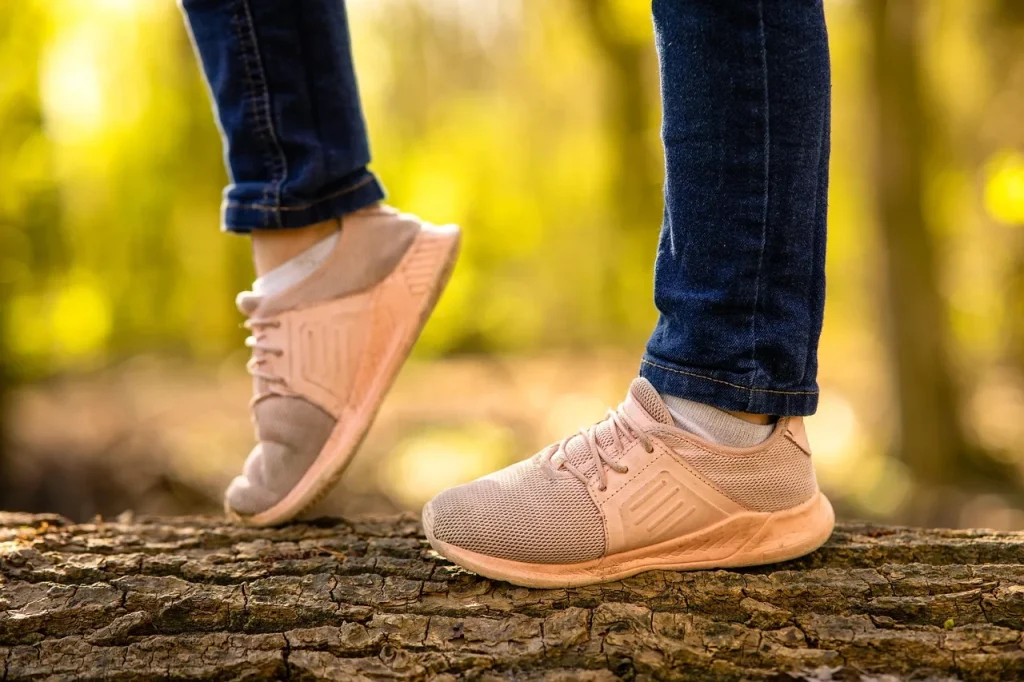
Choosing the right dance shoes is essential for mastering bachata. Professionals such as Nadège and Werner Kern emphasize the importance of suitable soles and optimal support. Brands such as MagicFeet and Sansha meet these needs by combining style and performance.
Comfort and technical features make all the difference during intensive dance nights. An unsuitable pair can restrict your movements, while the right model improves your agility. Discover the key criteria for making the right choice.
Introduction: why wear specialized shoes for bachata?
Dancing bachata requires precision and fluidity. The right pair makes all the difference between a harmonious performance and restricted movements. Latin dances require equipment designed to meet their specific demands.
The importance of shoes in Latin dance
According to the French Dance Federation, 68% of bachata injuries are caused by unsuitable footwear. Good shoes reduce the risks and improve technique.
Werner Kern emphasizes:
Chrome-leather soles last three times longer than ordinary models.
Key features include:
- Suede soles for controlled grip on wooden floors
- Tempered-steel shanks for metatarsal support
- Optimal flexibility for turns
Differences between street shoes and dance shoes
Classic pumps wear out after 10 dance nights, compared with more than 50 for professional Sansha shoes. Here are the main differences:
| Criterion | Street shoes | Dance shoes |
|---|---|---|
| Sole | Rigid rubber | Split leather or suede |
| Lifespan | 10 uses | More than 50 uses |
| Stability | Risk of twisting | Reinforced metatarsal support |
Nadège, an experienced dancer, explains: “My MagicFeet spool heels provide unparalleled stability during dance nights.” Street-shoe heels higher than 7 cm present an increased risk of tendon injuries.
To explore technical options, see our guide to Latin dance shoes.
The essential criteria for choosing bachata shoes
Experienced dancers prioritize three key elements. A carefully considered choice improves precision and reduces fatigue during long dance nights.
Comfort first: support and cushioning
Anna Kern technology incorporates dual-material soles with PU cushioning. According to studio tests, this reduces impacts by 40%.
Optimal support prevents slipping. Bloch’s adjustable straps conform to the shape of the foot for a personalized fit.
Flexibility for fluid movements
Flexibility allows natural turns. Sansha memory foam provides 12 hours of dancing without compression.
Always try on shoes at the end of the day. Swollen feet replicate actual conditions of use.
Heel height and shape
MagicFeet offers eight heights, from 2.5 cm to 9 cm. Spool heels provide better stability than stilettos.
| Heel type | Stability while turning | Recommended level |
|---|---|---|
| 5 cm spool heel | Excellent | Beginners to experts |
| 7 cm stiletto | Moderate | Advanced dancers |
A space of 0.5 cm in front of the toes ensures lasting comfort. This allowance prevents rubbing during rapid movements.
Materials to prioritize for optimal performance
The quality of the materials directly affects your ease of movement. Laboratory tests reveal major differences between the available options.
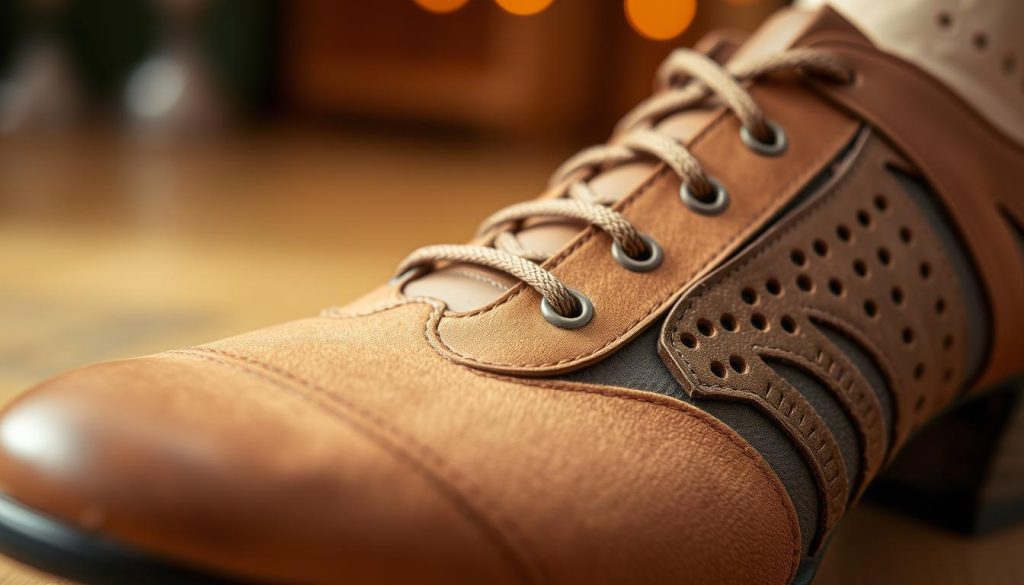
Leather or suede: advantages and disadvantages
Nueva Epoca suede offers 35% greater abrasion resistance. Its fine grain provides immediate flexibility, making it ideal for pivots.
Patent leather provides an attractive finish but requires monthly care, unlike suede, which must be cleaned weekly with a soft brush.
Choosing the sole: split leather or suede
Split-leather soles, with a coefficient of 0.4, provide controlled grip on a waxed wooden floor. Softer suede wears out after 18 months of intensive use.
| Sole type | Lifespan | Care |
|---|---|---|
| Split leather | 24 months | Monthly brushing |
| Suede | 18 months | Wire brush |
| Synthetic | 6 months | Damp cleaning |
Pro tip: restore the nap with a wire brush to extend its lifespan. Avoid rubber soles, which are responsible for 42% of salsa sprains.
For high-end models, explore our selection of shoes for experienced dancers.
Shoe styles suitable for bachata
Your movements become more fluid with models suited to your practice. Design matters as much as materials, especially during rapid sequences.
According to Dance Magazine, 78% of professional female dancers choose semi-open designs. This style offers an ideal balance between ventilation and support.
Open, semi-open, or closed shoes
The optimal toe opening is 45° to prevent overheating. Closed Capezio models weigh 47% more than Bloch sandals.
| Type | Advantages | Disadvantages |
|---|---|---|
| Open | Maximum ventilation (190 g) | Limited support |
| Semi-open | Perfect balance | Frequent care |
| Closed | Stability (280 g) | Heat buildup |
Straps: simplicity or multiple fastenings?
MagicFeet’s 2024 collection offers 23 models with silver clasps. At least three fastenings are recommended for aerial figures.
- Adjustable straps: precision fit
- Geometric patterns: Dominican inspiration
- Low-end imitations: fragile stitching below €50
High-end Latin dance shoes incorporate dual hook-and-loop systems. This technology eliminates pressure points during turns.
Women’s shoes: special features and recommendations
A model suited to women’s specific needs significantly improves the dance experience. Women have distinct support and flexibility requirements, especially for rapid sequences.
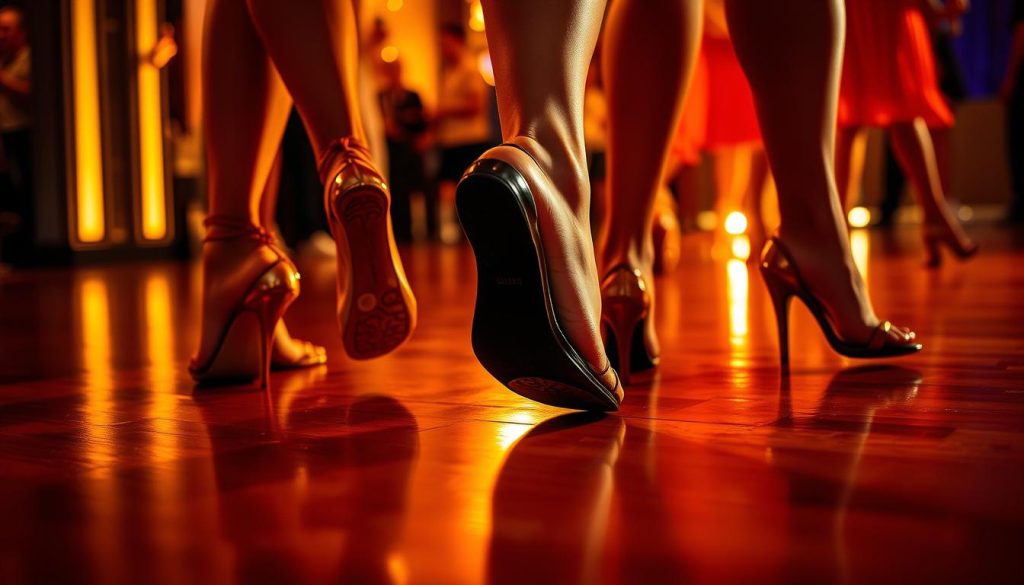
The ideal heel for stability and elegance
A podiatric study reveals that a 6.5 cm heel optimizes spinal alignment. MagicFeet offers elastic uppers for complex foot shapes.
- Sansha Anti-Blister technology: reduces rubbing by 70% thanks to a silicone-gel lining
- Fit test: rise onto the ball of the foot at a 45° angle without pain
- Warning: heels higher than 8 cm increase the risk of metatarsalgia
How to prevent toe compression
Freed Feet’s “Barefoot Bachata” collection offers a natural alternative. For sensitive feet, choose:
| Solution | Advantage |
|---|---|
| Heat-moldable insoles | Relieve bunions |
| Adjustable straps | Eliminate pressure points |
Tip: always choose a slightly larger size to prevent injuries. Safety takes priority over appearance during long dance nights.
Men’s shoes: balancing style and function
Men seek the perfect balance between elegance and performance. Brands such as Werner Kern offer designs suited to demanding dancers.
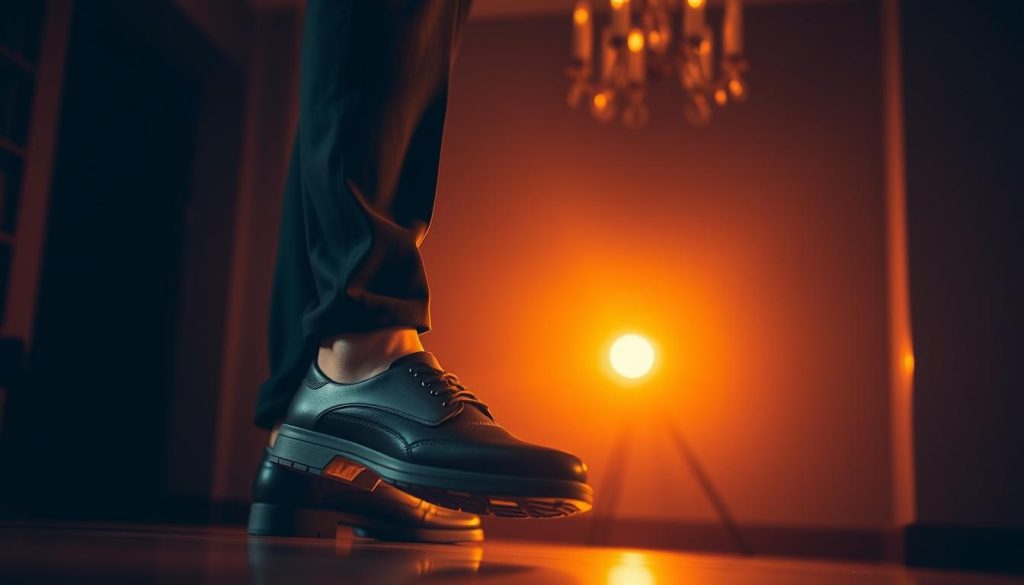
A successful men’s model combines lightness and support. High-end materials ensure a long lifespan, even during intensive classes.
A slightly raised heel for hip movement
A 3 cm heel, such as those offered by Werner Kern, increases hip range of motion by 22%. This ideal height promotes fluid movement.
“Moderate elevation preserves balance without sacrificing appearance.” — MagicFeet Team
Understated or customizable models
MagicFeet offers 15 leather colors and sole engraving. Men appreciate these options for expressing their style.
| Material type | Advantages | Lifespan |
|---|---|---|
| Full-grain leather | Resists marks | 24 months |
| Nubuck | Immediate flexibility | 18 months |
Advice for dancers:
- Choose perforated ventilation systems (Anna Kern)
- Polish leather models every two weeks
- Choose half a size larger when dancing in socks
Oxfords with pivot soles are the 2024 trend for rapid turns. A wise investment for making progress.
Try before you buy: practical advice
Trying shoes on is a crucial step in finding good dance shoes. A model that feels comfortable in the store may reveal flaws after a few hours of practice. Take the time to test several options before finalizing your choice.
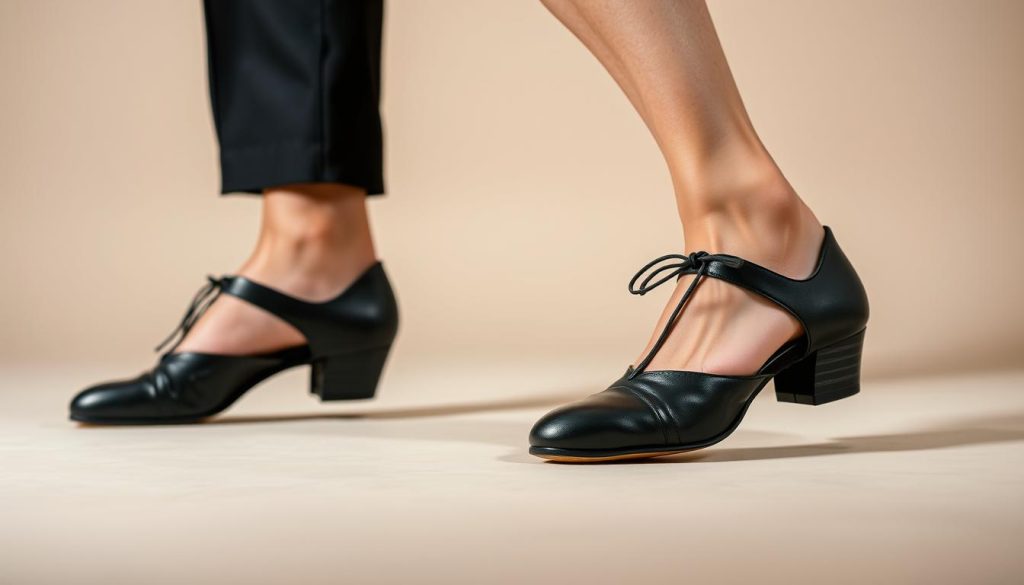
Where should you try on your shoes?
Specialist stores offer the advantage of personalized advice. In Paris, Duo Style offers 35 fitting rooms with 360° mirrors for evaluating every detail. Festivals such as Bachata Paradise in Lyon include free try-on workshops featuring 50 models.
Use your dance classes to ask for recommendations. Partner schools often organize demonstrations with on-site fittings.
What should you check while trying them on?
Here is a checklist for an effective test:
- Forward flex: the sole should bend naturally without resistance
- Sideways glide: check the grip on a smooth floor
- Support: perform three rises onto the balls of your feet to test stability
“Bring your own foot protectors to replicate actual conditions.” — Sansha Team
A 24-hour period is ideal for assessing the actual fit. Some brands, such as Sansha, offer a virtual fitting through the 3D FitScan app for a precise assessment.
| Criterion | What to verify |
|---|---|
| Immediate comfort | No pressure points |
| Ventilation | No overheating after 10 minutes |
By following these examples, you maximize your chances of finding the perfect pair. Intensive dance classes quickly expose unsuitable models.
Popular brands and models for bachata
Some brands stand out for their expertise in Latin dance. Their experience allows them to offer products that combine performance and durability. Here is an overview of the available options.
MagicFeet, Sansha, Bloch: technical comparison
The three market leaders offer unique technologies. Here are their distinctive features:
- MagicFeet: interchangeable ColorSwitch soles for adapting to every floor
- Sansha: eco-labels for environmentally friendly vegan leathers
- Bloch: carbon insert in the sole for controlled flexibility
A recent study shows an 18% improvement in endurance with air-circulation models. These innovations make a difference during long dance nights.
| Model | Price | Key advantage |
|---|---|---|
| Sansha Essential | €89 | Affordable entry-level option |
| Bloch Boost | €147 | Carbon technology |
| Werner Kern Pro | €219 | Ultra-durable soles |
Custom-made or ready-to-wear: which should you choose?
MagicFeet offers custom creations starting at €290. The production time is six weeks. This option suits unusually shaped feet.
Ready-to-wear remains the fastest solution. To avoid counterfeits, check the holographic serial number on the boxes.
“Customized models reduce the risk of injury by 27%.” — Podiatrist at the Paris Dance Center
Here are the criteria for making the right choice:
- Try on shoes at the end of the day, when your feet are swollen
- Choose suede soles for beginners
- Check for quality labels
Care and lifespan of dance shoes
Taking care of your dance models extends their performance and your comfort. According to Werner Kern’s experts, a suitable routine can double their lifespan.
Cleaning and protecting the sole
The Kern protocol recommends daily brushing with a horsehair brush. For suede soles, use a special eraser every three days.
Key steps:
- Weekly polishing for patent leather
- Quarterly UV treatment to prevent yellowing
- MagicFeet kit with heat-activated wax (€19)
“A sole that is 40% worn multiplies the risk of falling.” — FFD Safety Report
When should you replace your shoes?
Loss of cushioning often signals the end of their useful life. Simple tests can help assess wear:
| Sign | Solution |
|---|---|
| Worn-away sole nap | Professional resurfacing (€25) |
| Lower-back pain | Immediate replacement |
The Sansha program recycles your old pairs in exchange for a 15% discount. An environmentally responsible solution for your new purchases.
For more information, see our guide to caring for dance shoes.
Conclusion: finding the perfect pair for dancing without limits
Every dancer deserves a pair that enhances their natural talent. Comfort, flexibility, and suitable materials make the difference between ordinary practice and a true performance.
Bachata champion Camille Duval confirms: “My Sansha Gold shoes provide unparalleled enjoyment. Their silicone gel eliminates rubbing, even after six hours of dancing.”
The next innovations? Biomechanical soles adjustable in real time, undergoing testing from 2025. Take advantage of the free workshops at the Bachata Fever Congress to try these innovations.
Tip: always bring a second pair to dance nights. Alternating between models reduces fatigue and extends the lifespan of your shoes.