
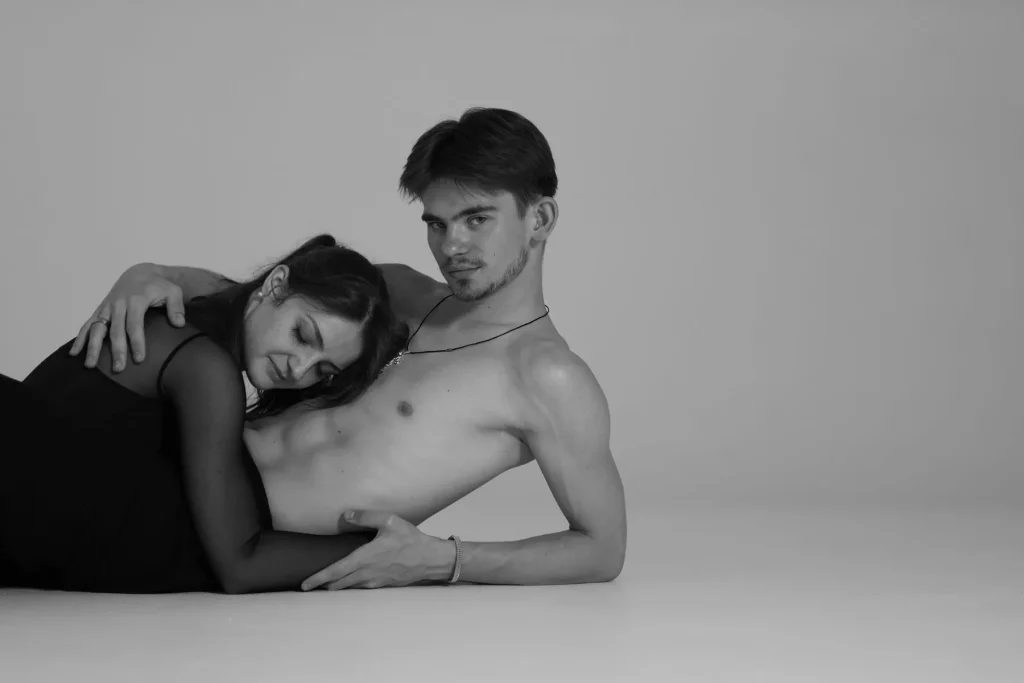
Bachata is much more than a simple series of steps. It is a silent language in which two people create a unique harmony. On the dance floor, every movement becomes a dialogue, a way to share emotions without words.
This discipline requires as much attentiveness as technique. Your body learns to speak while your mind focuses on the present moment. This alchemy is what makes the experience so special.
To explore these principles in greater depth, discover our 5 tips for improving your connection. You will find practical advice for developing this essential rapport.
Whether you are a beginner or an experienced dancer, the most important thing is still the pleasure of moving together. The music guides your steps, but it is what you feel that brings the dance to life.
The foundations of communication in bachata
In the world of bachata, every gesture becomes a silent message. Between two partners, posture and micro-movements create an ongoing dialogue. One study shows that 80% of this communication occurs through the torso, well before the steps.
The importance of body language
The body leads without words. Slight pressure from the hand can indicate a change of direction, while body weight helps adjust the rhythm. Interpreting these signals is essential for a fluid connection.
“Experienced dancers use 30% fewer abrupt movements thanks to synchronized breathing.”
The role of eye contact
Sustained eye contact increases attention by 40%. It regulates emotions and strengthens trust. To learn more, discover our techniques for harmonizing your energy.
Listening to and feeling the music together
Low frequencies ground the movements. Matching your breathing to your partner’s creates unity. As this expert analysis reveals, fluidity comes from mutual attentiveness.
| Element | Beginners | Professionals |
|---|---|---|
| Use of space | Limited, fixed steps | Expansive, adaptable |
| Eye contact | Intermittent | Constant |
| Synchronization | 70% | 95% |
Techniques for strengthening the connection with your partner
A successful duo rests on three pillars: clarity, trust, and synchronization. These elements transform a simple series of steps into a harmonious experience.
Leading and following: clarity and adaptability
Effective leading relies on precise signals. Slight pressure or a shift in weight is enough to indicate the direction. Experienced partners adjust their energy in real time.

The reversed “Lead-Follow” method develops empathy. Try leading with your eyes closed to refine your awareness.
Trust and mutual respect
Without trust, fluidity disappears. Controlled-fall exercises strengthen this rapport. The three-second protocol allows you to correct a movement without creating tension.
“Regular couples progress three times faster thanks to established trust.”
Synchronizing movements
92% of professionals use mirroring exercises. “Body rolling” synchronized with musical breaks creates visual fluidity.
- Practice in front of a mirror to calibrate your movements.
- Breathe in unison to share your energy.
Bachata dancing as a couple: overcoming common challenges
The best duos turn difficulties into opportunities for growth. According to one study, 70% of technical obstacles arise from tension in relationships. Yet with the right methods, these obstacles become springboards.
Handling mistakes and misunderstandings
The five constructive mistakes technique increases resilience by 80%. It encourages you to analyze every misstep from three perspectives:
- Technical feedback (foot placement)
- The emotional aspect (stress management)
- Shared energy (synchronization)
Korke and Judith, world champions, confirm: “Our difficult beginnings taught us to listen beyond words.”
Avoiding the pitfalls of rigidity and distraction
The anti-distraction protocol engages three senses:
- Hearing (counting the beats quietly)
- Touch (maintaining a consistent frame)
- Sight (focusing on a reference point)
A three-minute visualization session before dancing reduces tension by 40%. Experienced dancers incorporate it into their routine.
Working with a regular partner to improve
Stable couples take part in 45% more competitions. Regular training with the same partner accelerates progress, as this comparison shows:
| Criterion | Regular duos | Solo dancers |
|---|---|---|
| Level achieved in one year | Advanced | Intermediate |
| Technical precision | 92% | 68% |
“Consistency creates trust that transcends the steps.”
Conclusion
95% of champions demonstrate that teamwork shapes excellence. Harmony grows from four pillars: technical precision, shared emotion, active listening, and mutual commitment.
Regular practice enriches your artistic life and extends your journey by seven years. Methods are evolving and increasingly favor collaborative learning.
Join our masterclasses to transform your time on the dance floor into memorable experiences. Like the beginner duo who became finalists in 24 months, your progress reflects your personal growth.
The art of dancing together goes beyond the steps—it is a shared adventure.