
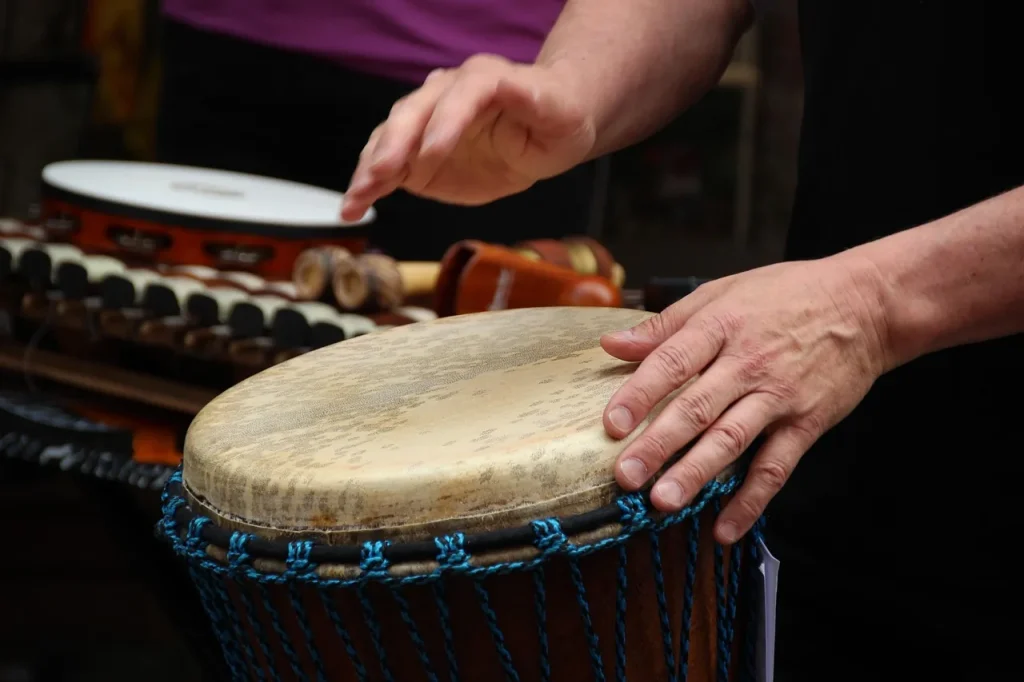
The djembe is a Manding percussion instrument carved from a chalice-shaped wooden shell. A stretched goatskin covers the top and creates the resonating chamber. Its silhouette resembles the mortar used to pound grain in West Africa.
This drum accompanies celebrations, weddings and local rituals. It is played in polyrhythmic ensembles in which each hand produces precise tones. Learning it requires patience and practice to master the bass, midrange and high notes.
In this article, we explore its history, its wooden construction and drumhead, as well as playing technique. To learn more, read our complete guide to the djembe.
What is a djembe and what is this instrument used for?
Originating in West Africa, this drum has established itself over the centuries as both a musical tool and a cultural symbol. This type of percussion instrument has existed for more than 700 years and has undergone significant development.
The chalice shape, often carved from a single trunk, provides remarkable sound projection. This silhouette defines the tone and depth of both the low and high notes.
Highly versatile, it produces a broad range of sounds. Percussionists adapt their technique to create powerful bass notes, rounded tones and sharp slaps.
The drum remains at the heart of celebrations, rituals and community gatherings, connecting tradition with modern practices.
- Sound projection provided by the chalice shape.
- A central role in collective percussion ensembles.
- Requires dexterity to vary the tones.
| Aspect | Characteristic | Effect on sound |
|---|---|---|
| Shape | Chalice carved from wood | Projection and resonance |
| Drumhead | Traditionally made from goatskin | Rich harmonics |
| Technique | Fingers and palms | Variety of tones |
To learn more, read our complete guide to the djembe.
Anatomy and composition of the African drum
The balance between the wood and the drumhead determines the tone color and projection of the sound.
The wooden shell
The shell is carved from a single piece. Its height generally ranges from 45 to 65 cm. Its diameter is approximately 25 to 35 cm.
Woods such as lengue, iroko, mahogany and dugura are used. The choice of wood affects resonance, vibration duration and durability.
The drumhead and tensioning system
The goatskin covers the top. It is tightened using ropes connected to three iron rings. This modern assembly replaces wooden pegs.
The tension of the drumhead is adjusted to set the pitch. The ropes allow precise tensioning despite changes in climate.
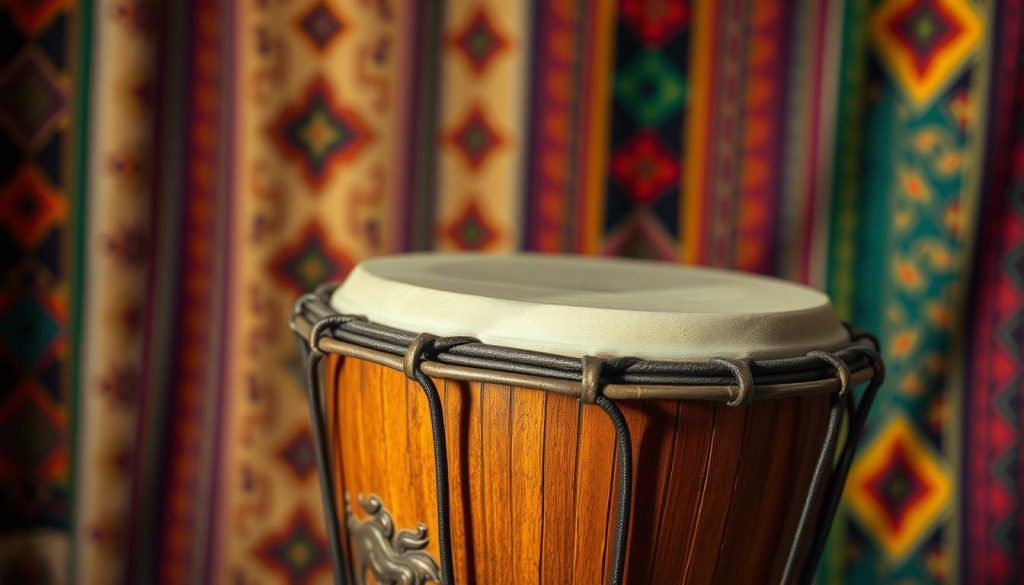
“The drum’s voice is born in the middle section before being projected through the flared foot.”
- The foot acts as a natural amplifier for the bass notes.
- The voice is the area where the sound takes shape.
- Seke-Seke, a type of metal ear, add harmonic vibrations.
| Component | Material | Acoustic role |
|---|---|---|
| Shell | Lengue, iroko, mahogany | Resonance and vibration duration |
| Drumhead | Goatskin | Pitch and harmonic richness |
| Tensioning system | Iron rings and ropes | Stable drumhead tension |
| Foot | Carved wood | Bass projection and amplification |
To explore its construction and history in greater depth, read our guide to the djembe.
Historical origins and cultural evolution
The roots of the djembe date back to the 13th century, at the heart of the Manding Empire founded by Sundiata Keita.
This drum spread through Guinea, Mali and Burkina Faso, where it formed part of local polyrhythmic ensembles.
During the 1950s, the African ballets led by Fodéba Keïta provided an international showcase. These tours gave the world its first organized presentation of the rhythms and dances.
“The national ballets transformed a regional heritage into an international cultural symbol.”
The worldwide expansion of the djembe
The 1980s marked a turning point. Masters such as Mamady Keïta and Famoudou Konaté established learning centers in Europe, the United States and Japan.
- Djembefolas shared their techniques and teaching methods.
- African ballets paved the way for this success.
- The tradition adapted to modern stages without losing its identity.
To learn more about its origins and history, read our origins and history guide.
Mastering striking techniques and sounds
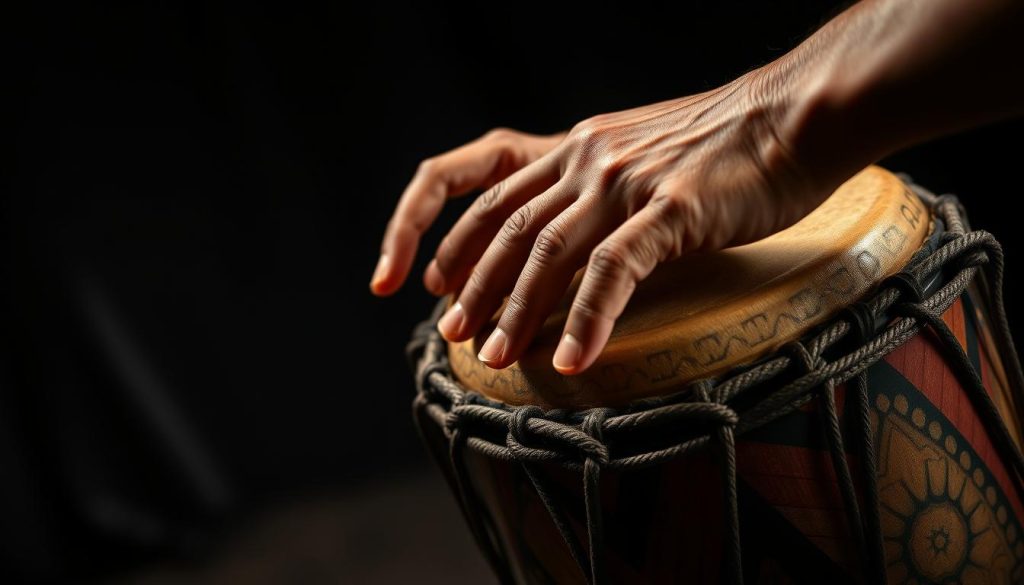
Mastering the sounds depends on precise hand movements and knowing where to strike.
The technique begins with hand position. A proper stroke varies according to where it lands on the drumhead.
The bass
The bass is produced by striking the center of the drumhead with the whole hand, keeping the palm open and the thumb raised. This movement creates a low, deep sound.
The tone
The tone is produced at the edge of the drumhead. Strike it with the fingers held together, without allowing the palm to touch the surface. The resulting sound is full and rounded.
The slap
The slap produces a high-pitched sound. Use the tips of the fingers, often held in a slightly cupped shape, to strike the edge. The tone is dry and percussive.
“Sound quality depends as much on technique as on drumhead tension and the shape of the shell.”
The ropes control the tension of the drumhead, thereby changing its vibrations. High-quality djembes make it easier to learn these nuances.
| Technique | Area | Resulting sound |
|---|---|---|
| Bass | Center of the drumhead | Low, deep sound |
| Tone | Edge — fingers held together | Full, rounded sound |
| Slap | Fingertips — edge | High, dry sound |
To improve, repeat the exercises and read our practical guide to playing techniques.
The role of the djembe in modern music
On today’s stages, this African drum often interacts with electric guitars and keyboards.
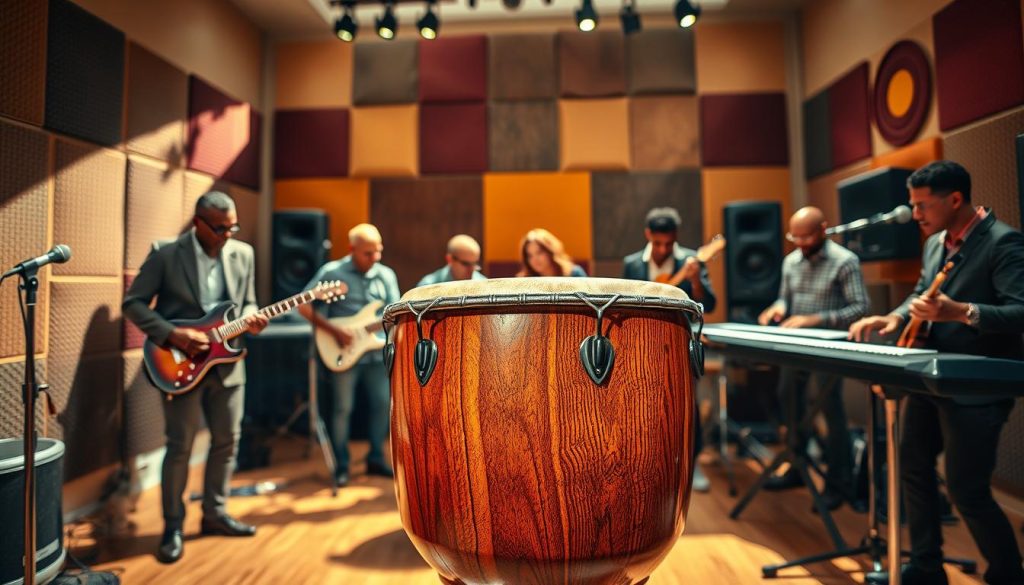
In 2002, Noel “Toca” Rivera demonstrated that percussion could carry the rhythm section in pop-rock duos alongside Jason Mraz.
Since 2010, artist Christina Goh has used the drum as the rhythmic foundation of her albums. She blends blues and Afro-rock, sometimes replacing the drum kit with it.
Versatility remains its strength: the wooden shell and drumhead provide an acoustic warmth sought after in the studio.
“The fusion of traditional percussion and modern instruments creates a new sonic dynamic.”
| Use | Context | Advantage |
|---|---|---|
| Stage | Pop-rock, blues | Rhythmic presence and mobility |
| Studio | Acoustic recordings | Natural warmth of the drumhead and wood |
| Solo project | Afro-rock, folk | Central rhythm replacing the drum kit |
To learn more about its origins and history, read our origins and history guide.
Conclusion
In summary, the value of the djembe lies in its ability to connect tradition and creativity. This article shows how its carved shape, the choice of wood and the quality of the drumhead define its voice.
Mastery requires respecting the tension applied by the ropes and learning the striking techniques. Investing in a well-made model makes progress easier.
Djembes remain highly valued instruments both on stage and in workshops. To explore the cultural context and craftsmanship associated with instrumental heritage, read this guide to West African instrumental heritage.