
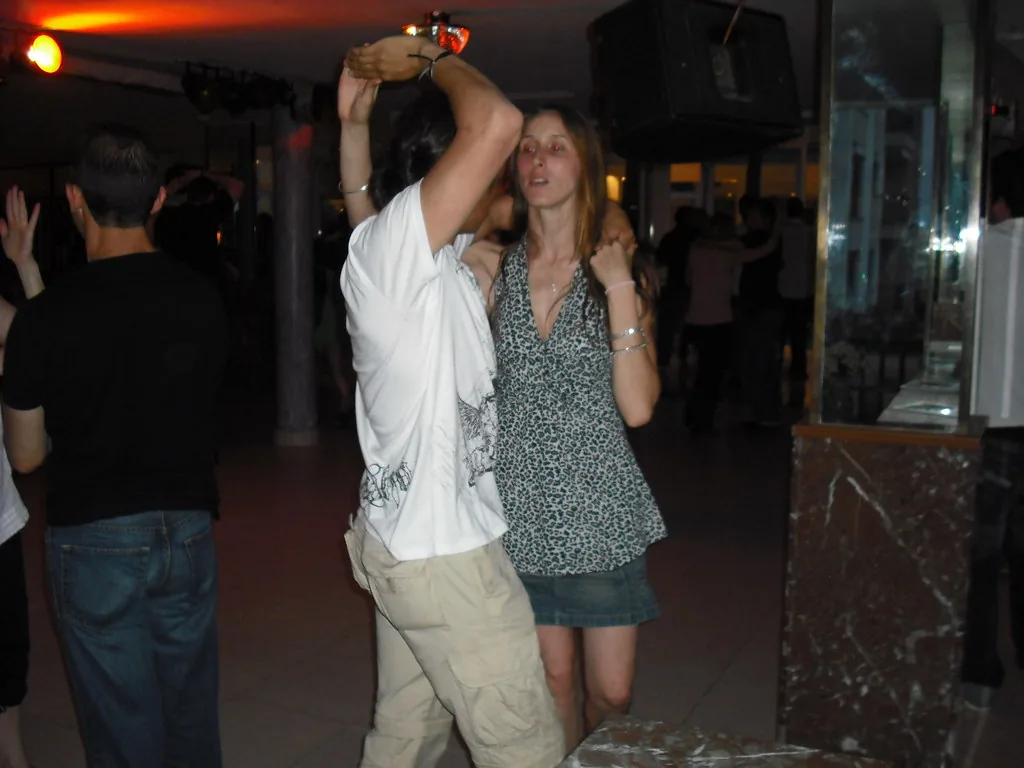
Welcome to our professional beginner’s guide to partner salsa. If you are here, it is because you want to learn the basics of salsa and the techniques you need to become an experienced dancer.
Salsa is an energetic and sensual partner dance that can be enjoyed in many settings, whether at dance parties, Latin music festivals, or dance clubs. Throughout this guide, we will help you learn the basic steps, advanced figures, and techniques needed to lead and follow your partner in perfect harmony on the dance floor.
Our guide was written by a professional salsa instructor with extensive experience teaching this dance. It provides detailed instructions and practical advice to help you learn quickly and effectively.
So, are you ready to put on your dance shoes and start learning partner salsa? Follow our professional guide, and you will be on the dance floor in no time!
Basic Partner Salsa Steps
Salsa is an energetic partner dance that requires a high degree of coordination between partners. Before you can perform advanced figures, you must first master the basic steps. These will give you a solid foundation and help you feel comfortable on the dance floor.
The basic steps of partner salsa are fairly simple, but they require close coordination between partners. Here are the instructions for performing them:
| Salsa Step | Description |
|---|---|
| Basic step to the left | Start with your left foot. Move your left foot to the left. Place your right foot next to your left foot. |
| Basic step to the right | Start with your right foot. Move your right foot to the right. Place your left foot next to your right foot. |
| Forward step | Start with your left foot. Move your left foot forward. Shift your weight onto your left foot. Bring your right foot next to your left foot. |
| Backward step | Start with your right foot. Move your right foot backward. Shift your weight onto your right foot. Bring your left foot next to your right foot. |
It is important to remember that salsa is a dance for two and that the steps are performed in coordination with your partner. You must trust your partner and maintain a close connection throughout the dance.
To see the basic partner salsa steps demonstrated visually, watch the video below:
By practicing these basic steps and working on your coordination with your partner, you will be able to progress to more advanced partner salsa figures.
Partner Salsa Figures
Partner salsa offers a variety of advanced figures for those who have mastered the basic steps. Different choreographed sequences can be performed as a couple to impress your dance partner and the audience.
To begin, try combining the basic steps with simple turns or position changes. You can then move on to more advanced figures, such as partner spins, passes, and double turns.
| Figure | Description |
|---|---|
| The single turn | The leader brings their partner to the side with a basic turn, spins them in place, and then returns them to the starting position. |
| The pass | The leader guides their partner forward, passes under their arm, and brings them back to the starting position. |
| The double turn | The leader guides their partner through two complete turns before returning them to the starting position. |
These figures may seem intimidating at first, but with practice and patience, you will be able to perform them with ease and elegance.
Remember to maintain a close connection and stay synchronized with your partner while performing the figures. Communication is the key to smooth, harmonious partner dancing.
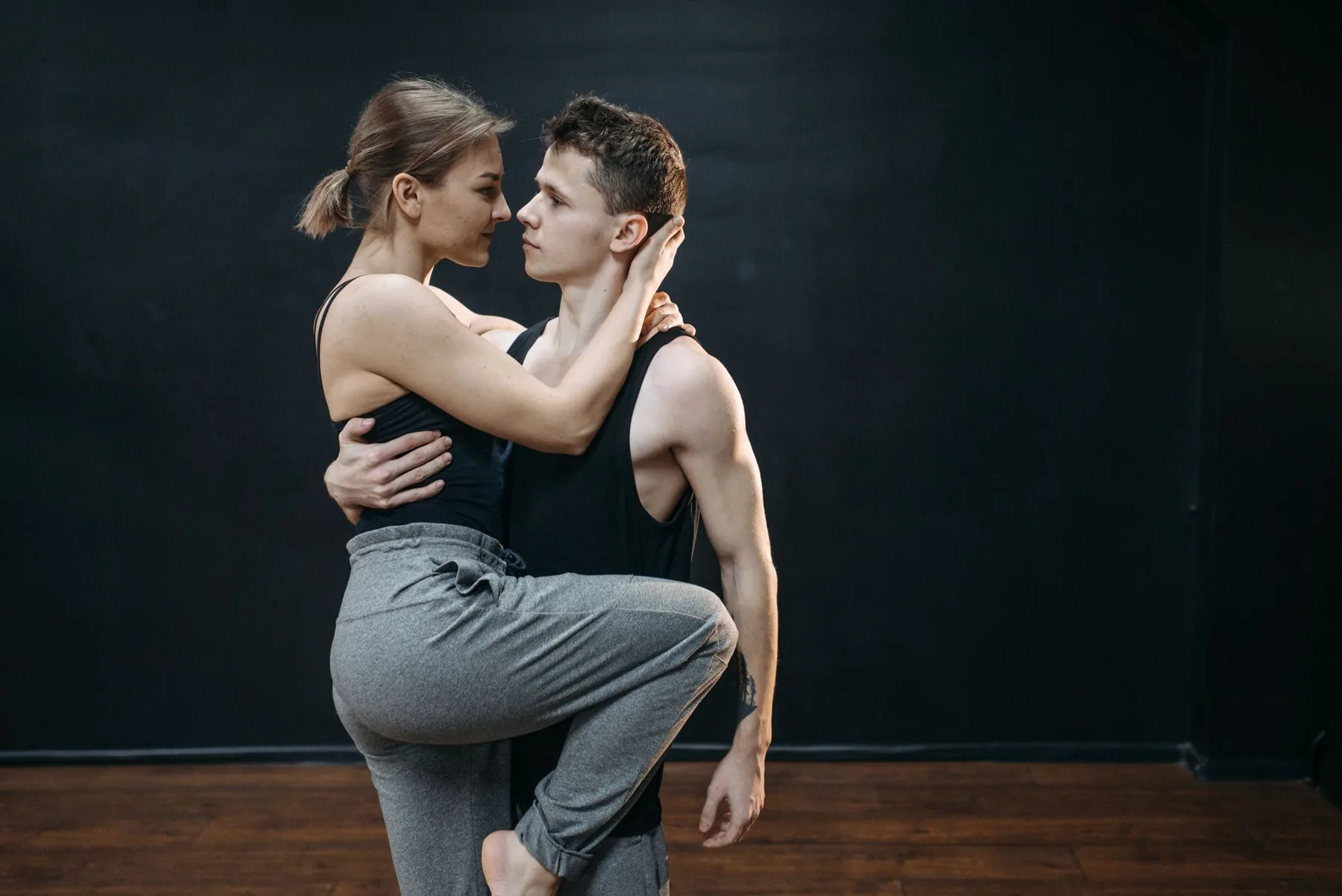
Synchronization and Connection in Salsa
Salsa is a partner dance that requires perfect synchronization and connection between partners. To succeed on the dance floor, it is essential to understand the importance of nonverbal communication and coordination with your partner.
To improve your synchronization in salsa, you can start by practicing breathing and relaxation exercises with your partner. This can help you feel more comfortable and build a better connection with your dance partner.
Next, you can learn to use your body to communicate with your partner. Use clear, precise signals to indicate the movements you are about to perform. Nonverbal communication is the key to synchronization in salsa.
It is also important to follow the rhythm of the music to dance salsa successfully. Listen carefully to the music and try to feel it in your body. If you have trouble synchronizing your movements with the music, try slowing down the tempo and focusing on the basic steps.
Finally, regular practice with your partner is essential for improving your synchronization in salsa. Try to dance as often as possible and vary the styles of music to improve your sense of rhythm.
Salsa Leading Techniques
Leading is an essential skill for the salsa leader. The leader must be able to guide their partner through complex movements using clear nonverbal communication. Here are a few salsa leading techniques:
- Posture: good posture is the key to effective leading. The leader should keep their body upright and relaxed while maintaining eye contact with their partner. They should also maintain an appropriate distance to allow for optimal physical communication.
- Pressure: the leader should apply light pressure with their hands to guide their partner’s movements. This pressure should be firm enough to be felt but gentle enough not to jerk their partner around.
- Body weight: the leader can also use their body weight to guide movements. They should be able to transfer their weight smoothly from one foot to the other and use their own body to communicate with their partner.
It is important for the leader to remember that physical communication should be subtle and gentle to allow for a harmonious dance with their partner. Avoid aggressively pulling or pushing your partner, as this can cause injury and a loss of trust.
Leading in salsa also requires a good understanding of the music. The leader must be able to synchronize their movements with the rhythm of the music to make the dance look elegant. They should remain attentive to their partner’s signals to ensure that they are always in sync.
Finally, effective leading also involves good verbal and nonverbal communication. The leader must be able to communicate their intentions clearly to their partner through nonverbal cues, such as head movements or glances. They must also be able to give clear verbal instructions to guide their partner through the movements.

Partner Turns in Salsa
Partner turns are an essential component of salsa. They add energy and flair to the choreography, but they can also be among the most difficult movements to master. Here are a few tips to help you add partner turns to your salsa repertoire.
Step 1: Master Basic Turns
Before attempting partner turns, you need to master basic salsa turns. These are 360-degree movements that you perform individually, using your body weight to pivot. Once you have learned the basic turns, you can combine them with more advanced partner turns.
Step 2: Lead and Follow
To perform partner turns successfully, it is important for the leader and follower to be perfectly synchronized. The leader must make clear, precise movements and gently guide their partner through each step. The follower must remain attentive and respond to the leader’s signals while maintaining visual and physical contact and interpreting the movements accurately.
Step 3: Partner Spins
Partner spins are more advanced rotational movements in which both partners pivot their bodies at the same time. This is a difficult movement to perform, but it can create a spectacular effect on the dance floor. To execute partner spins successfully, you must be able to maintain your balance while performing coordinated rotational movements with your partner.
| Movement | Description |
|---|---|
| Single partner spin | Both partners pivot their bodies in the same direction from a face-to-face position. |
| Double partner spin | Both partners pivot their bodies in opposite directions and then return to face each other. |
| Triple partner spin | Both partners repeatedly pivot their bodies in different directions, creating a swirling effect. |
Step 4: Practice Regularly
As with any dance movement, regular practice is essential if you want to become an expert at partner turns in salsa. Try to practice regularly with a dance partner to improve your synchronization and coordination. You should also record yourself dancing so that you can review and correct your movements. With practice and perseverance, you will soon be able to add breathtaking partner turns to your salsa dancing.
Conclusion
In conclusion, learning to dance salsa with a partner is a unique experience that offers many benefits. In addition to strengthening your connection and communication with your partner, salsa is also a fun and stimulating physical activity.
In this professional guide for beginners, we explored the basic steps of partner salsa as well as more advanced figures, leading techniques, and partner turns. We also emphasized the importance of synchronization, connection, and nonverbal communication in salsa.
By continuing to practice and learn partner salsa, you will quickly become a masterful dancer, ready to impress your salsa partners with your elegance and fluidity. So, what are you waiting for?