

Are you new to percussion and looking to invest in an instrument that will help you improve? Drawing on more than 20 years of experience supporting musicians, the author guides you step by step.
This article summarizes the essential criteria: size, materials, differences between traditional and modern models, and budget. Each point is intended to ensure your comfort and sound quality.
We will also explain how to avoid common mistakes when making a first purchase and which options are suitable for children. Practical, clear advice to help you get started without making the wrong choice.
For a complete guide and detailed recommendations, see our dedicated page: beginner’s guide.
– Author’s experience: more than 20 years supporting musicians.
– Criteria: size, materials, budget, and use by children.
– Goal: purchase a durable and comfortable instrument.
Understanding the Importance of Choosing a Djembe Suited to Your Skill Level
Your choice of first drum affects your comfort, sound, and motivation. The djembe comes from West Africa and is used to accompany dances and convey messages. For someone beginning with African percussion, the right instrument makes regular practice easier.
Consider your body type: the shell’s size and weight affect comfort when playing seated or standing. An unsuitable African drum can quickly cause pain and hinder progress.
The market offers a wide range of models. Choosing between traditional models and modern versions may seem complicated. Check the quality of the materials, as it determines the percussion instrument’s longevity.
Choosing wisely helps you progress more quickly in African music. The world of the djembe is rich in variations; every detail matters when finding the instrument that matches your goals.
- Quick tip: try several sizes and assess the shell’s balance.
- Practical tip: choose sturdy materials for a durable instrument.
Differences Between Traditional and Modern Models
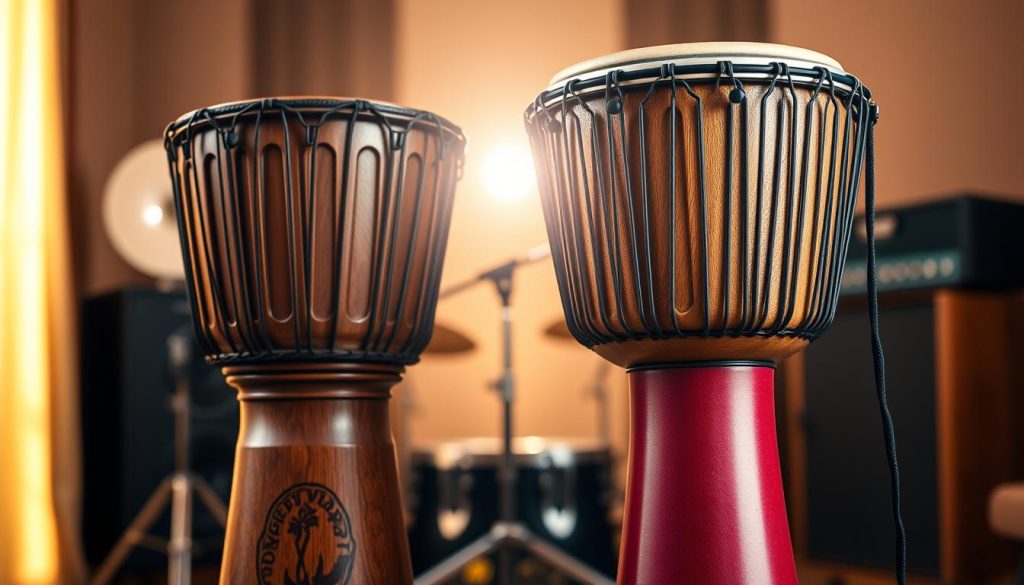
The nature of the shell and head determines the instrument’s character and durability. For purists, an authentic sound often comes from a shell carved from solid wood such as mahogany or iroko.
Solid Wood and Animal Skins
Traditional models use goat or buffalo skins. This gives them a depth and warmth that are difficult to reproduce by other means.
These instruments require more maintenance: adjusting the ropes and protecting them from moisture. In return, their rich sound will appeal to players who value tradition.
Synthetic and Modern Materials
Modern versions made from ABS or fiberglass offer excellent resistance to changes in climate. It is worth noting that these materials make maintenance easier.
During my musical journey, I have found that synthetic instruments are well suited to outdoor playing. They remain stable and practical for beginners and traveling sessions.
- Advantage of wood: an authentic, rich sound.
- Advantage of synthetic materials: durability and easy maintenance.
- Choice: your musical preferences will guide your decision between tradition and practicality.
How Size Affects Sound and Comfort
The height and dimensions of the shell directly affect tone and playing comfort.
Djembe size is a key factor: it determines the depth of the bass and the clarity of the treble.
Small djembes are often easier to handle.
Medium-sized djembes (40 to 50 cm) offer a good compromise. They provide good resonance for practice while remaining easy to transport.
Projection, Weight, and Transportation
- A standard-sized djembe, about 60 cm tall, provides greater projection and deeper bass.
- It is worth noting that head diameter affects the sound: a larger head increases resonance.
- Large djembes deliver richer deep bass, but they also weigh more.
Choosing the right size prevents muscle strain and makes long sessions easier. To compare sizes and comfort, see our guide to the ideal size.
Setting a Budget for a First Purchase
Setting a budget before buying makes the decision easier and protects your wallet. A carefully considered investment helps you find a durable instrument that matches your musical goals.
To begin your musical journey, a budget of €50 to €100 is often sufficient. These entry-level models are functional and allow you to learn the basics.
Between €100 and €300, you will have access to a wide range of models. Build quality improves, as does playability. Try several instruments to identify the best value for money.
Above €300, you can find handcrafted djembes from around the world. These instruments offer an appealing richness of sound for anyone wishing to immerse themselves in the tradition.
- Advice: define your goals before buying.
- Tip: for a first djembe, prioritize reliability over appearance.
- Learning African percussion happens in stages: start simply, then move upmarket if necessary.
Selecting an Instrument for Children
To introduce a child to percussion, choose instruments that are lightweight and easy to handle.
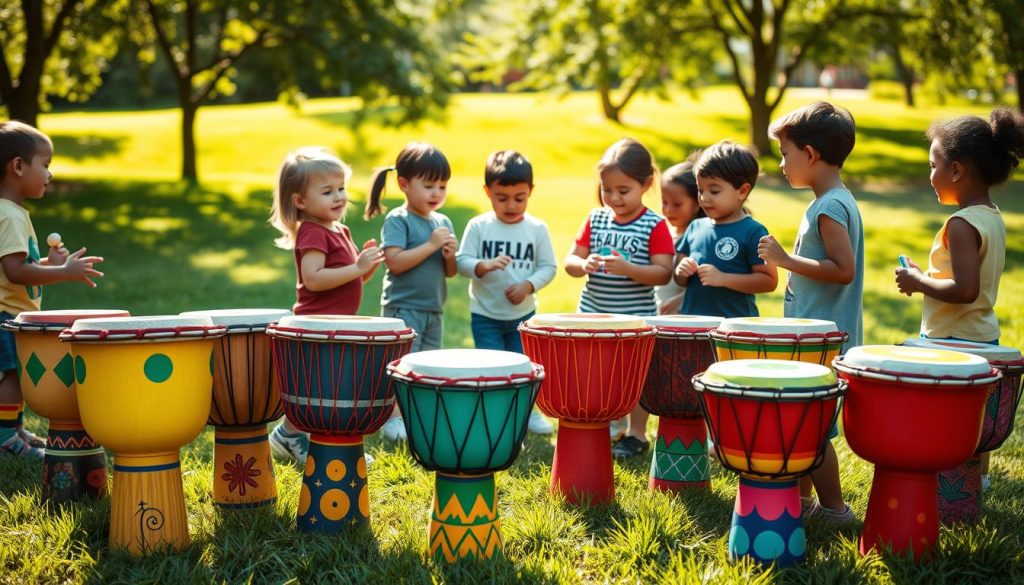
Weight criteria: children’s djembes generally measure 30 to 40 cm. These smaller sizes correspond to the recommended djembe size for younger players.
Weight Criteria
It is worth noting that many children’s models use ABS plastic. This material makes the instrument very lightweight and impact-resistant.
Ergonomics for Younger Players
Pay particular attention to the height and shape of the shell. Small djembes are well suited to learning without placing excessive strain on the wrists.
A standard-sized djembe would often be too cumbersome. A beginner-friendly size allows the young musician to work on striking accuracy.
- Recommended height: 30 to 40 cm for children’s djembes.
- Material: ABS for its light weight and durability.
- Ergonomics: a stable base and rounded rim for greater comfort.
For practical advice and suitable models, see our beginner’s guide.
Essential Accessories for the Beginner Percussionist
A thoughtful choice of accessories transforms the daily practice of any beginner percussionist.
A carrying strap and case protect your instrument while traveling. A good strap distributes the weight and prevents back strain.
The case absorbs impacts and protects against moisture. It extends the lifespan of the shell and head.
Keep replacement heads available to prevent interruptions to your practice. Check the rope as well: a diameter of about 5 mm ensures stable tension.
- Comfortable strap: a practical way to carry the instrument without fatigue.
- Padded case: protects against impacts and changes in humidity.
- Replacement heads: ensure continuity in your musical experience.
- 5 mm rope: essential for achieving optimal head tension.
- Suitable stand: supports good posture and daily practice.
These accessories preserve your instruments and improve playing comfort. Investing wisely helps you progress more quickly.
Practical Advice to Guide Your Choice
Start by assessing your real needs: comfort, sound projection, and the styles you want to play. This reflection helps you avoid impulse purchases and guides you toward the most appropriate djembe size.
Assessing Your Body Type
Assessing your body type is a key factor. A suitable height and well-balanced shell allow you to adopt a natural posture and prevent strain.
Small djembes are suitable if you have a smaller build or play seated. Large djembes offer deeper bass, but they weigh more.
Defining Your Musical Goals
Define your musical goals: do you want to play for yourself, in a group, or to accompany dances? Your choice of percussion instrument will vary according to these goals.
For traditional African music, a standard-sized djembe provides greater authenticity. For outdoor sessions, prioritize projection.
The Importance of Playing Style
Your musical style affects head tension and djembe size. Medium-sized djembes are an ideal compromise for beginners.
By following this practical advice, you will find the ideal djembe for your musical needs and budget.
- Assess your posture before buying.
- Think about the music you want to play: traditional, stage, or recreational.
- Choose the right size for your specific needs.
To explore the subject further and compare models and sizes, see our buying guide.
Where to Find Quality Instruments
Consulting a specialist gives you access to a carefully selected range and technical advice.
Instruments du Monde offers a wide range of more than 50 models. You will find instruments for both recreational and stage use.
Before buying, check the djembe’s size and the quality of its wood and head. These factors determine projection and bass depth.
The advisers help you make the right choice for your body type. They can direct you toward a standard-sized djembe or a more traditional African model.
- Practical advice: try several instruments to find the ideal djembe.
- Quality assurance: favor retailers that certify the wood and head.
- Compare: the store makes it easier to find the best possible instrument.
For practical advice and guidance before buying, see our beginner’s guide.
Conclusion
, By reading this article, you have gained the essential knowledge needed to choose your African drum with confidence.
You have learned that size, materials, and budget form the basis of a sound choice. Consistent practice remains more important than your initial equipment.
Take the time to explore your options and listen to several instruments. For practical advice and technical guidance, consult this reference guide.
Your percussion journey begins now: play often and seek help from a professional when necessary.