
Twenty years of practice have taught me that every percussion instrument needs precise care to last. Here I share clear, practical methods for protecting your djembe and preserving its unique tone.
This short article presents the essential steps for preserving the shell and head. You will find simple advice suited to both traditional and contemporary instruments.
Respect for tradition and practical solutions guide every step. Learn how to prevent climate-related damage, manage humidity and choose safe products to maintain the instrument’s beautiful sound.
– A practical guide to preserving a djembe for years to come.
– Simple tips drawn from 20 years of experience.
– A focus on wood, skin and protection from climatic conditions.
Why maintaining your instrument is crucial
Regular maintenance often saves your instrument from costly repairs. A complete restoration frequently costs more than €300 at a specialist workshop. Prevention costs less than repair.
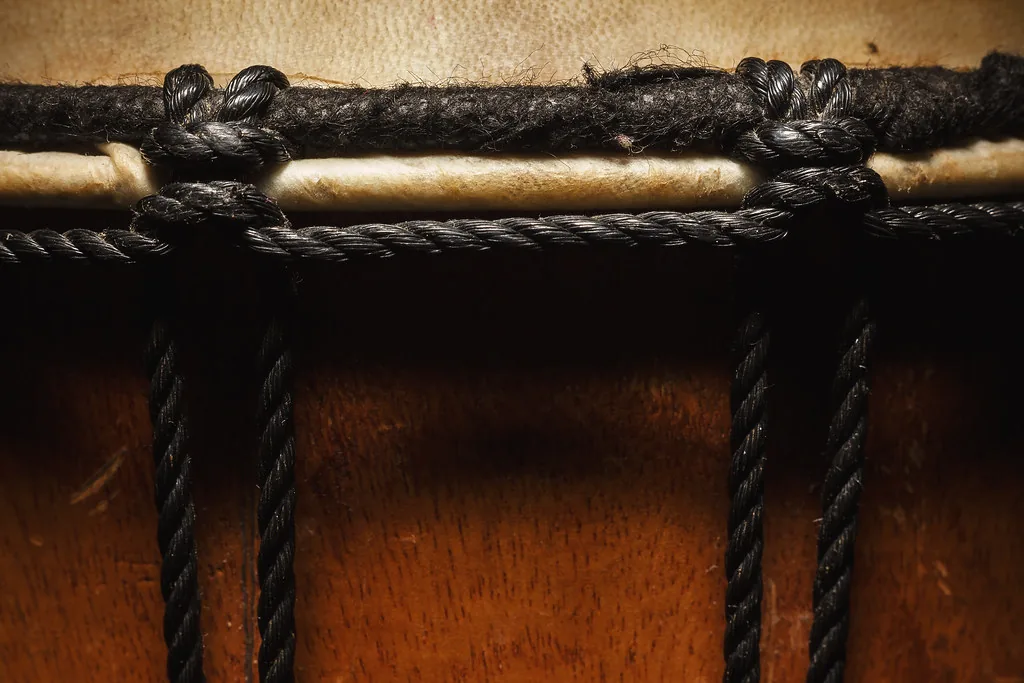
Maintaining the correct head tension prevents structural damage. If the ropes loosen, the tone becomes distorted and repairs become urgent.
Simple maintenance preserves acoustic quality. A tuned, well-maintained djembe provides rich, lasting resonance. It also protects the shell and head.
- Preventing damage avoids costs exceeding €300.
- Regular care extends the life of your instrument.
- Sound quality remains consistent during solo or group sessions.
Investing a few minutes each month is a responsible and cost-effective approach. To learn how to check the head and its tension, consult our practical guide on how to tighten the head.
Wooden Djembe: Benefits, Sounds and Maintenance
Choosing solid wood radically transforms your instrument’s acoustic response. With more than twenty years of experience, I have observed that the shell material determines the richness and projection of its tone.
The benefits of solid wood
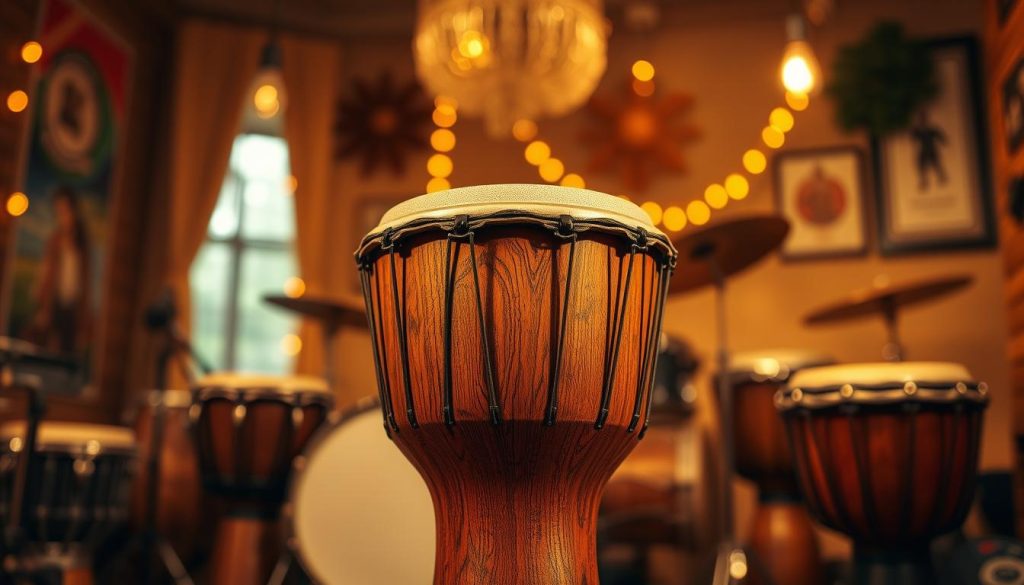
A solid shell provides superior resonance. Its strength increases durability under mechanical and climatic stress.
Density affects projection. A dense model produces deeper bass and clearer, longer-lasting highs, which is useful when playing outdoors or in a group.
Unique sound characteristics
In practice, I have noticed warmer tones and a more precise dynamic response.
- Richer resonance with every strike.
- Greater durability than the alternatives.
- Improved projection for acoustic performances.
“The shell material remains the foundation of the sound.”
To explore material selection and its effects in greater depth, consult our guide to choosing the right wood in this article.
How wood species affect resonance
Each species gives your percussion instrument a distinct sonic personality. This choice affects warmth, projection and dynamic response.
Mahogany and its acoustic qualities
Mahogany is renowned for its density. It offers balanced resonance and sustained bass.
Musicians looking for a precise and versatile djembe appreciate this species for its tonal stability.
Doussie wood
Doussie has a similar density, but it can react more quickly to changes in humidity.
It requires regular attention to preserve the instrument’s sound quality and longevity.
Vène wood and its rarity
Vène produces a highly sought-after deep resonance. Warning: this species is becoming rare because of international demand.
Its rarity is changing the supply of instruments available on the French and European markets.
- Several species (mahogany, doussie and vène) produce distinct tones.
- Understanding these differences helps you choose the right djembe for your style.
“The material remains decisive: it colors every strike.”
Guide to preserving your drumhead
Modest but consistent care extends the head’s lifespan and preserves sound quality.
Regular cleaning and products to avoid
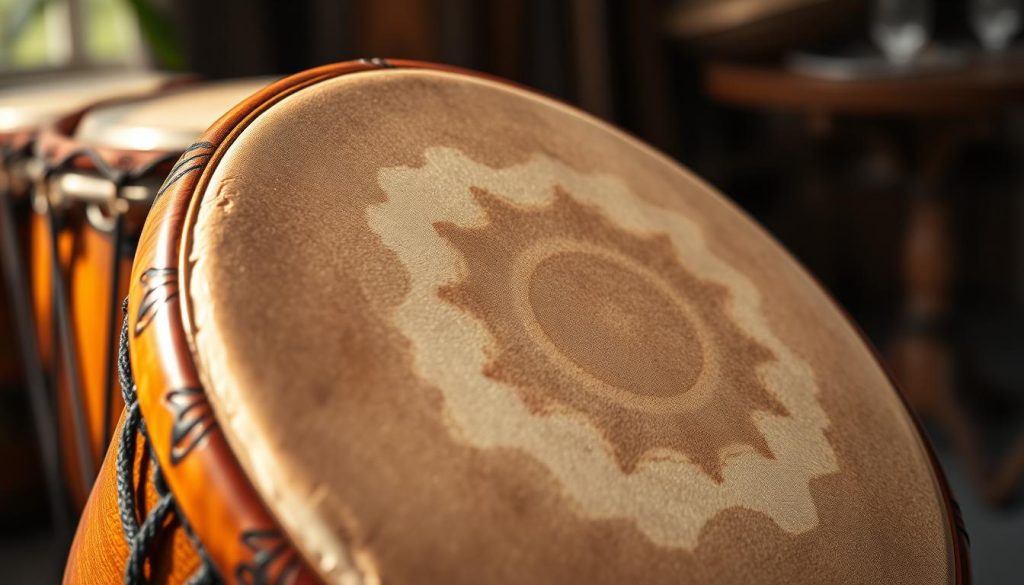
Your instrument’s head remains highly sensitive to climatic variations and perspiration deposits.
After every session, wipe it with a soft, dry cloth. This reduces the buildup of dust and moisture.
- Never use: olive oil. It increases the skin’s elasticity by 30% and causes irreversible damage to the djembe.
- Also avoid: any harsh chemical product that weakens the head.
- Maintain: correct tension to preserve sound clarity and prevent dull notes.
| Action | Recommended product | Risk if performed incorrectly |
|---|---|---|
| Daily cleaning | Soft, dry cloth | Salt and dust buildup |
| Conditioning | Avoid cooking oils | Irreversible stretching of the head |
| Tension check | Suitable manual adjustment | Loss of djembe clarity |
To carry out repairs or replace the head, follow a specialist guide to protect your instrument.
Techniques for conditioning and protecting the wooden shell
Conditioning the shell requires a methodical approach: use a mixture of 3 parts linseed oil to 1 part turpentine.
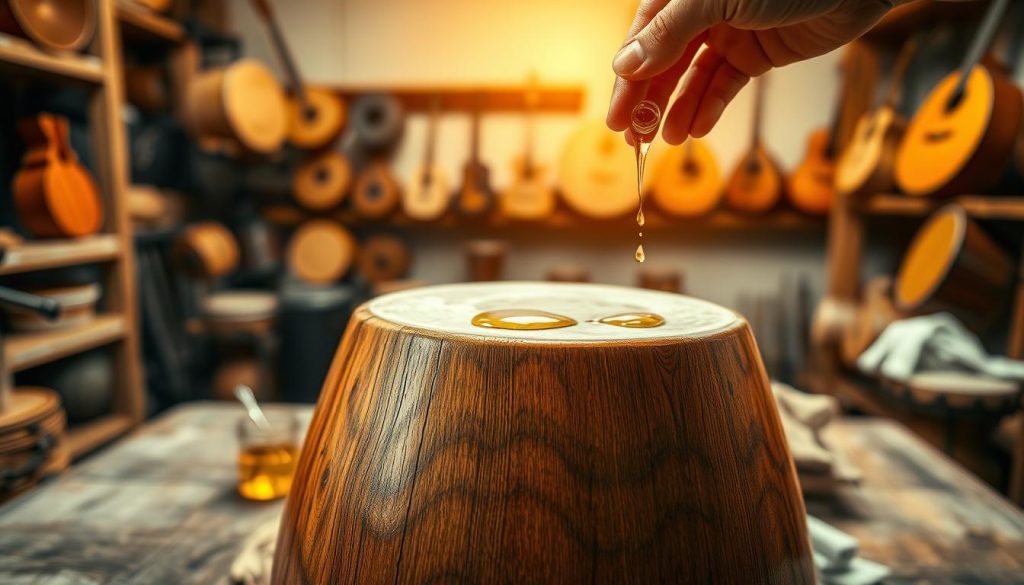
Apply it sparingly. A thin layer spread with a lint-free cloth is enough to penetrate the grain. Let it air-dry before playing.
This treatment protects your instrument from drying out and cracking. It also prevents the shell from losing its structural stability.
- Ratio: follow the 3-to-1 formula to avoid saturation.
- Ideally, carry out this treatment when replacing the head.
- Excessive application reduces the djembe’s natural resonance.
When selecting a model and seeking to choose a quality djembe, check the type of finish before applying any treatment.
Maintaining optimal rope tension
Controlled tension immediately transforms the precision of every strike. Above all, perform regular checks instead of making one major adjustment. This prevents fatigue in the shell and ropes.
Tool-free adjustment methods
Work one rope at a time. To make a tool-free adjustment, turn each rope by no more than a quarter turn. This limits the risk of damaging your djembe’s structure.
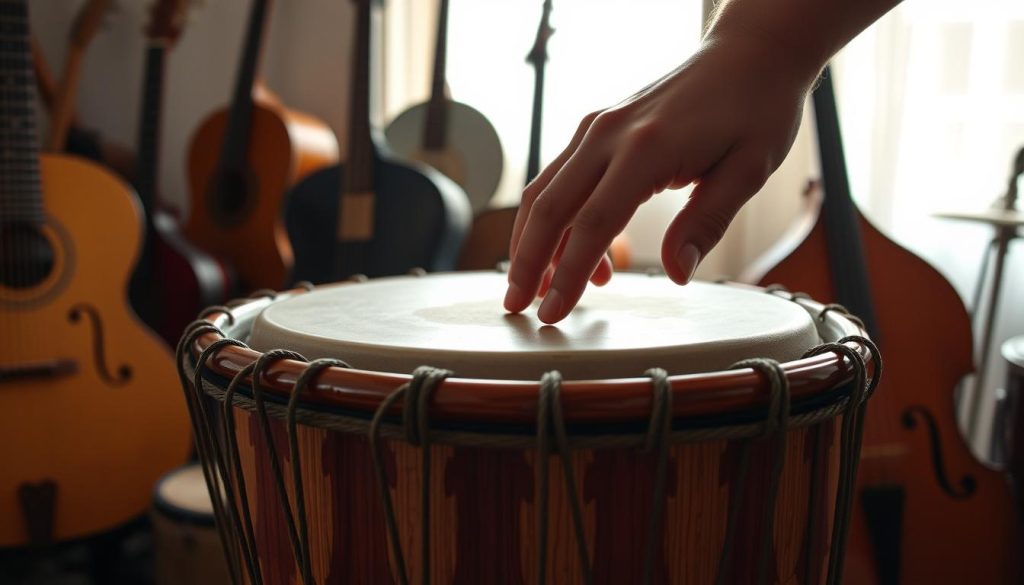
Check the tension once a month. Regular inspection prevents 80% of the resonance problems encountered by players of this traditional percussion instrument.
- Turn each rope by no more than a quarter turn to adjust the tension gradually.
- Make sure the tension is uniform across the entire surface to produce a clear sound with every strike.
- If in doubt, consult a professional before increasing the force to avoid tearing the head.
- Precise tool-free adjustment preserves your instrument’s structure and extends its lifespan.
“A small monthly adjustment is better than an expensive repair.”
Advice for safe transport and storage
Careful transport prevents most travel-related damage.
Choose a professional case with at least 2 cm of padding. This solution absorbs shocks and protects the shell from impacts.
Keep relative humidity between 40 and 50%. These conditions limit shell deformation and head distortion.
- Do not compromise on case quality; a useful reference is available under professional case.
- Never leave your djembe in a closed vehicle. Rapid temperature changes cause cracks.
- Store your instruments away from direct light and heat sources.
| Risk | Prevention | Impact |
|---|---|---|
| Impacts | Case with 2 cm of padding | Protection against breaks and chips |
| Humidity fluctuations | Humidistat set between 40 and 50% | Stable shell and tone |
| High temperature | Do not leave the instrument in a vehicle | Prevents separation and cracks |
Following these practices ensures the longevity of your djembe and preserves the value of your instruments.
Cleaning finishes and decorative elements
Decorations require special attention. Treat every engraving and painted area gently to preserve its patina. Inappropriate cleaning can alter the pattern and reduce the instrument’s cultural value.
Regularly inspect metal parts such as nails and rings. Look for any sign of corrosion or rust and act before the problem progresses.
- Clean decorations with a soft, slightly damp cloth.
- Check the djembe’s nails and rings for any sign of corrosion or rust.
- Favor natural solutions (diluted vinegar or mild soap) and avoid harsh chemicals.
Regular maintenance protects the appearance and cultural memory of your djembe. By attending to it every season, you preserve your instrument’s beauty and longevity.
Essential precautions for maximum durability
Controlling the air and temperature around your instrument is often more effective than any repair. Adopt simple habits to limit wear and preserve sound quality.
Managing ambient humidity
Appropriate humidity prevents cracks and warping. Maintain stable conditions: a level between 40 and 50% is ideal for the head and shell.
Tension changes quickly if the air is too dry or too humid. Check it regularly and adjust it gradually to avoid mechanical shocks.
A useful reminder: humidity management is an essential part of maintenance. For practical advice, consult our maintenance guide.
Protection against thermal shock
40% of repairs are related to prolonged sun exposure or sudden temperature changes.
Avoid prolonged exposure to sunlight and never store the instrument near a heat source. Excessive heat increases tension and can cause irreversible damage.
By taking these precautions, you ensure maximum durability for your djembe and reduce the frequency of costly repairs. Incorporating these steps into a short routine makes all the difference.
Conclusion
In conclusion, a few simple steps are enough to preserve the soul of your djembe. This short article offers clear routines that limit costly repairs.
Consistency is key: a monthly tension check, gentle cleaning after every session and protection during transport extend the instrument’s lifespan.
As Mamady Keïta reminds us, rigorous maintenance preserves up to 90% of your percussion instrument’s original resonance. Also consider browsing the Instruments Monde accessories collection to find a suitable case.
Choosing the right type of finish and protecting your djembe from external damage will help pass an intact musical heritage on to future generations.