
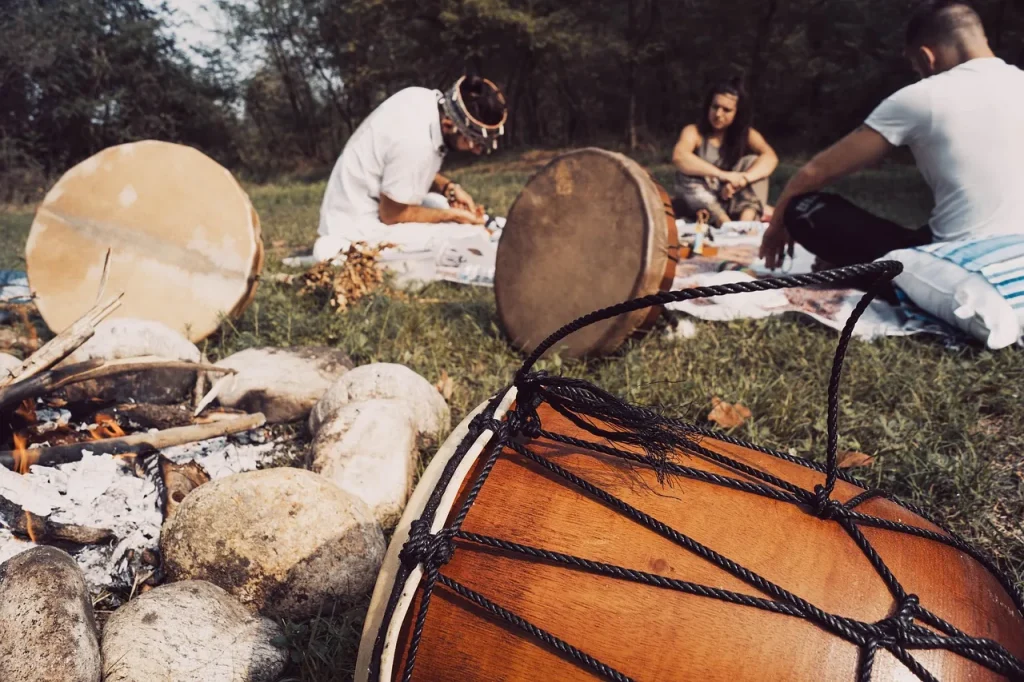
Welcome to this article designed to guide you through your first instrument purchase. Drawing on more than 20 years of experience advising beginner musicians, I offer practical, straightforward guidance.
We will examine the essential criteria: size, materials, sound and child safety. Each point is explained simply to help you compare the options.
You will also learn how to set a realistic budget so you can buy a quality instrument without any unpleasant surprises. This introduction lays the groundwork for the following sections and helps you make an informed decision.
Small or large djembe: which should you choose?
Size directly affects an instrument’s sound, portability and cost.
For a percussion instrument, size affects the volume and depth of the low bass tones. A standard-size djembe will provide greater resonance. Small djembes remain easier to carry and are suitable for travel.
By reading this article, you will find practical advice for assessing your body type and musical experience. If you want to play outdoors or in a small apartment, prioritize portability.
Here is a quick guide to help you choose your djembe according to your goals.
| Criterion | Advantage | When to choose it | Effect on sound |
|---|---|---|---|
| Small djembes | Portable, less expensive | Travel, smaller beginners | Less low bass, clear midrange |
| Standard-size djembe | Greater projection | Workshops, stages, rapid progress | Deeper bass, good resonance |
| Body-size criterion | Playing comfort | Fit for the player’s build | Affects technique and playing time |
After reading this section, you have learned that the right size depends as much on your build as on your sound goals. This will help you continue your musical journey through African percussion and the worldwide djembe tradition.
Understanding the differences between traditional and modern models
The origin of the materials often determines an instrument’s character and durability.
Solid wood and animal skin
Models carved from mahogany or iroko provide highly sought-after warmth and depth of sound.
Goatskin or buffalo hide contributes to authentic resonance produced by traditional craftsmanship.
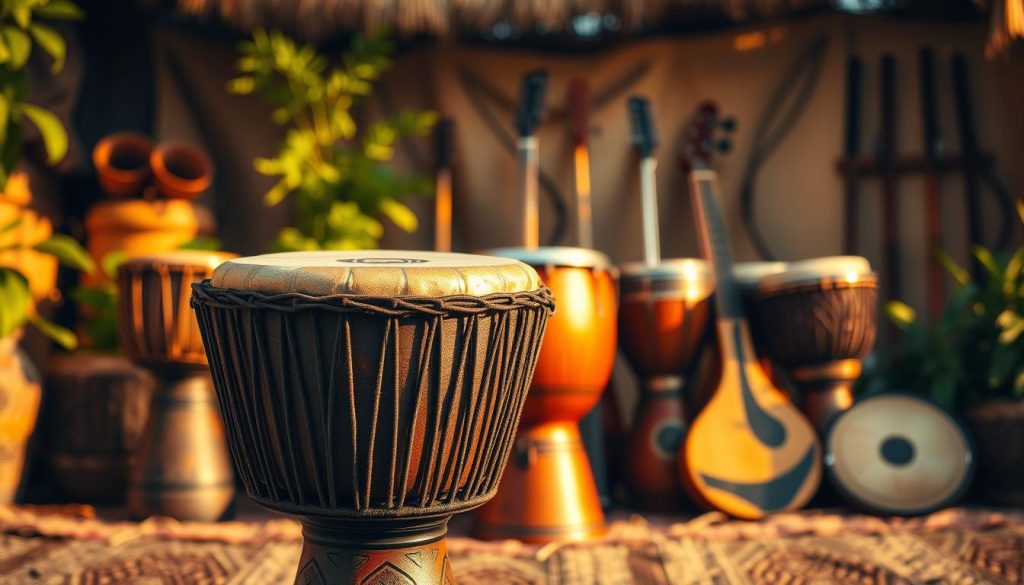
Modern ABS or fiberglass versions are designed to withstand changes in humidity.
It is worth noting that synthetic heads maintain stable tension and require less maintenance.
- Solid-wood instruments suit musicians seeking a traditional, nuanced sound.
- Synthetic models offer excellent outdoor resistance and a long service life.
- Percussionists can explore a wide range of sounds depending on the chosen material.
In practice: your choice will depend on your attachment to African tradition and your portability needs.
To learn more about first purchases, consult our practical guide: beginner’s buying guide.
The decisive impact of size on sound
An instrument’s size profoundly changes the color and presence of its sound. This criterion affects bass depth, projection and ease of transport.
Bass depth
Models measuring 60 cm or more provide deeper bass tones, making them ideal for traditional African music and performances in large spaces.
Projection and resonance
Projection depends directly on the djembe’s size. A large djembe provides a stronger acoustic presence during performances.
It is worth noting that resonance also varies with the wood’s structure and the tension of the head.
Ease of transport
Djembes measuring 40 to 50 cm offer an excellent compromise: they are easy to carry and suitable for a wide range of musical styles.
Small djembes remain well suited to fast rhythms and traveling musicians.
- Key factor: size affects both the sound and your playing comfort according to your build.
- Define your musical goals to choose an instrument suited to your specific needs.
For a first purchase, consult our buying guide and refine your choice according to the music you want to play.
Setting a budget for your first purchase
Setting a clear budget makes it easier to choose an instrument suited to your goals.
To begin your musical journey, a budget of €50 to €100 will buy a functional first instrument. These models are suitable for trying the instrument and traveling frequently.
A budget of €100 to €300 gives you access to higher-quality instruments. You gain better tone, tuning stability and playing comfort.
Above €300, you can consider a premium instrument made by craftspeople. These pieces offer greater longevity and a richer sound.
“Investing wisely from the outset makes progress easier and prevents premature replacements.”
| Budget | Type | Advantage | Target audience |
|---|---|---|---|
| €50–€100 | Entry-level | Affordable, portable | Beginners, trial use |
| €100–€300 | Mid-range | Better sound, durability | Regular players |
| €300+ | Premium | Craftsmanship, rich sound | Enthusiasts, professionals |
Practical advice: compare materials and finishes to make the best possible choice. Visit the Instruments du Monde store to find your first djembe and refine your decision.
Choosing an instrument suitable for children
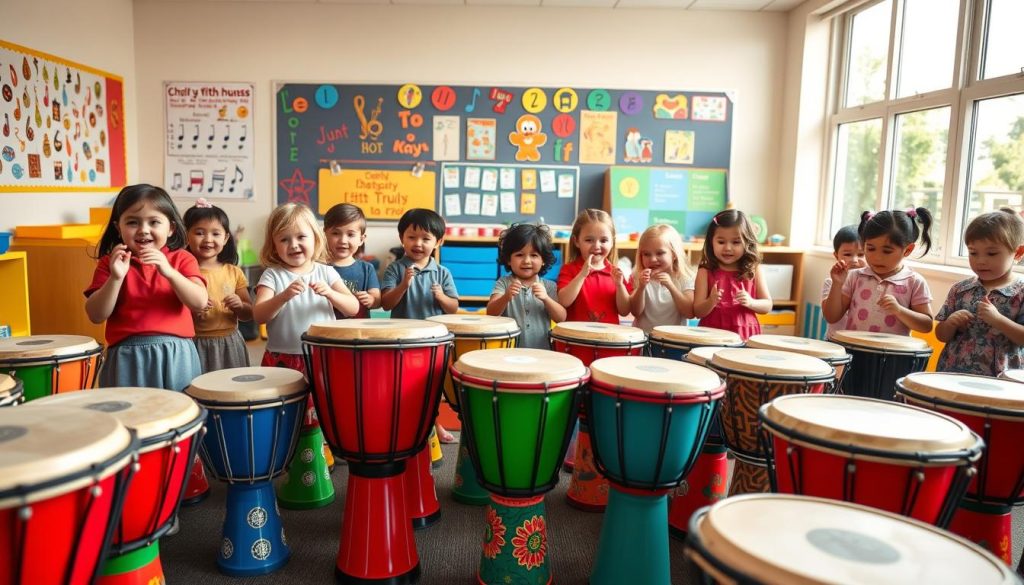
Choosing an instrument for a child means considering ease of handling and safety first. A good choice encourages the desire to play and supports progress.
Weight and safety criteria
Suitable sizes: children’s djembes are generally 30 to 40 cm tall.
Recommended material: it is worth noting that ABS plastic makes the percussion instrument lighter and more impact-resistant.
- Small djembes are easier for young children to handle and help prevent fatigue.
- Safety comes first: no sharp edges, rounded rims and careful finishing.
- A standard-size djembe would often be too bulky for a child.
- A lightweight instrument is easier to carry to school or workshops.
In practice: choosing suitable instruments helps develop coordination while providing a genuine African percussion sound. For a first purchase, consult our beginner’s guide.
Essential accessories for getting started with confidence
Before heading out to play, consider the accessories that will make travel easier and protect your instrument.
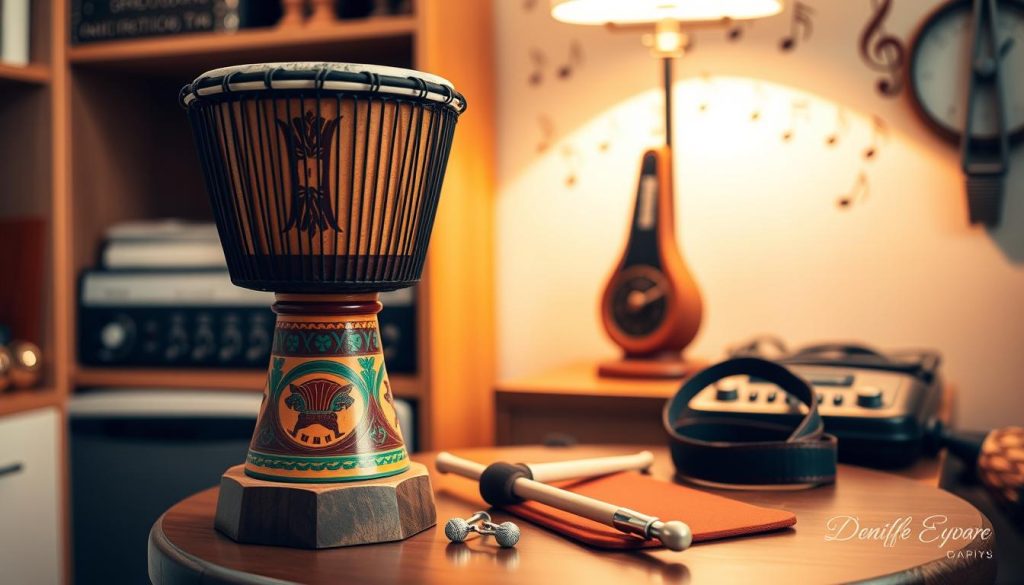
A carrying strap distributes the weight and prevents back pain while traveling. It is one of the most useful pieces of practical advice for people who frequently carry their instrument.
A protective case protects against dust, light rain and impacts. A good case preserves the appearance of instruments and extends their lifespan.
- Buying a quality strap prevents fatigue during transport.
- A sturdy case preserves the finish and limits risks associated with changing weather conditions.
- Keeping spare heads on hand prevents interruptions if the head becomes worn.
- These accessories increase your instrument’s longevity and protect your investment.
| Accessory | Function | Advantage |
|---|---|---|
| Carrying strap | Weight distribution | Less pain, greater comfort |
| Protective case | Protection against impacts and moisture | Preserves the finish and sound |
| Spare heads | Quick replacement | Uninterrupted playing, easy maintenance |
Practical advice: invest in quality accessories to keep your instrument in good condition. To complete your equipment, also consult everything you need to know about the kalimba.
Practical advice for refining your selection
Defining your musical goals helps you narrow down the instrument options quickly.
Assessing your musical goals
Start by specifying the music you want to play: concerts, workshops or practice at home. This affects the balance between projection and portability.
A standard-size djembe measuring 50 to 60 cm is often the best compromise for an adult’s first instrument. It provides sufficient low bass tones while remaining manageable.
Taking your body type into account
Your body type should guide your selection. A suitable size reduces fatigue and improves technique.
If you are considering outdoor performances or a traditional style, size will have a direct impact on sound quality. Try several heights before buying.
- Define your musical goals first.
- Make sure the size allows comfortable playing over long periods.
- Consider the style: traditional African music often calls for more pronounced bass tones.
| Criterion | Recommendation | Why |
|---|---|---|
| Goal | Concerts or workshops | Choose an instrument that provides projection and stability |
| Body type | Suited to a height of 50 to 60 cm | Playing comfort and endurance |
| Use | Traveling or stationary | Balance between weight and sound depth |
For a practical guide to sizes, consult what size djembe to choose.
Conclusion
Finally, remember that the balance between comfort, sound and cost is essential. This article has guided you step by step through the different criteria.
You have learned that size, materials and budget shape your purchase. To discover and compare models, consult the detailed buying guide that complements this advice.
We recommend visiting the Instruments du Monde store to try a wide range. With this information, you will make the best possible choice and find the ideal djembe that will serve you for years.