

Could a robot compose a piece as captivating as Mozart’s Requiem or Led Zeppelin’s Stairway to Heaven? The question is becoming increasingly pressing as we incorporate more and more technology into our daily lives. The ubiquity of artificial intelligence in the modern world is also raising ethical debates about copyright. Yet certain digital tools have established themselves brilliantly in musical composition, whether classical, electronic, or popular.
This is not about letting AI take precedence over human creativity. Technology should support and assist composition without ever exceeding the clearly defined boundaries of its role. Are you interested in digital resources for creating your own music? It is time to discover the most effective and widely used composition tools.
1. Music notation software
In the world of computer-assisted music composition, three names stand out: Sibelius, Finale and MuseScore. Each of these digital notation giants offers distinctive features and meets the varied needs of modern composers.
- With its intuitive interface, Sibelius appeals to musicians seeking efficiency.
- Finale, the Swiss Army knife of notation software, shines through its versatility and precision.
- MuseScore’s open-source status, meanwhile, makes it the preferred choice for beginner composers and collaborative projects.
The digital revolution has transformed the age-old art of writing music. Gone are the days of scribbled scores and crossed-out notes! Digital notation offers unprecedented flexibility. Change a note, transpose a melody or rearrange entire sections in just a few clicks. Scores become easier to read, reducing performance errors. Moreover, the ability to share them instantly makes remote collaboration easier and opens up new creative horizons.
A few tips will help you get the most out of these tools. Master the keyboard shortcuts: they will speed up your workflow considerably. Explore the built-in sound libraries to obtain a realistic preview of your compositions. Feel free to customize the interface to suit your preferences. Finally, familiarize yourself with the available plugins: they can extend the core features and meet specific needs.
2. Computer-assisted music production
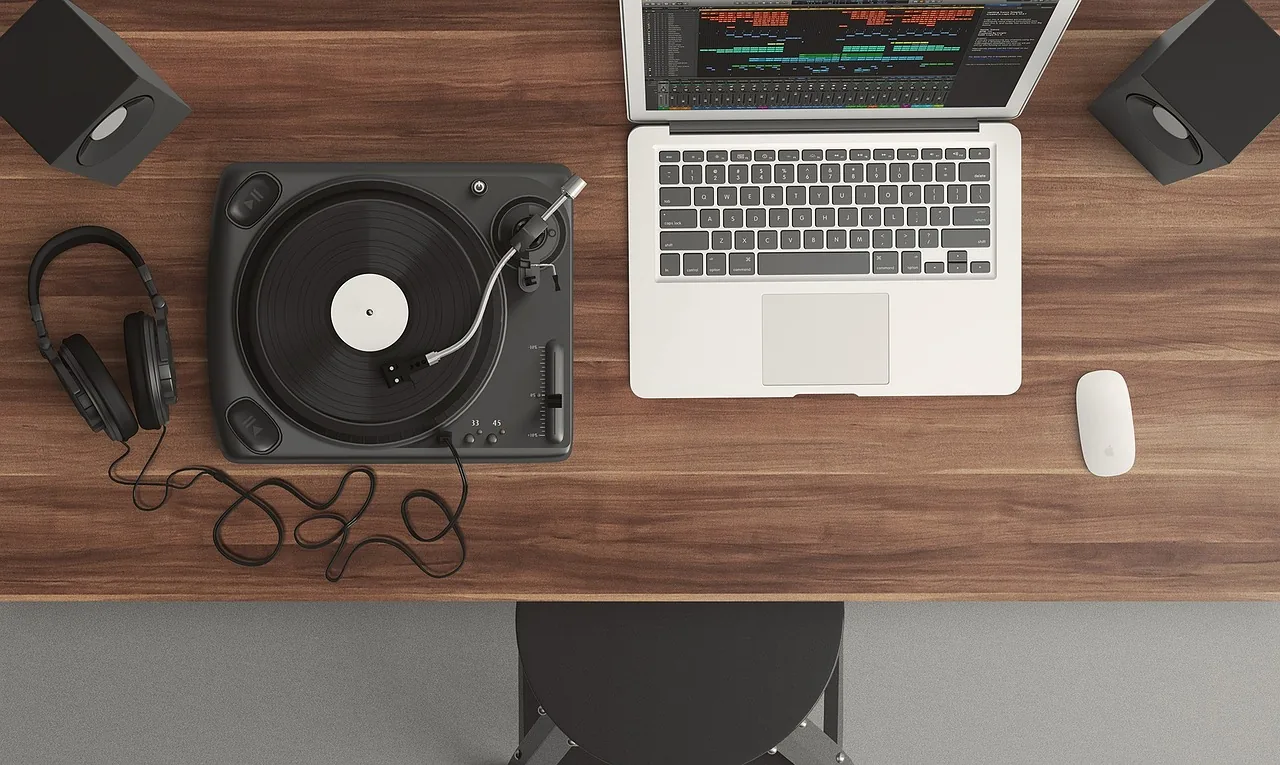
A true revolution in the world of music, computer-assisted music production makes it possible to compose, arrange and produce music entirely on a computer. It is based on converting digital signals into sound and offers an almost limitless sonic palette. Computer-assisted music production democratizes music creation by giving anyone access to a genuine recording studio at home.
Ableton Live, FL Studio and Logic Pro are the three leading DAWs, or digital audio workstations. Ableton Live excels at electronic production and live performance. With its playful interface, FL Studio appeals to beatmakers and urban music producers. Logic Pro, available only on Apple devices, offers a comprehensive environment for every style of music.
These DAWs share essential features:
- multitrack recording;
- precise MIDI and audio editing;
- advanced mixing;
- mastering.
Their sequencers let you arrange your musical ideas with unprecedented flexibility. Automation tools provide precise control over every sound parameter, bringing life and movement to your compositions.
VSTs, or virtual instruments, open up a world of sonic possibilities. These plugins faithfully reproduce acoustic instruments and vintage synthesizers, or enable you to create entirely new sounds. Integrated into your DAW, they expand your creative palette without cluttering your physical space. Experiment and blend timbres: this is where your signature sound will take shape.
The art of mixing in a DAW is all about balance. Use equalization to sculpt each sonic element, compression to control dynamics and reverb to create depth. Remember: less is often more. A good mix lets every element breathe while creating a cohesive whole. Experiment, but always bear in mind that technology should serve your artistic vision, not the other way around.
3. Artificial intelligence in composition
AI is making its way into the creative process, offering fascinating tools to spark inspiration. Platforms such as AIVA and Amper Music generate melodies and chord progressions from parameters you define. These virtual assistants do not replace human creativity, but provide a new playground for exploring unexpected musical ideas.
Arrangement, which is often time-consuming, also benefits from AI. Tools such as Orb Composer and MIDI Stretcher analyze your compositions and suggest arrangement variations. They can propose bass lines, rhythmic patterns or complex harmonizations, allowing you to explore different musical directions quickly.
Although AI opens fascinating doors, it also raises questions. How far does the machine’s share of creativity extend? How should copyright be assigned for a work co-created with AI? It is crucial to take a critical view of these tools, use them as assistants rather than replacements and consider the ethical implications of using them in the creative process.
4. Mobile apps for composition
Inspiration arrives without warning, which is why it is important always to have a recording tool close at hand. Apps such as Voice Memos (iOS) and Easy Voice Recorder (Android) let you capture vocal or instrumental ideas quickly. For more elaborate melodies, Hum On! turns your humming into sheet music, while Notion gives you a genuine musical notepad on your smartphone.
Some mobile apps now rival desktop DAWs. GarageBand (iOS) puts a complete studio in your pocket, with virtual instruments and multitrack recording tools. On Android, FL Studio Mobile brings the power of the renowned software to your phone. These apps let you compose entire tracks, from the initial concept to final production, wherever you are.
The key is to integrate these mobile tools seamlessly into your usual workflow. Use them to sketch ideas while on the move, then export those ideas to your main DAW for refinement. Some apps, such as Ampify Launchpad, sync directly with their desktop counterparts, blurring the boundaries between mobile composition and studio work.
5. MIDI controllers and physical interfaces
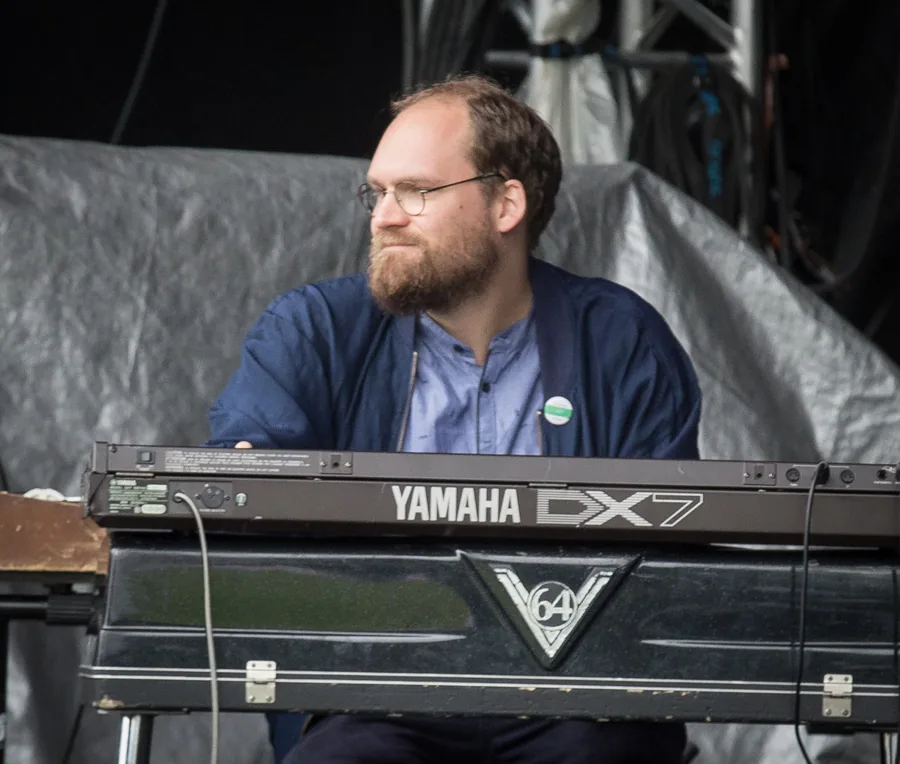
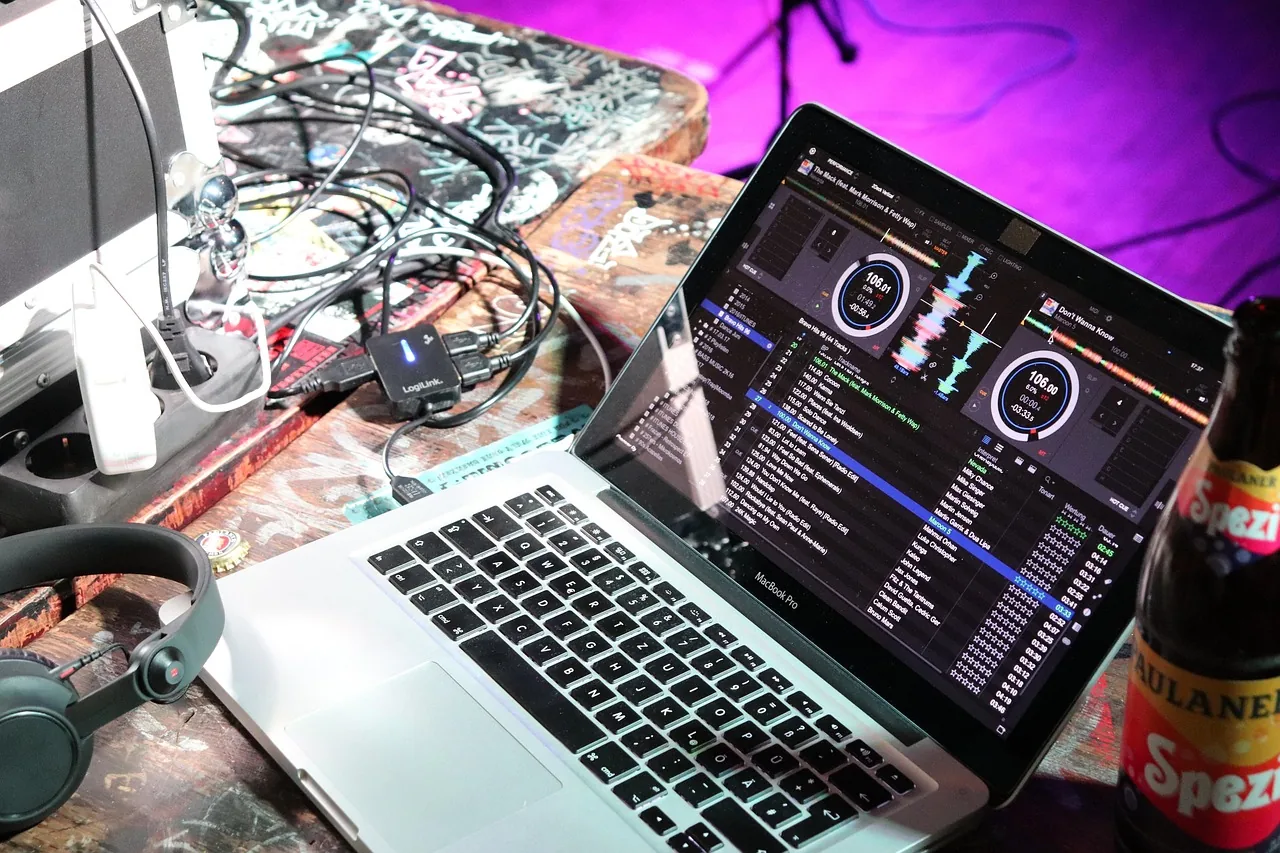
MIDI controllers bring physical touch back into the digital world.
- MIDI keyboards, ranging from 25-key mini keyboards to behemoths with 88 weighted keys, offer pianists a familiar approach.
- Pads, popularized by Akai’s MPC range, excel at beat production and sampling.
- Ribbon controllers, such as the ROLI Seaboard, open up new expressive dimensions through their sensitivity to pressure and lateral movement.
These interfaces transform the way you interact with your music. A well-chosen controller becomes an extension of your creativity, enabling you to manipulate sounds and effects intuitively. Assign knobs to your favorite parameters and map pads to trigger samples or loops: in this way, you create a custom instrument tailored to your style and workflow.
Take the concept further by creating interactive musical installations. Controllers such as the Reactable and Tenori-on let you visualize and manipulate music in tactile and graphical ways. Paired with software such as Max/MSP, these tools pave the way for immersive performances in which the audience can interact directly with the composition.