
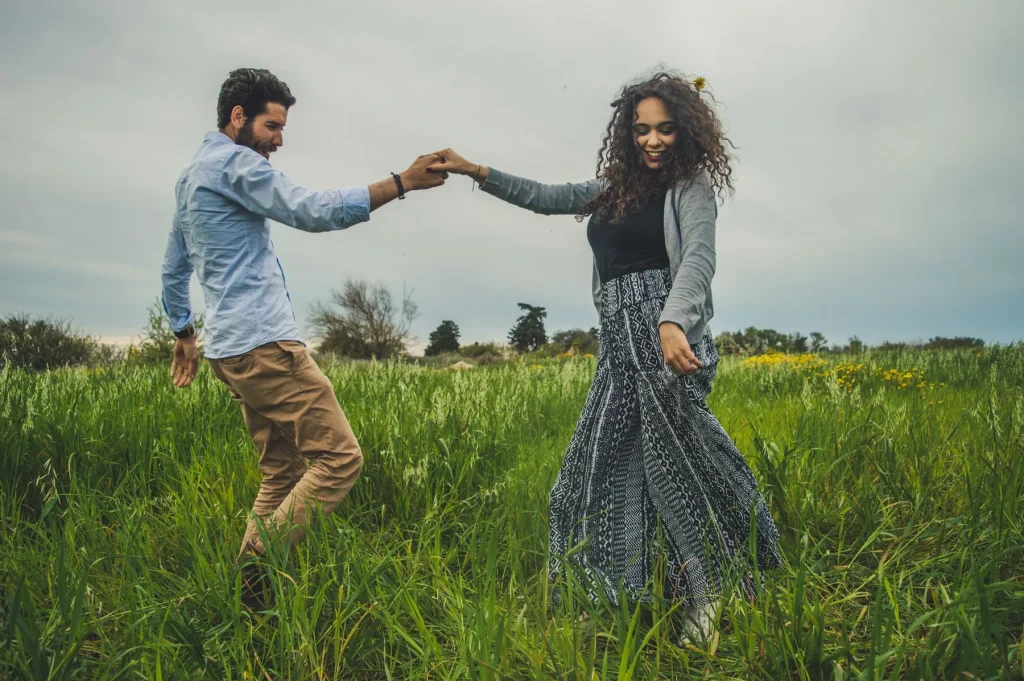
Bachata is a popular Latin dance, known for its simplicity and infectious rhythm. Originating in the Dominican Republic, it captivates dancers with its fluid movements and enchanting musicality.
This guide will help you master the basic steps and understand the essence of this discipline. Whether you are a beginner or an enthusiast, you can progress quickly with regular practice.
Free resources, such as videos by Fiona (an instructor in Nice), are the perfect complement to your learning. Suitable for different styles—modern, Dominican, or sensual—this dance is accessible to everyone.
Introduction to bachata
This Latin dance embodies passion and connection between partners. Born in the Dominican Republic, it combines infectious melodies with sensual gestures. Ideal for social events or classes, it appeals to a wide range of people.
Unlike salsa or tango, bachata favors simple steps and natural hip movements. Its movements can be adapted to every level, even without prior experience. Regular practice improves coordination and relieves stress.
| Dance | Rhythm | Difficulty | Style |
|---|---|---|---|
| Bachata | 4 beats | Easy | Sensual/modern |
| Salsa | 8 beats | Intermediate | Energetic |
| Tango | 4/8 beats | Advanced | Dramatic |
In France, dance schools have reported a 30% increase in enrollment since 2020. Whether dancing solo (lady styling) or with a partner, this discipline encourages social connections and self-confidence.
The origins of bachata
In the early 1960s, a melody revolutionized the streets of Santo Domingo. Originating in the Dominican Republic, this rhythm has its roots in working-class neighborhoods, blending emotion and resilience.

A dance born in the Dominican Republic
Influenced by bolero and merengue, bachata emerged as the language of the voiceless. Acoustic guitars, bongos, and the güira create a unique sound. At the time, it was seen as marginal, reflecting social realities.
Its evolution over the decades
In the 1990s, the middle classes embraced this dance. Its themes shifted from melancholy to passion, with artists such as Aventura. Their urban style propelled bachata onto the world stage.
| Period | Instruments | Themes | Popularity |
|---|---|---|---|
| 1960-1980 | Guitar, bongo | Melancholy | Local |
| 1990-2000 | Electric guitar, güira | Passion | National |
| 2000-present | Modern mix | Love, celebration | International |
Today, this dance symbolizes the union of cultures. From schools to festivals, it continues to captivate audiences with its rich history and enchanting rhythms.
Basic bachata steps
Mastering the fundamentals of this Latin dance begins with understanding its 4-beat rhythm. These movements, simple as they may seem, require precise coordination between the feet and hips.
The 4-beat movement
The count follows a key sequence:
- Beat 1: step to the right (right foot).
- Beat 2: bring the left foot in.
- Beat 3: take another step to the right.
- Beat 4: lightly lift the ball of the foot with a “hip kiss.”
Fluidity is essential. As Fiona, an instructor in Nice, explains:
“Beat 4 should feel natural, like breathing. Avoid jerky movements.”
The role of the hips and body weight
The hips guide the movement. Transfer your body weight from one foot to the other without becoming stiff. One effective exercise is to isolate the hips while standing in place, as shown in this demonstration video.
Variations: forward-back and side-to-side
Adapt the steps to the available space:
| Variation | Technique | Common mistake |
|---|---|---|
| Forward-back | Small gliding steps | Putting too much weight on your partner |
| Side-to-side | Balance on the ball of the foot | Keeping the arms too stiff |
At a fast tempo, reduce the range of motion. Keep your upper body stable for a solid foundation.
Rhythm and musicality in bachata
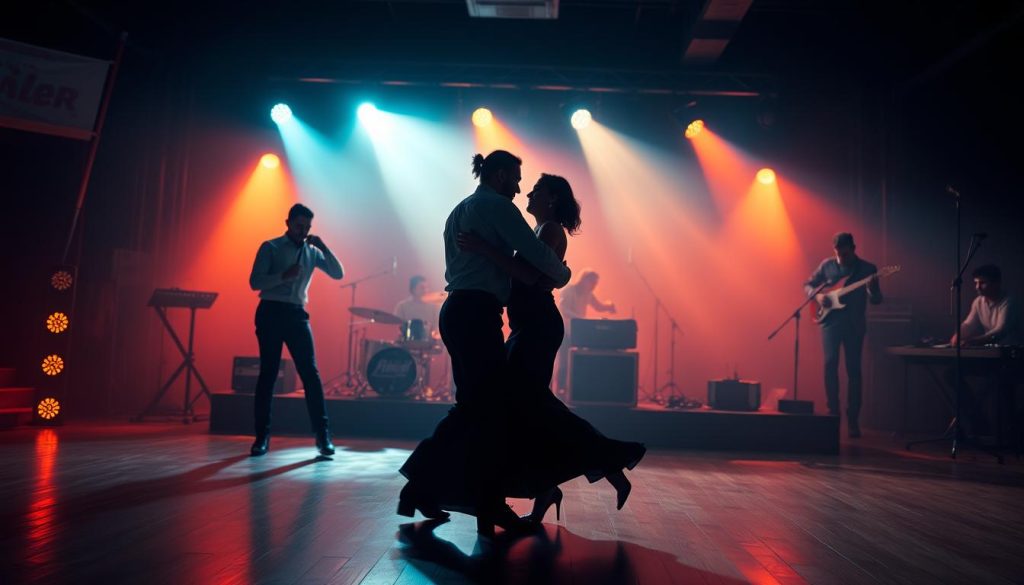
The essence of bachata lies in the dialogue between rhythm and emotion. Lively music, driven by guitars and percussion, dictates the fluidity of the movements. To progress, you must learn to listen to it as much as you dance to it.
How to count the beats in bachata
The 4-beat structure is the backbone of this dance. Here is how to break it down:
- Beat 1: the most strongly accented beat, often marked by the bass.
- Beats 2-3: lighter, accompanied by the guitar strings.
- Beat 4: hip lift, synchronized with the güira.
A useful exercise is to listen to Aventura’s “Obsesión.” The first beat is always easy to identify.
Recognizing musical breaks
Songs often follow a predictable structure:
| Section | Characteristics | Actions |
|---|---|---|
| Intro | Slow, guitar-led | Simple steps |
| Chorus | Accented percussion | Stylized figures |
During instrumental breaks, improvise with footwork or dramatic pauses. The technique is to anticipate these changes.
Key positions for dancing bachata
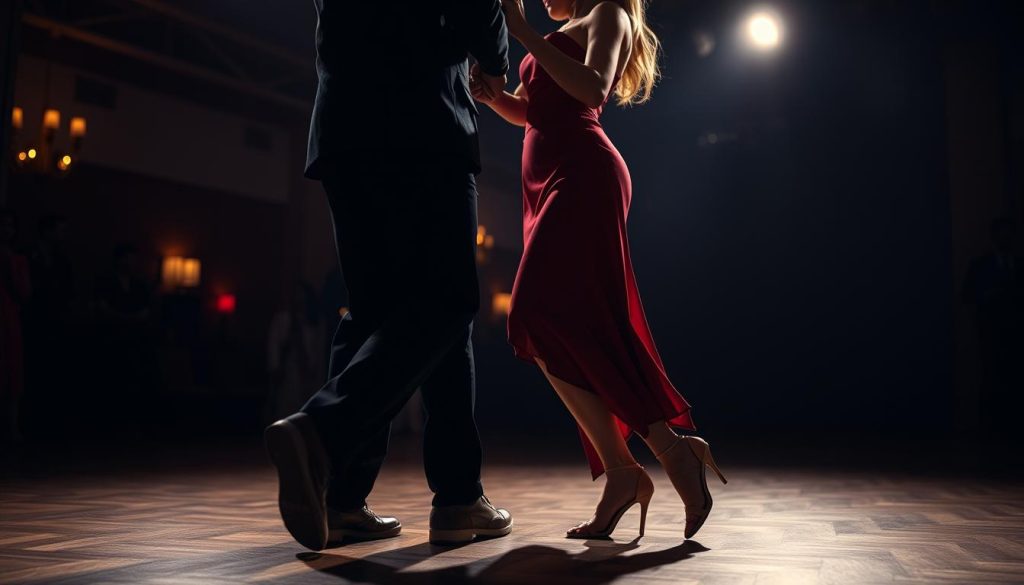
The magic of this dance lies in the harmony between two bodies. Correct positioning improves leading and comfort for the couple. It directly affects the fluidity of movement and the quality of the connection.
Open or closed position
In the closed position, the dancers face each other with their knees touching. Hands are placed on the shoulder blades or arms. Maintain an upright posture without becoming stiff.
The open version allows more freedom:
- 30 to 50 cm between partners
- Hands joined at shoulder height
- Ideal for complex figures
Connecting with your partner
Leading is achieved through subtle hand pressure. Too much blocks the movement; too little becomes imperceptible. An effective exercise is to dance with your eyes closed to develop sensitivity.
Adapt to differences in height:
| Difference | Solution |
|---|---|
| Taller partner | Raise the arms slightly |
| Shorter partner | Bend the knees slightly |
As instructors remind us:
“Connection comes from listening to each other, not from force.”
Practical tips for making rapid progress
Your progress depends on three pillars: practice, equipment, and immersion. By combining these elements, you will get the most out of every session and see results within a few weeks.
Solo practice exercises
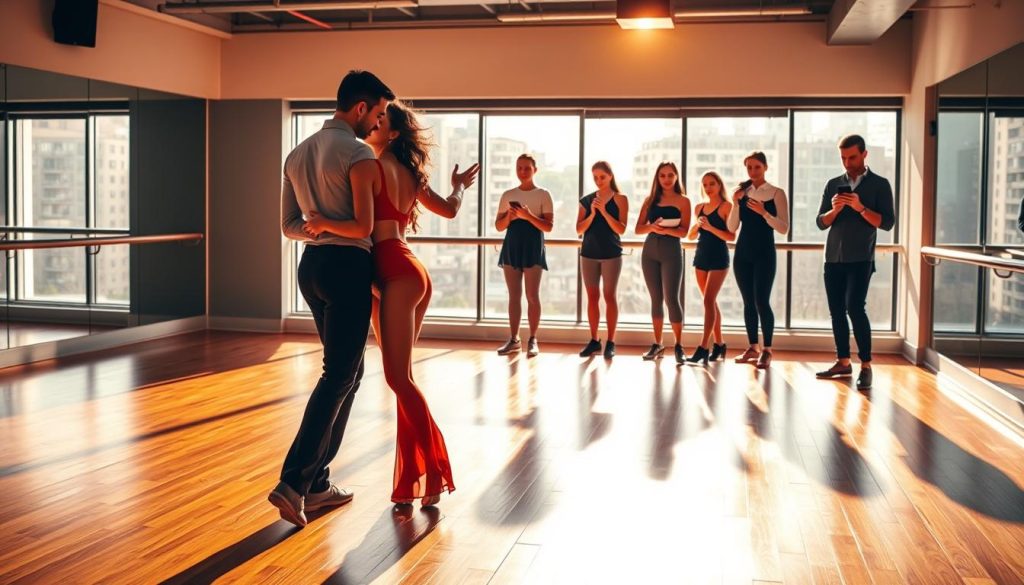
A daily practice of 15 minutes is enough to reinforce the basics:
- Warm-up: hip circles for 8 beats, followed by calf stretches
- Rhythm exercise: count aloud while tapping your feet
- Self-assessment: film your movements in front of a mirror
Instructors recommend this routine:
“Twenty minutes of exercises are better than an hour of imprecise dancing.”
Choosing dance shoes
The right equipment improves precision. Choose shoes with flexible soles and the following features:
| Floor type | Ideal sole | Example brand |
|---|---|---|
| Wood | Thin leather | Dance&Fun |
| Tile | Suede | Bailar |
Avoid sneakers: their excessive grip restricts turns.
Joining classes or dance socials
Group dance classes provide a structured environment:
- Immediate posture corrections
- Meeting a variety of partners
- Learning social etiquette
At socials, begin by watching experienced dancers. One useful tip is to note three figures to practice at home.
Conclusion
Dance is much more than a series of movements. Bachata offers a unique blend of enjoyment, social connection, and culture. It builds self-confidence and improves coordination.
Getting started may seem difficult, but progress comes with practice. Join a local community or try a free class to experience this energy.
Explore playlists and online forums as well. For enthusiasts, a trip to the Dominican Republic offers a chance to immerse yourself in the origins of this captivating dance.
Take the plunge and let the rhythm guide you. Bachata is waiting for you!