
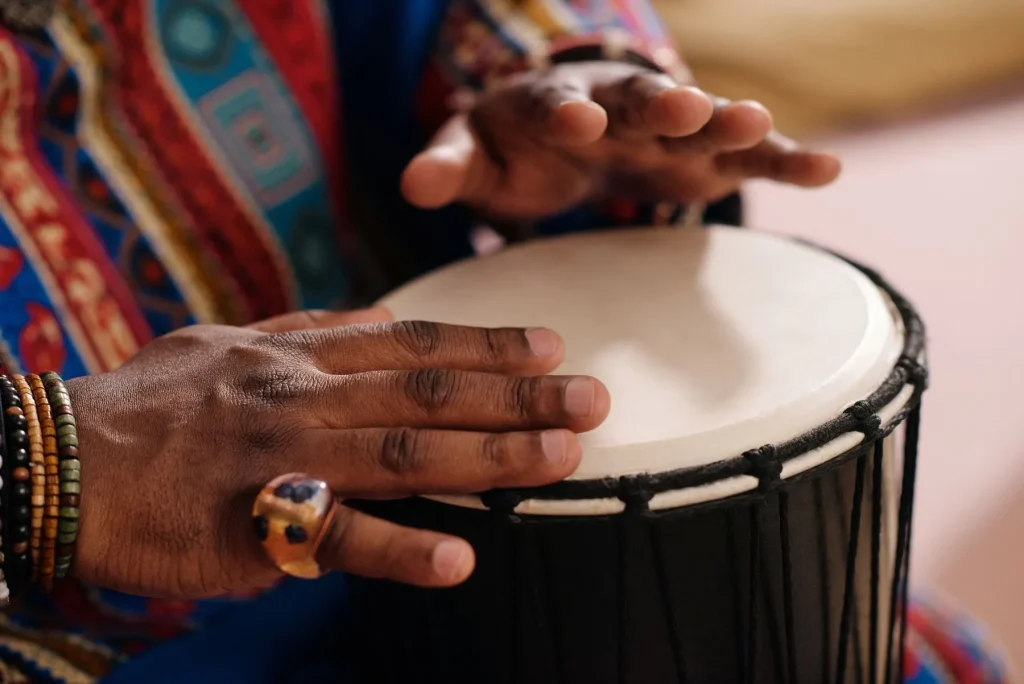
A percussion instrument from West Africa can spark a passion for music from an early age.
Choosing a good djembe for a young musician requires assessing its size, weight, and drumhead quality.
A model made from solid wood, such as mahogany, offers a rich sound and valuable durability for learning.
This practical guide covers dimensions, resonance, and materials, from wood to synthetic drumheads, so that the instrument suits the child’s build and age.
Playing comfort depends on a reasonable weight, a suitable height, and good balance between the right and left hands.
We also discuss maintenance, carrying cases, and humidity management to protect your investment.
To learn more, read our buying guide and find the best model for your budget.
Why introduce your child to African percussion?
African percussion develops motor skills and confidence from the very first rhythms.
A suitable instrument encourages listening and makes it easier to coordinate the left and right hands.
Developing coordination
Starting early improves overall motor coordination. Repeating patterns also helps develop rhythmic memory.
Musical discovery and social development
Playing in a group encourages social interaction and creates family bonds through shared music-making.
- The size and weight should remain suitable so that the instrument is easy to handle.
- The shell’s wood affects the warmth of the sound and its acoustic quality.
- The drumhead, whether natural or synthetic, determines its responsiveness and how successfully beginners produce their first strokes.
- In schools, compact models are easier to carry and use in groups.
| Benefit | Impact | Advice |
|---|---|---|
| Right-hand/left-hand coordination | Improves fine motor skills | Begin with simple patterns |
| Sound quality | Motivation and enjoyment of playing | Choose a well-tuned model |
| Size and weight | Comfort and ease of use | Choose a size suited to the player’s build |
For more information about choosing an instrument and finding a good model, read our buying guide.
Children’s djembe: how to choose the right one
Successfully playing the first rhythms often depends on a lightweight, stable model. A good instrument should remain securely between the knees without tipping over. This makes it easier to coordinate the right and left hands and prevents poor posture.
The size, weight, and manufacturing quality determine playing comfort. A wooden shell made from a material such as mahogany produces a beautiful sound, while modern materials can reduce the weight for use in workshops or at school.
The tension and type of drumhead affect the resonance and clarity of the three sounds: bass, tone, and slap. You should also consider maintenance, a case for transportation, and protection from humidity.

- Choose an age-appropriate model to encourage learning.
- Choose smooth finishes for safety and comfort.
- Set a budget that allows you to buy a strong, durable instrument.
For a complete buying guide and recommendations based on your budget, read our buying guide.
The importance of choosing a size suited to the player’s build
A drum’s size directly affects posture and sound quality.
Matching the instrument to the player’s build prevents hand fatigue and poor posture. The standard height for an adult is approximately 50 to 60 cm, while a model for younger players is often 30 to 40 cm tall.
Match the diameter to the child’s age
The diameter of the drumhead directly affects how easy the instrument is to play and the richness of its bass.
A smaller diameter makes hand placement easier and improves accuracy. To support progress, choose a model whose drumhead offers good projection without requiring excessive force.
The ideal seated posture
The posture should be stable: keep the instrument between the knees, the neck relaxed, and the shoulders lowered.
Stability encourages accurate strokes, which are essential for mastering the basics of percussion. The weight and manufacturing quality affect handling, particularly for children under nine.
- 30–40 cm: a good balance between projection and comfort for younger players.
- 50–60 cm: a size that meets adults’ resonance requirements.
- Prioritize comfort to support progress and enjoyment.
| Criterion | Impact | Recommendation |
|---|---|---|
| Size (height) | Comfort and posture | 30–40 cm for younger players; 50–60 cm for adults |
| Drumhead diameter | Ease of playing and bass response | Choose a diameter suited to the size of the player’s hands |
| Weight and quality | Ease of handling | Choose lightweight materials and strong finishes |
Comparing solid wood and synthetic materials
The shell material determines the sound, weight, and resistance to changing weather conditions.
Solid wood (mahogany or iroko) offers a warm sound and excellent projection. This type of instrument remains popular for performances where a rich tone matters.
However, it requires more maintenance and is vulnerable to humidity. A case and proper control of the drumhead tension will extend its lifespan.
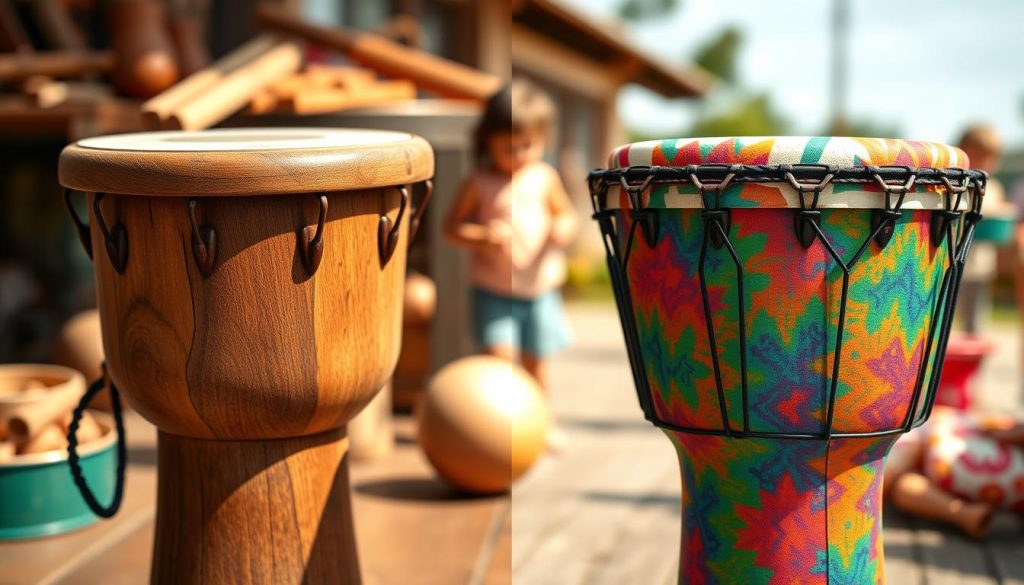
Synthetic materials (ABS and fiber) are lightweight and durable. Modern models cope better with changing weather conditions and are suitable for intensive use.
- Synthetic drumheads maintain stable tension, making them ideal for reducing maintenance in schools.
- An ABS instrument is easier to carry and less likely to be damaged.
- Manufacturing quality remains crucial to resonance, regardless of the material.
For a complete comparison of instrument types and shell variations, read our model guide.
Natural or synthetic drumhead for a young musician
The type of membrane plays a central role in the tone and ease of learning. It directly affects how the drum responds beneath the hand and how well it projects.
Sound stability and durability
Natural drumhead: goatskin produces an organic texture and rich dynamics. Its sound is warm, making it ideal for a solid-wood djembe used in traditional performances.
This option remains sensitive to changes in humidity. It requires regular maintenance to preserve its tension and quality.
Synthetic drumhead: pre-tensioned drumheads retain stable tension. They are highly consistent, making it easier to learn the three sounds (bass, tone, and slap).
“A stable membrane makes it easier to progress and reduces the need for adjustments between rehearsals.”
- Durability: synthetic > natural.
- Outdoor performance: choose a synthetic drumhead.
- For purists: solid wood and a natural drumhead provide a richer tone.
| Criterion | Natural drumhead | Synthetic drumhead |
|---|---|---|
| Tension stability | Moderate; depends on humidity | High; pre-tensioned |
| Maintenance | Regular (oiling and adjustment) | Very low |
| Projection and sound | Warm and nuanced | Clear and consistent |
For teaching resources and practical information sheets, read the educational booklet.
Assessing quality and playing comfort
Testing resonance and comfort while playing allows you to assess an instrument’s quality quickly. Place it between your knees and play the three sounds: bass, tone, and slap. The clarity of these notes is a key indicator of manufacturing quality.
A model should remain stable while being played. If it is unstable, extended practice may cause tension in the hand and shoulder.
Check the finish: rounded edges protect the hands. A carefully finished surface makes learning percussion easier and prevents unnecessary friction.
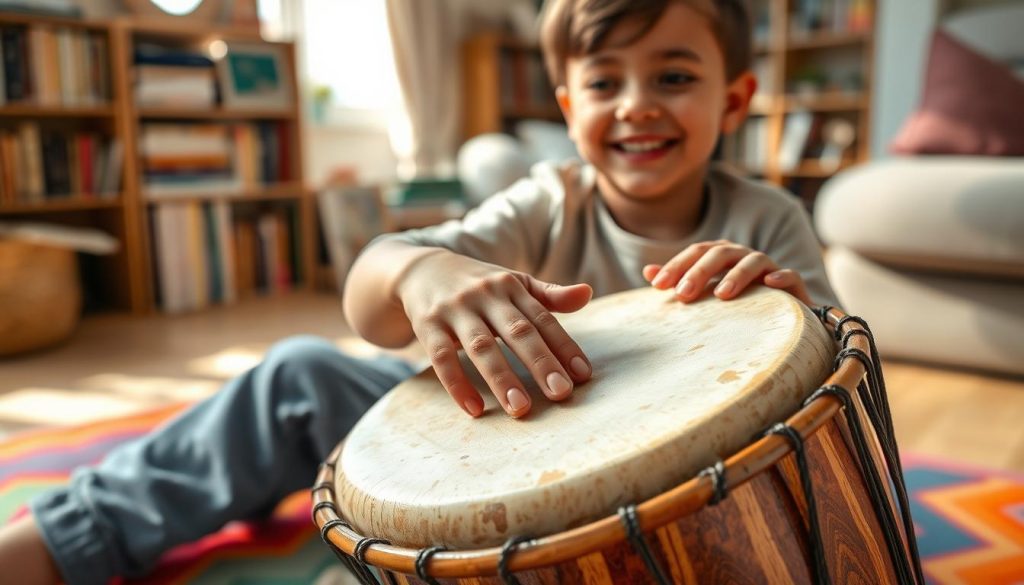
Check the weight and size against the child’s age to reduce fatigue. The drumhead tension should be adjustable so that the resonance can be adapted to the type of music being played.
- Regular maintenance and a carrying case extend its lifespan.
- Choose durable wood or synthetic materials according to how the instrument will be used and the ambient humidity.
- Choose an instrument that is easy to tune for a stress-free learning experience.
How much should you budget for a first instrument?
Knowing how much to spend helps you quickly find an instrument suited to the player’s actual level of commitment.
For a beginner, plan for a budget of €50 to €100. This range provides access to sturdy entry-level models suitable for beginners and for school or home use.
Entry-level models
Models made from ABS or fitted with synthetic drumheads are often less expensive. They maintain stable tension and require little maintenance. Their projection remains sufficient for rehearsals and workshops.
Investing in durability
An instrument costing more than €300 is generally handmade. Solid wood and a genuine natural drumhead provide a better sound and greater projection for performances.
- Price and use: €50–€100 for trying it out; €150–€300 for a good compromise.
- The size and type of drumhead affect the cost.
- For regular use, choose a mid-range model.
| Range | Indicative price | Advantage |
|---|---|---|
| Entry level | €50–€100 | Durable, low maintenance (synthetic drumheads) |
| Mid-range | €150–€300 | Greater comfort and balanced sound quality |
| Handmade | > €300 | Solid wood, superior projection and tone |
For a detailed comparison and recommendations based on your budget, read our practical beginner’s guide.
Practical maintenance and transportation advice
Protecting an instrument begins with good maintenance habits and careful transportation. Always use a padded case to reduce impacts and exposure to bad weather.
Changes in weather, particularly humidity, affect the tension of a natural drumhead. Check the tension regularly and store the instrument away from excessively humid places.
For wooden shells made from mahogany or other woods, light, controlled oiling extends their lifespan. Models made from modern materials and synthetic drumheads require less attention, although regular cleaning remains useful.
Weight and size affect transportation: use a strap for heavier instruments. A well-maintained instrument supports stress-free learning of African percussion and prevents unpleasant surprises during rehearsals.
- Regular maintenance to preserve resonance and projection.
- Transportation in a padded case to protect the drumhead from changing weather conditions.
- Check the tension periodically, especially on wooden models that are sensitive to humidity.
| Action | Frequency | Effect |
|---|---|---|
| Clean the drumhead | After every use | Better resonance |
| Check the tension | Every month | Stable projection |
| Oil the shell | 2–3 times a year | Protects the wood (mahogany) |
Follow this guide to adopt the right practices for your instrument’s type and dimensions. Simple maintenance ensures its longevity and preserves the desired sound.
Conclusion
The right balance of weight, size, and quality provides genuine playing enjoyment. A suitable instrument builds confidence and supports progress.
Prioritize hand comfort and the model’s stability. A good case and regular maintenance of the drumhead and shell will protect your purchase.
Instruments du Monde offers a wide selection of models. Discover dependable, varied options with this practical guide and refine your decision.
A thoughtful choice today becomes a musical companion for tomorrow. Give your child an instrument that makes them want to play every day.