
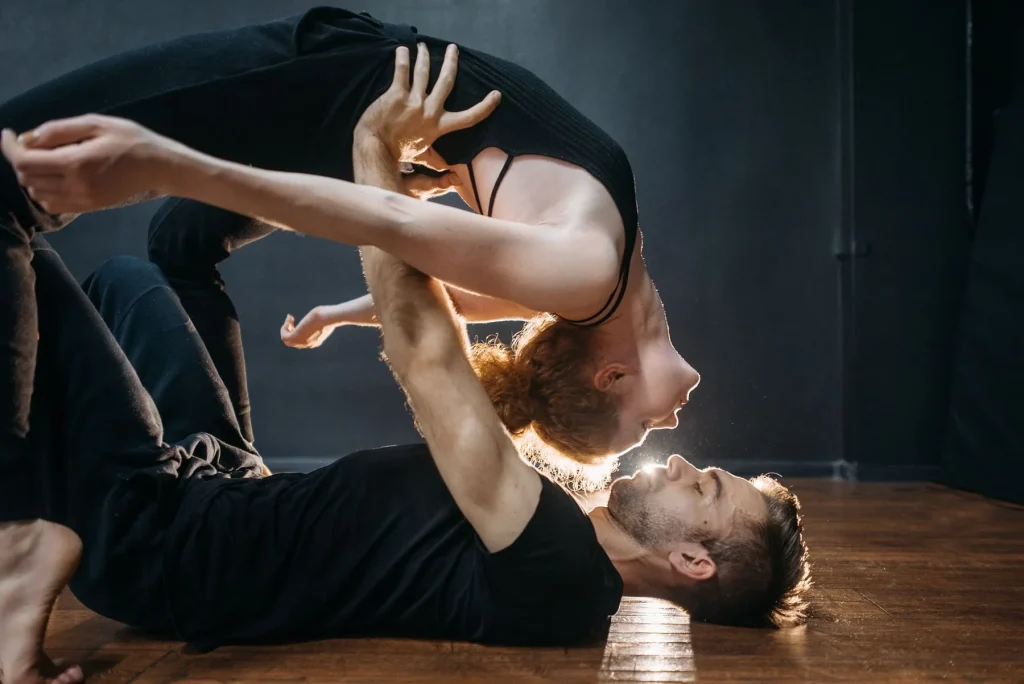
Latin dance captivates people with its energy and sensuality. Among the most accessible styles, bachata stands out for its gentle rhythm and fluid movements. Ideal for beginners, it lets you become familiar with the basics in just a few sessions.
Learning takes place in a relaxed atmosphere. Classes, often accompanied by popular songs such as Aventura’s “Obsession”, make the experience fun. No previous skills are required: the key is to let the melody carry you.
In France, many schools offer sessions tailored to newcomers. Whether you are in Paris or another major city, specialized venues will help you progress quickly. What matters most? Having fun and daring to dance without feeling self-conscious.
Introduction to bachata for beginners
Discover a dance that combines sensuality and simplicity. Originating in the Dominican Republic, it is danced with a partner, fostering a unique connection between them. Its slow rhythm allows everyone to get started without pressure.
Recognized in international competitions since 2012, this discipline combines technique and emotion. Unlike tango, its basic steps can be learned quickly. Here is a clear comparison:
| Criterion | Bachata | Tango |
|---|---|---|
| Complexity | Beginner level in 3 sessions | Beginner level in 8 sessions |
| Rhythm | 4/4, moderate tempo | 2/4, rapid variations |
| Popularity in France (2023) | +72% since 2015 | +34% since 2015 |
Body expression is essential. The hips follow the melody, creating a natural harmony. “Bachata helped me regain confidence in my body,” says Julie, 28, who has been dancing for a year.
More than 300 schools offer classes in France. This growth is linked to the immediate enjoyment the dance provides. Ideal for letting off steam or meeting people, it appeals because of its accessibility.
The origins of bachata: a sensual and accessible dance
A melody and swaying hips: the story begins in the streets of Santo Domingo. Born in the 1960s, this dance has its roots in working-class neighborhoods of the Dominican Republic. At the time, it was synonymous with cultural resistance.
Marginalized for many years, it was described as vulgar by the elite. Yet its artistic value ultimately prevailed. “It was the voice of the people, an outlet for those who went unseen,” explains Marco, an instructor at Danses Latines-Tropicales.
From the Dominican Republic to dance floors worldwide
Dominican migrants played a key role. In the 1990s, they brought their culture to New York and Madrid. Juan Luis Guerra’s song “Burbujas de Amor”, released in 1992, marked a turning point. It brought bachata international recognition.
Female and male dancers then popularized modern variations. The traditional rhythm was enriched with pop and electronic touches. One example? Prince Royce’s remixes won over a new generation.
The evolution of a once-disliked dance into a global phenomenon
In 2005, the World Dance Council added bachata to its competitions. Social media accelerated its spread. Today, schools in Paris and Lyon train thousands of enthusiasts.
“In 10 years, our enrollment has tripled. Demand is soaring among people aged 25 to 40.”
A symbol of diversity, this discipline transcends borders. The secret of its success? A blend of simplicity and emotional depth.
Easy bachata for beginners: the basic steps to master
Mastering the basics is essential if you want to move confidently on the dance floor. Once you have learned these elements, the dance becomes natural and expressive.

The fundamental movement: 1, 2, 3, tap
The 1, 2, 3, tap sequence structures the rhythm. Women start with the right leg and men with the left. On the fourth beat, the free foot brushes the floor on the ball of the foot.
Here is how to coordinate your movements:
- Feet: move around an imaginary square.
- Hips: sway gently to mark the beats.
- Hands: maintain relaxed contact with your partner.
Common beginner mistakes to avoid
Certain habits can slow your progress. Instructors often identify these pitfalls:
| Mistake | Solution |
|---|---|
| Looking at your feet | Focus on your partner’s shoulder |
| Forward-backward imbalance | Practice using floor markers |
| Stiff hips | Practice in front of a mirror |
Regular practice will help correct these details. The goal? To find fluidity and enjoyment in every step.
Key positions for dancing bachata
The art of bachata is revealed through the physical connection between partners. Two postures predominate: the closed position, a symbol of intimacy, and the open position, which provides greater freedom. Mastering these basics allows you to express all the sensuality of the style.
The closed position: connection and intimacy
Known as the “cuddle”, this posture brings the partners’ knees into contact. The hands rest gently on the shoulder blades or hips. Three key points:
- Keep the arms relaxed to make leading easier.
- Maintain a short distance without tension, encouraging harmonious expression.
- “Shadow position” variation: back-to-front contact for stylized figures.
The open position: freedom and expression
Ideal for footwork, it allows individual expression while maintaining visual contact. Tips from professionals:
- Choose close-fitting clothing to make body signals clearer.
- Adjust the distance between partners if there is a difference in height.
- Transition smoothly to the closed position during the slower beats.
Combined with mutual attentiveness, these positions turn every dance into a wordless conversation. The secret? Practice with kindness and adapt your style to each partner.
Bachata rhythm: how to feel and follow it
Understanding the rhythm of this Latin dance transforms the experience into a genuine musical conversation. Unlike other styles, its repetitive structure makes it easier to learn.

Counting the beats: the 8-count structure
Bachata music consists of two 4-beat phrases, with strong accents on the fourth and eighth beats. To identify them:
- Listen to the bass or güira, which are often more prominent on these accents.
- Tap your foot while counting aloud “1, 2, 3, 4,” then repeat.
The average tempo (120–144 BPM) makes active listening possible. Try Romeo Santos’s “Propuesta Indecente”, which is ideal for beginners.
How it differs from salsa and other Latin dances
Unlike salsa (150–250 BPM), bachata has a slower rhythm. Here is a detailed analysis:
| Criterion | Bachata | Cuban salsa |
|---|---|---|
| Structure | 8 beats (4 + 4) | 8 beats (2 phrases of 4) |
| Key instruments | Güira, bongo, bass | Trumpets, congas |
| Style | Circular movements | Linear steps |
Rhythmic differences also affect leading. Turns are faster in salsa, whereas bachata emphasizes connection.
Do you need a partner to learn bachata?
Many people hesitate to start because they fear they will not find a partner. Modern schools, however, have adapted their methods to make this dance accessible to everyone. What matters most is your desire to learn and your consistency.

Leading in bachata: the roles of men and women
Traditionally, male dancers lead while female dancers follow. But this dynamic is changing. Leading relies on subtle signals:
- Light finger pressure to indicate turns.
- Shifting body weight to signal changes of direction.
- Eye contact to synchronize movements.
“In class, we alternate roles. This develops attentiveness and versatility.”
How to practice alone at home
Several techniques allow you to progress without a partner:
- The spin: turn around on the spot while marking all 8 beats.
- Shadow dancing: reproduce the steps in front of a mirror.
- Hip exercises with a weighted belt.
During lockdown, 63% of students used video tutorials. “I learned to feel my body before dancing with other people,” says Thomas, 31.
What do professionals recommend? Start by mastering the rhythm, then gradually incorporate figures. Improvisation will come naturally.
Tips for progressing quickly in bachata
Progressing in Latin dance requires a methodical approach. Whether you are aiming for an intermediate level or advanced mastery, these tips will optimize your learning.

Choosing the right class or school
The quality of your school directly affects your results. Here are the criteria to prioritize:
- Group size: no more than 8–12 participants for personalized guidance.
- The style taught (traditional, modern, or fusion), depending on your goals.
- A supportive atmosphere, which is essential for feeling confident enough to experiment.
“A good instructor adapts their advice to each person’s pace. Watch how they correct their students.”
The importance of posture and hip movement
Aligned posture enhances the elegance of your movements. The Alexander Technique, used to improve coordination, produces excellent results.
Key hip-movement exercises:
- Side planks with rotation (3 sets of 30 seconds).
- Hip circles to slow music (count 8 beats on each side).
| Ideal weekly program | Benefits |
|---|---|
| 2 group classes + 1 solo session | Improves technique and muscle memory |
| 1 intensive workshop per month | Rapid progress through immersion |
“After 3 months of practicing for 20 minutes a day, my leading became fluid,” says Léa, 35. Consistency matters more than duration.
Conclusion: start bachata with confidence
Unleash your energy through an activity that is both athletic and social. This dance strengthens coordination while creating unique connections.
The enjoyment comes quickly, even without experience. As Marc, 50, says: “I discovered a new passion and made new friends.”
Take advantage of free trial classes to give it a try without committing. Professional advice will guide you step by step.
Join a world where music and movement bring people together. Every step counts—start today!