
Bachata, born in the Dominican Republic, is much more than just a dance. It is an artistic expression in which body and music become one. Its essence lies in the harmony between movement and melody.
This discipline requires careful listening. The steps must follow every note to create perfect harmony. Festivals such as the Dominican Republic Bachata Festival show just how important this connection is.
This guide will help you master this alchemy. Whether you are a beginner or an experienced dancer, you will discover how to transform your practice. The goal? To become a dancer who is always attuned to the rhythms.
Introduction to musicality in bachata
Knowing how to dance means first knowing how to listen. This discipline, which originated in the Dominican Republic, requires perfect harmony between movement and melody. A study by Caroline Palmer reveals that 2–3% of the population experiences beat deafness, highlighting the importance of developing this skill.
What is musicality in dance?
Musicality is the ability to synchronize your movements with sound. Scientifically, it involves motor and auditory coordination. As a Fuego Latino instructor explains:
“Many beginners focus on the steps but forget to listen to the music.”
The crucial importance of rhythm
In bachata, rhythm guides every step. Unlike salsa, which uses eight counts, bachata is structured around four counts, with accents marked by the requinto guitar. Luis Vargas and Juan Luis Guerra modernized this dance style by adding complex nuances.
| Element | Bachata | Salsa |
|---|---|---|
| Basic count | 4 counts | 8 counts |
| Key instrument | Requinto guitar | Timbales |
| Musical example | “Bachata Rosa” | “Oye Como Va” |
The distinctive rhythms of bachata
The song “Bachata Rosa” perfectly illustrates rhythmic breaks. Sudden changes in tempo require active listening. This richness is what gives the practice its unique feel.
Understanding bachata’s musical structure
To dance fluidly, you must first understand the foundations of the melody. Bachata, which originated in the Dominican Republic, is built on a very specific musical structure. Each instrument plays a key role.
Key instruments and their rhythmic role
The güira, a metal percussion instrument, marks the tempo precisely. The requinto guitar provides moving melodies, while the bass emphasizes the strong beats. In “Hoja en Blanco,” Monchy & Alexandra demonstrate this perfect alchemy.
Decoding strong and weak beats
The rhythmic foundation generally follows this pattern:
- Bass on beats 1 and 3
- Bongo accents on the offbeats
- The fourth beat is often marked by a güira stroke
A simple exercise is to clap on the accents. This helps you feel the nuances.
The different musical styles of bachata
The tempo varies by style:
| Style | Tempo (BPM) | Characteristic |
|---|---|---|
| Traditional | 120-140 | Slower rhythm |
| Modern | 140-160 | Pop influences |
| Sensual | 110-130 | Fluid movements |
To explore these variations, listen to artists such as Aventura or Prince Royce. Their songs clearly demonstrate the genre’s evolution.
Discover more advice on dance techniques to refine your practice.
Bachata musicality: develop your sense of rhythm in dance
Improving your musical perception requires practical, appropriate methods. Latin dances like this one rest on three pillars: listening, analysis, and reproduction.
Active-listening exercises
Start by isolating the instruments. One effective tip:
- Use the Dance Rhythm app to visualize patterns
- Walk sideways while following the bass
- Analyze “Propuesta Indecente” by Romeo Santos measure by measure
One student reports:
“After three months of regular practice, I could finally distinguish the syncopations.”
Learning to count the beats
The “1-2-3-tap” method works well:
| Technique | Application | Benefit |
|---|---|---|
| Mobile metronome | Set it between 100 and 160 BPM | Gradual adaptation |
| Counting aloud | “One-two-three-tap” | Marks the offbeats |
Identifying rhythmic changes
Organize workshops featuring:
- Speed variations (+10% each week)
- Visual signals with a partner
- Guided improvisation exercises
Weak beats are often overlooked. A good class should devote 20% of the session to them.
Body techniques for improving your rhythm
Mastering your body is essential for synchronizing your steps with the music. A well-mastered technique improves both precision and natural movement. Here is how to optimize your gestures for greater harmony.
Rhythmic isolation exercises
Inspired by Marius & Elena, the isolation method works each part of the body separately. Begin with the shoulders and neck while following a slow tempo.
One effective exercise is an eight-count body wave. It improves fluidity of movement and spatial awareness.
Coordinating feet and body with the music
Synchronization between the feet and the rest of the body is crucial. Use a resistance band to work on pivots under resistance.
Also practice linking the hips and knees for dips. A partner can act as a mirror to help correct symmetry.
| Exercise | Goal | Recommended duration |
|---|---|---|
| Shoulder isolation | Movement precision | 5 min/day |
| Pivots with a resistance band | Muscle strengthening | 10 min/session |
| Mirror exercise | Posture correction | 15 min/week |
The role of the hips in rhythmic expression
The hips are central to expression in bachata. Improve their mobility with slow, controlled circles.
Adapt your style to your body type. Slow-motion videos help refine the details.
As one professional puts it:
“Supple hips turn a simple sequence of steps into genuine choreography.”
Practical exercises for developing your musicality
Progress requires practical and enjoyable exercises. These methods, used by professionals around the world, turn learning into an immersive experience.
Walking to the basic rhythm
Start by mastering the fundamental basic step. Here is an effective routine:
- Choose a simple song (120-130 BPM)
- Walk in a straight line, synchronizing each step with the strong beats
- Gradually add arm movements
A Bachata Day competitor confirms:
“This exercise helped me improve my rhythmic accuracy by 30% in two months.”
Varying your execution speed
Adaptability is essential. Try the 52 variations method:
- Start at 50% of the original tempo
- Increase the speed by 10% every 30 seconds
- Gradually slow back down
This cycle strengthens active listening and muscle memory. For additional advice, read this guide to rhythmic techniques.
Rhythm games with a partner
Turn practice into an enjoyable shared experience:
| Activity | Duration | Benefit |
|---|---|---|
| Stop-and-go | 10 min | Responsiveness |
| Body percussion | 15 min | Coordination |
| Social challenge | 3 evenings/month | Confidence on the dance floor |
Free interpretation to acoustic music is particularly effective at stimulating creativity. Vary your styles for balanced progress.
Adapting your dancing to different bachata styles
Each style brings a unique touch to this practice from the Caribbean. Bachata festivals show how techniques evolve under different regional influences.
Traditional and modern rhythms
Dominican culture permeates the classic versions. Acoustic guitars dominate, with steady tempos of around 120 BPM.
Contemporary versions include 30% more turns. The footwork becomes faster, particularly in bachatango songs.
Adapting your style to the speed of the music
Experienced dancers adjust their energy to the tempo. Tip: use progressive playlists to become accustomed to the variations.
| Speed | Technique | Typical song |
|---|---|---|
| Slow ( | Fluid movements | “Estrellas y Luna” |
| Medium (120-140) | Precise footwork | “Darte un Beso” |
| Fast (>150) | Dynamic pivots | “Ella y Yo” |
Musicality in sensual and Dominican bachata
Personal preferences often guide the choice. Sensual bachata favors waves, while the original style focuses on footwork.
Compare videos of Raquel y Miguel in the traditional style with Daniel y Desiree performing fusion. The interpretation changes dramatically.
Common mistakes and how to correct them
Mistakes are part of learning, but knowing how to correct them changes everything. In Latin dances, certain common mistakes arise repeatedly. Here is how to identify and resolve them.
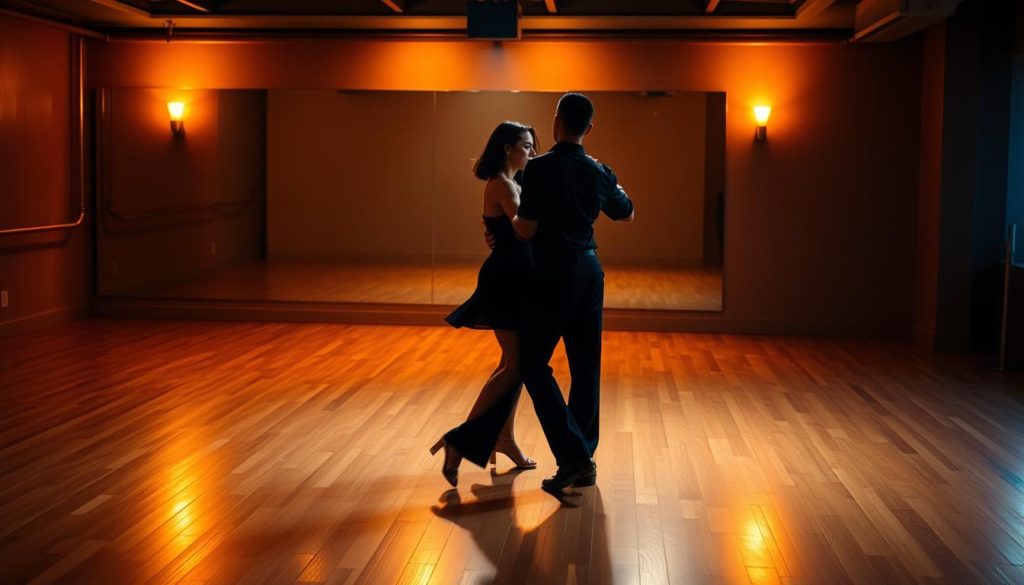
Synchronization problems
A mismatch between the steps and the music is common among beginners. Here are five typical counting mistakes:
- Ignoring the offbeats (beats 4 and 8)
- Speeding up during turns
- Forgetting musical pauses
- Confusing slow and fast tempos
- Overlooking instrumental accents
The body drumming method helps you naturally return to the beat. Clap on the strong beats and tap your feet on the weak beats.
Beat deafness: myth or reality?
According to studies, only 2–3% of the population may experience this condition. For everyone else, it is often a matter of practice.
A specialist instructor explains:
“Most students improve with targeted exercises. MyBachata sensors show improvements of 73% in three months.”
Techniques for finding the rhythm again
The seven-step protocol produces excellent results:
- Listen to the music without moving
- Tap the basic rhythm
- Walk on the strong beats
- Add arm movements
- Practice with a partner
- Use a visual metronome
- Improvise over variations
Before every class, five minutes of mental visualization can enhance performance. Try it!
Conclusion: becoming a musical dancer
Turning your passion into harmonious movement is the essence of this discipline. Active listening, precise technique, and adaptation to different styles form a winning trio. These pillars will guide you toward ever more authentic expression.
Join the Fuego Latino community to connect with dancers from around the world. Exclusive workshops with guest artists are planned for this summer. It is a unique opportunity to improve.
As Léa, a former beginner, recounts:
“Regular practice transformed my life. Today, I teach with joy.”
Remember: enjoyment remains the key. Let the music carry you and savor every step forward.