
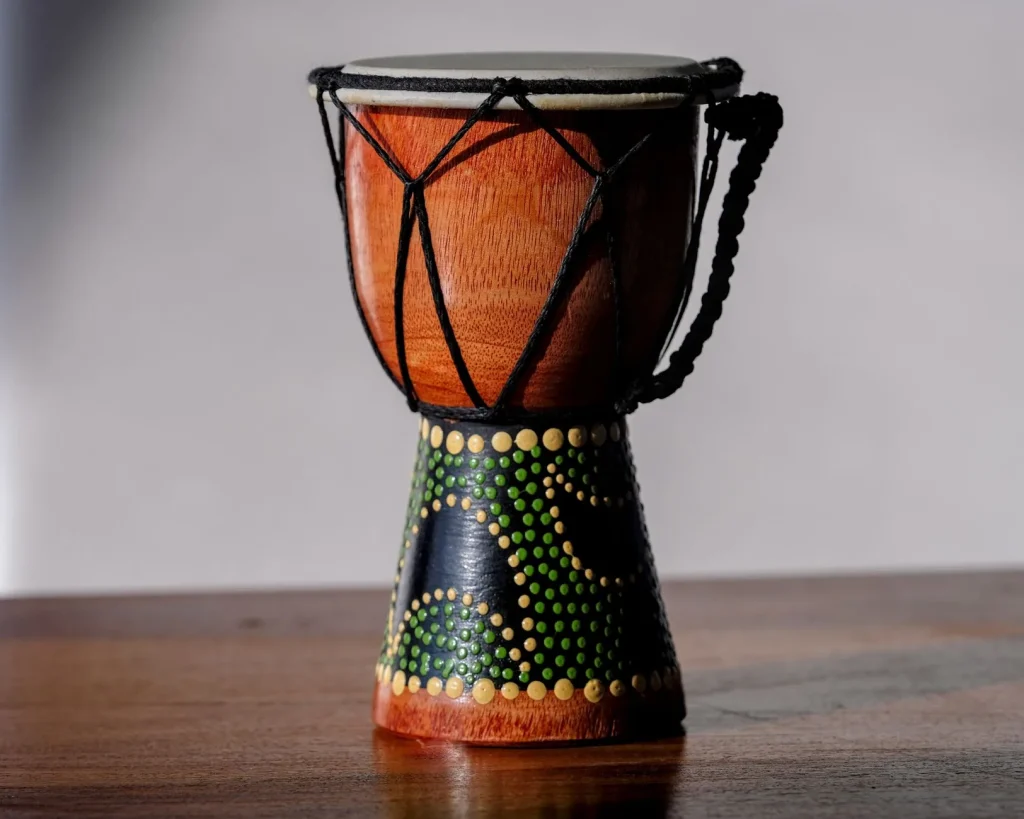
Author: a percussion adviser with more than twenty years of experience, I will guide you through buying your first instrument.
This short article explores the essential criteria to check before buying. We will see how to combine a limited budget with a satisfying sound.
You will learn how to check the condition of the shell, head and ropes, as well as how to choose the right size to prevent pain and make playing easier.
I also provide practical advice for spotting problematic finishes and choosing reputable sellers.
To take your pre-purchase checks further, visit my page dedicated to selecting an instrument: choose your instrument.
Goal: to help you buy a durable and enjoyable instrument without making a costly mistake.
Cheap Djembe: Bargain or Bad Choice?
Investing in a first instrument requires you to distinguish genuine quality from appearances. A rich sound and solid construction determine the instrument’s lifespan and how enjoyable it is to play.
This iconic West African music drum requires a simple but thorough inspection. Check the shell, head and ropework for cracks, an excessively tight head or fragile assembly.
Be careful: a low-priced model may conceal defects that affect its tone. The materials and craftsmanship give each instrument its own “sonic soul.”
- Reliability: a good instrument lets you progress without technical interruptions.
- Sound: it depends on the wood, head and tuning.
- Durability: avoid poor-quality finishes that deteriorate quickly.
Next, we will examine whether an economical option remains viable for a beginner or whether it is better to invest a little more in an instrument that will last.
Comparison of Traditional and Modern Models
Distinguishing solid wood from synthetic materials will inform your purchasing decision. This short section compares two approaches to choosing an instrument based on its use and the climate.
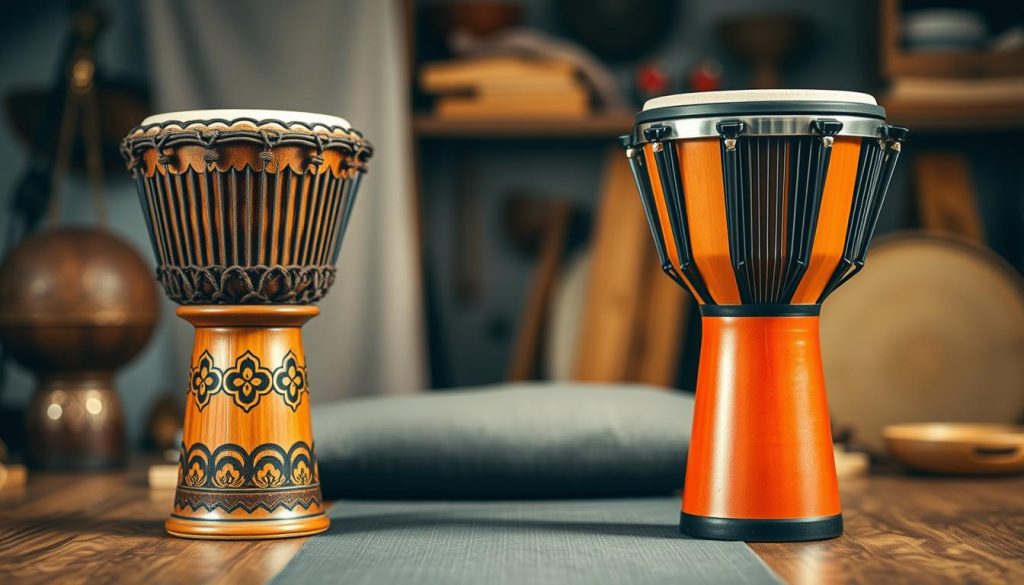
Solid Wood and Animal Skins
Traditional instruments are carved from woods such as mahogany or iroko. This produces the depth of sound prized by purists.
Tensioning animal skins requires artisanal expertise. This craftsmanship guarantees authenticity rooted in tradition.
Synthetic Materials and Modern Advantages
Modern models use ABS plastic or fiberglass. This type of construction offers greater resistance to climate variations.
Practical advantage: the tension remains more stable, helping beginners play outdoors frequently without having to retune the instrument.
| Characteristic | Traditional (wood) | Modern (synthetic) |
|---|---|---|
| Sound | Warm, deep | Clear, consistent |
| Maintenance | More demanding | Easy |
| Stability | Sensitive to humidity | Weather-resistant |
| Price | Varies according to quality | Often more affordable |
| Recommended for | Players seeking tradition | Beginners and outdoor use |
For detailed pre-purchase checks, see points to check before buying.
Choosing the Ideal Size for a Beginner
Getting off to a good start means choosing a size suited to the musician’s physique.
For a beginner, a medium-sized instrument with a 40-to-50-centimeter head offers a good compromise between portability and sound quality. This size is easier to hold and produces clear high notes without sacrificing bass.
Matching the Size to the Musician’s Age
Models measuring 60 centimeters in height are better suited to adult players who want to explore complex rhythms and deep bass tones.
For children, choose models under 40 centimeters. They are lighter and easier to handle. This adjustment prevents muscle strain and makes playing percussion more enjoyable.
- Useful compromise: a 40-to-50-cm head for beginners.
- Standard size: 60 cm tall for deeper sounds.
- Tension: it varies with size and affects the response when struck.
| Size (head) | Height | Recommended for |
|---|---|---|
| < 40 cm | Variable (small) | Children, early learning |
| 40 to 50 cm | 50 to 60 cm | Beginners, mixed use |
| > 50 cm | ≈ 60 cm | Advanced players seeking bass |
Setting Your Budget for a First Drum
Setting a clear budget before buying prevents regrets and guides your search toward suitable instruments.
€50 to €100: this range lets you buy an entry-level model and discover percussion without making a major commitment. Expect acceptable quality for learning the basics.
€100 to €300: this is the recommended mid-range budget if you want better playability and a richer sound. The materials and finish are often superior, making it easier to progress.
More than €300: this will buy a high-end instrument made by an experienced craftsperson. You will get durability and a tone that will support your playing for many years.

- Set aside money for accessories: a case, strap and maintenance supplies.
- Compare offers to find the best value for money.
- Consult a reliable buying guide before deciding: how to buy a good instrument.
Essential Accessories for Percussionists
Transport, protection and replacement parts are the essential accessories you need for worry-free playing. These items extend your instrument’s life and improve your comfort during rehearsals.
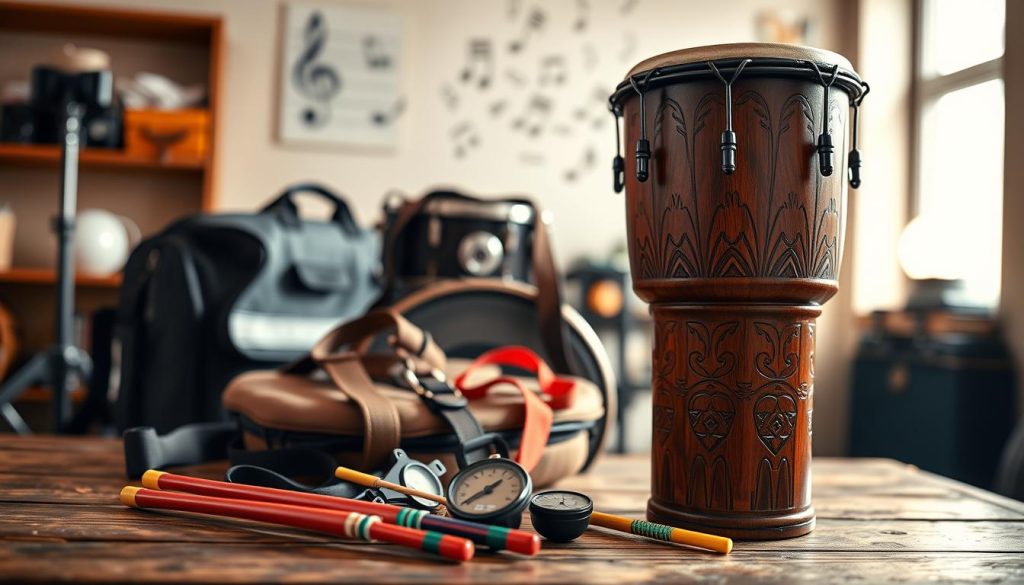
The Importance of a Strap
A carrying strap distributes the weight and reduces muscle strain during long journeys. It helps you hold the instrument correctly and provides greater stability when playing while standing.
Protection with a Case
A protective case safeguards the instrument against impacts, dust and changes in humidity. Investing in a padded case prevents minor damage that could affect its sound.
Managing Replacement Heads
Keeping replacement heads available prevents interruptions when the head wears out. Remember to check and maintain the ropes as well. Proper care preserves the tension and maintains consistent sound quality.
- A properly adjusted strap relieves pressure on the shoulders.
- A suitable case protects your instrument while traveling.
- Replacement heads and ropes reduce interruptions to your practice.
- These accessories extend the life of your instruments and make playing percussion easier.
Where to Buy Your Instrument with Confidence
Buying with confidence begins with selecting specialists who understand tension and wood. Expert sellers explain the differences between types and provide personalized advice.
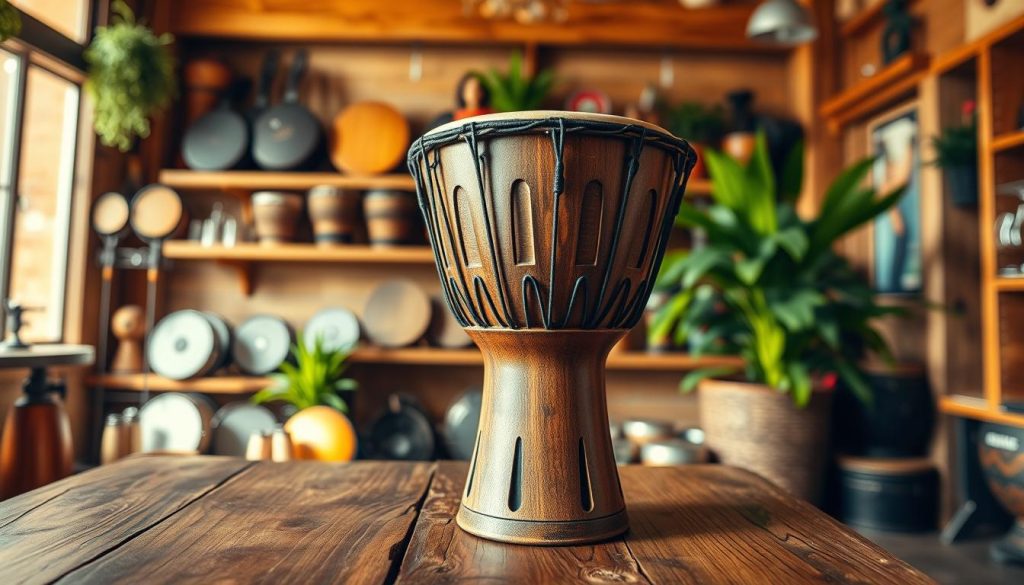
The Instruments du Monde store has a collection of more than 50 models. It allows you to compare several instruments before making a decision.
“A good retailer provides technical advice and responsive after-sales service.”
Buying online has the advantage of a 14-day right of withdrawal. You can try the instrument and return the product if its sound or feel does not suit you.
- Avoid general-purpose websites with no expertise in tension or wood.
- Choose specialists who guarantee build quality and reliable after-sales service.
- Test the instrument in a store if you want to check its sound, but then compare the selection online.
| Criterion | Specialist retailer | General-purpose store |
|---|---|---|
| Technical advice | High | Low |
| Choice of models | Wide (more than 50) | Limited |
| Right of withdrawal | Often 14 days (online) | Varies |
Conclusion: Making the Right Choice for Your Playing
Success in percussion begins with a carefully considered purchase. Choose an instrument suited to your build and how often you play so that you remain motivated.
Check the head’s tension, the shell’s strength and the balance between registers by testing the bass, tone and slap. These checks ensure frustration-free progress.
Choose tradition or modern models according to how you plan to use the instrument. Explore specialists’ collections to compare finishes and traceability.
For practical advice about sizes, woods and sound, see our guide to sizes and sounds. By following this advice, you will make a durable and suitable choice.