

Are you looking for an affordable instrument and hoping to avoid common pitfalls? This short guide will help you examine a used djembe in a few clear steps.
Check the goatskin head and the tension of the ropework. Test the three sounds: bass, tone, and slap. These tests reveal the sound quality from the first contact.
Check the wood, the base, and the presence of holes or signs of wear. Hand craftsmanship affects resonance, while the shell diameter influences the tone and overtones.
Consider the price and your budget: a handmade instrument may cost between €80 and €180, compared with €300–€500 new in France. Also watch out for humidity and changes in rope tension.
To learn more about reliable places to buy and recommended models, see this dedicated page.
Why choose a used djembe?
The secondhand market provides access to instruments made from fine woods without breaking the bank. In France, hand-carved shells often cost between €80 and €180, compared with €300–€500 new.
An instrument that has already been played may be better broken in: the wood fibers stabilize and the sound becomes more consistent. This is a real advantage for anyone seeking predictable sound quality from the moment of purchase.
Buying used can also be an environmentally responsible choice. Extending an instrument’s life reduces the consumption of forest resources and supports a more sustainable approach.
- Access to fine woods at a lower cost.
- Natural breaking-in that improves resonance.
- Many options on online platforms and from local dealers in France.
To identify good deals and check the condition before committing, see this useful page.
Used djembe: advice before buying for a successful inspection
A methodical inspection protects you from industrial copies sold as handmade instruments. Carefully examine the wood and head. Look for repairs concealing cracks or artificial tension.
Ask about its storage history. Excessive humidity damages the head and base. Check the condition of the ropework and ropes: fraying reduces the instrument’s tuning capacity.
Common pitfalls
- Industrial copies resold as handmade instruments.
- Cracks concealed with glue or filler.
- Worn ropes that limit the tension and quality of the sounds.
Recommended places to buy
In France, favor specialist shops, instrument makers, and percussion schools. Verified classified ads can also be suitable if you inspect the instrument carefully.
Test the playing position with a strap to check the fit. Make sure your budget covers any repairs to the base or head.
| Item | What to check | Risk | Action |
|---|---|---|---|
| Head | Even tension | Warping, muffled sounds | Reject it or negotiate the price |
| Wood | Visible cracks | Sound leakage, weakness | Examine it under a light and ask about its history |
| Ropework | Condition and tension | Inability to tune | Plan for replacement |
| Storage | Humidity and temperatures | Progressive deterioration | Avoid it if the storage conditions are unknown |
Assessing sound quality and the three fundamental sounds
The sound assessment should focus on the head’s response to the three distinct strokes.
Test the bass, tone, and slap.
The head should respond clearly: the bass should be deep and free of buzzing. The tone should be focused and clear. The slap should remain dry, without unwanted high-pitched overtones.
For most adults, a diameter of 12 to 13 inches makes it easier to maintain the correct hand position and play all three sounds naturally.
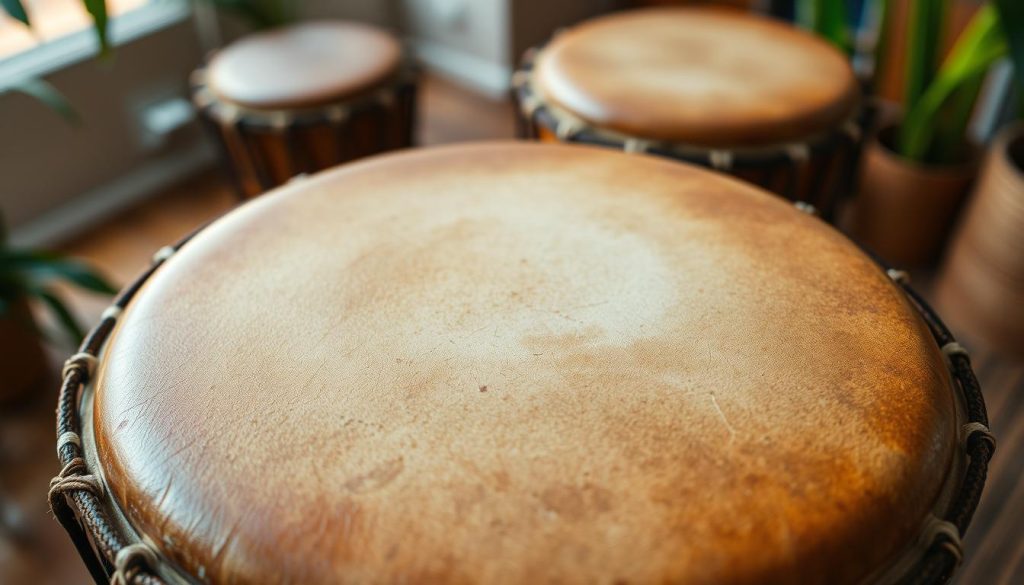
The shell’s wood should resonate freely: move 2 to 3 meters away to test its projection. Good ropework maintains stable tension; without it, the sounds become unfocused.
Finally, check the base: if it is muffled by the floor, the bass will lose impact and the overall quality will suffer.
Structural inspection of the solid-wood shell
Begin by examining the wood’s density and color to determine its origin. Lenke can be identified by its reddish-brown color and high density, which promote good sound projection.
Identifying fine woods
Tap the shell lightly: a clear, ringing sound indicates good craftsmanship and suitable density. Run your hand over the surface to detect irregularities caused by humidity.
A quality instrument may be made from lenke or other dense woods. If the material seems light or crumbly, its value and price should be reconsidered.
Detecting cracks
Inspect the base under raking light: vertical hairline cracks are common and dangerous there. These active cracks compromise the structural strength and service life of the base.
A clean resin repair may be acceptable if it is away from high-tension areas. Also look for holes or rotten wood; these signs reduce durability.
- Check the overall condition of the wood before the purchase.
- Good ropework and correct tension cannot compensate for a cracked shell.
- Adjust the price if restoration is required to recover the quality of the sounds.
For a complete checklist and other points to inspect, see this practical list, or discover complementary technical approaches in a technical guide.
Condition of the head and longevity of the playing surface
Inspecting the playing surface often reveals the instrument’s true condition. A head in good condition provides better sound quality and greater longevity.
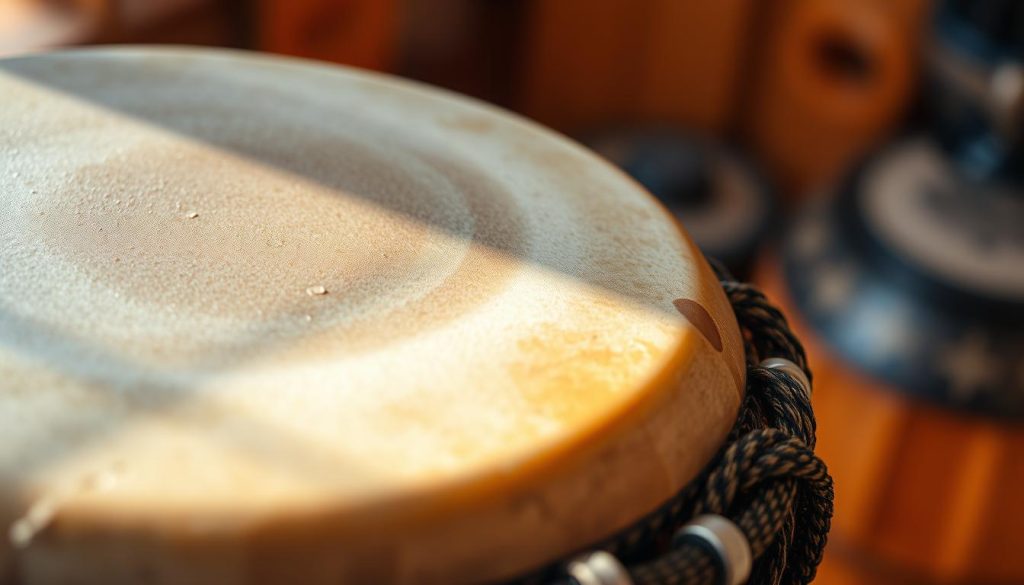
The goatskin head should be examined for dark marks caused by humidity or areas that have become thin. The goatskin’s spine should be centered: this indicates even mounting and greater durability.
A head that is too thin or cracked requires immediate replacement. A perforated head must be reskinned, at an estimated cost of €40 to €80 depending on the shell size.
Animal or synthetic head
Synthetic heads are more stable under changing climatic conditions, but they often lack the harmonic richness of an animal head. Check the tension by pressing the center and the flexibility by pinching the edge.
- Inspect the edges for nicks or folds that could develop into holes.
- Sound ropework is essential to keep the head in place and compensate for changes in humidity.
- Make sure the head’s size matches the diameter of the wood to avoid uneven tension.
To learn how to repair or replace a head, see this guide to reskinning and maintenance.
Checking the rope and tension system
Checking the weave and the ropes’ remaining adjustment range prevents unpleasant surprises in the long term.
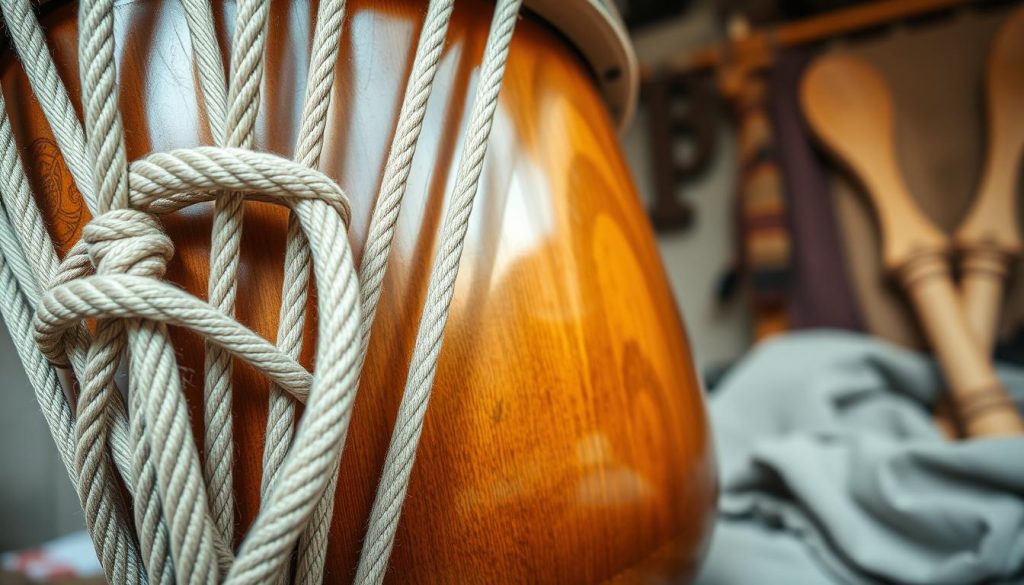
Count the strands: a professional instrument generally has between 24 and 30 to ensure even tension.
Examine the knots and check for fraying. Make sure enough adjustment range remains to tighten the ropework. A jammed system will prevent tuning after a few months.
Key-tuned systems provide quick, repeatable adjustment. They suit traveling musicians who encounter changes in humidity.
| Item | What to check | Risk | Recommended action |
|---|---|---|---|
| Ropework | Even knots, no fraying | Loss of tension | Replacement or negotiation |
| Tension | Remaining adjustment range and evenness | Loose head, unfocused sounds | Test tightening and plan for adjustment |
| System | Working key or solid weave | Jamming, inability to adjust | Favor a key-tuned system if you travel frequently |
| Base and wood | Neat weave protecting the base | Wood wear during transport | Reinforce the weave or use a protective case |
Note that traditional ropes require more maintenance but produce a more authentic sound. Quality ropework helps keep the head stable and preserves the fundamental sounds.
Choosing according to your build and budget
A good match between your body and the shell transforms playing comfort. Match the instrument’s size to your build to maintain accurate strokes and prevent wrist strain.
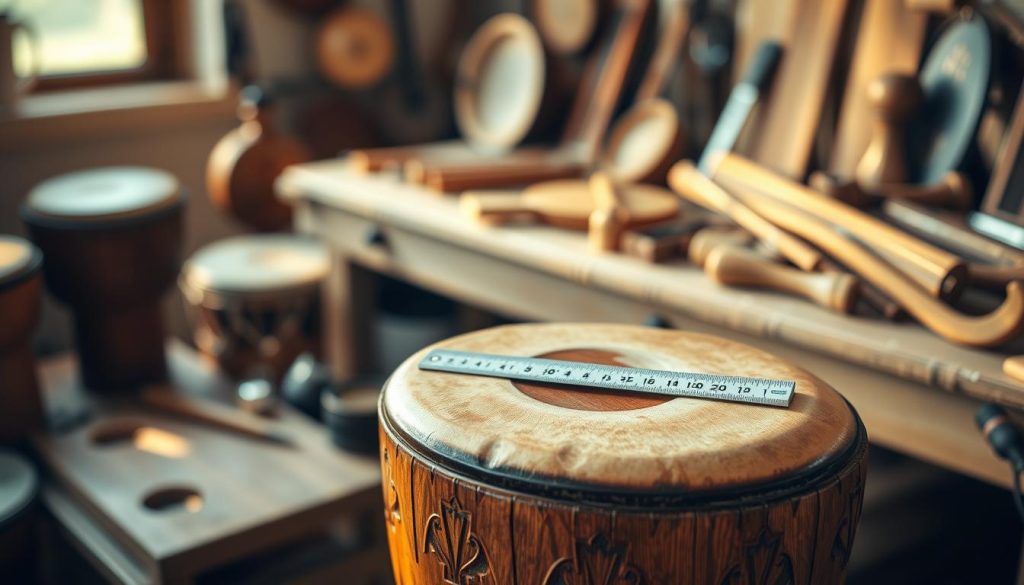
Diameter and height
For adults, favor a diameter of 12–13 inches. This size provides natural access to all three sounds and reduces fatigue.
Height affects your position. A shell that is too tall requires more effort when playing while standing. Test the instrument while sitting and standing to confirm your position.
Analyzing hidden costs
Do not consider only the advertised price: include possible repairs. Reskinning generally costs €40–€80.
- Plan for a case or strap if you play while standing.
- Compare several models on the market to refine your choice.
- Account for replacing the ropework and the condition of the wood.
| Criterion | What to check | Impact |
|---|---|---|
| Diameter | 12–13 inches recommended | Comfort and projection |
| Height | Suitable for your position | Fatigue or accuracy |
| Hidden costs | Reskinning, ropework, case | Increase in the actual budget |
Conclusion
Finally, remember that the right choice combines sound, strength, and budget control.
Inspect the goatskin head, wood, and rope system to ensure good sound quality and lasting tension.
Test the three sounds—bass, tone, and slap—and anticipate the cost of reskinning or replacing ropes to stay within your budget.
Protect your instrument from humidity and temperature changes to extend the life of the base and limit wear.
Finish your search by comparing several offers and documenting each listing. For a practical checklist, see this guide to checking the condition and negotiating the price.