

Choosing the right instrument takes time and a discerning eye. Drawing on more than twenty years of experience advising musicians, I offer this clear guide to today’s market.
This short article explains the essential criteria: size, type of wood, skin quality, and the care taken during construction. These factors affect the sounds, projection, and lifespan of your percussion instrument.
The Instruments du Monde store offers more than fifty models suitable for beginners. This demonstrates the variety available, but also the importance of knowing how to assess each instrument.
This guide will help you compare traditional craftsmanship with modern options so that you can find a percussion instrument suited to your style. Understanding handmade construction remains the key to recognizing quality.
Professional Djembe: How Can You Recognize a Good Model?
A quality percussion instrument can be recognized by its resonance and structural stability.
Construction is the first indicator. A solid instrument is made from dense wood and has a crack-free finish. This ensures substantial durability for demanding musicians.
The choice of materials directly affects the sound. Check the fineness of the skin and the density of the shell. These elements determine projection and frequency balance.
Test the resonance by striking the center, edge, and shell. A good instrument delivers deep bass, warm midrange, and clear highs. Its tonal balance should remain stable at any volume.
Ergonomics matter as much as tone. The instrument should suit your body to prevent fatigue. A comfortable playing position makes long practice sessions easier.
Finally, the maker’s reputation and the origin of the materials are reliable signs of quality. To examine these points in greater depth, consult a complete guide to evaluating an instrument.
| Criterion | What it indicates | What to check |
|---|---|---|
| Wood | Density and stability | No cracks, tight grain |
| Skin | Clarity and projection | Uniform thickness, good tension |
| Finish | Longevity | Clean assembly, no visible glue |
| Ergonomics | Playing comfort | Suitable height, rounded edge |
Understanding the Differences Between Traditional and Modern Construction
Construction choices strongly influence an instrument’s resonance and authenticity.
Advantages of solid wood
Solid wood, such as mahogany or Malian lenke, provides density that enhances natural resonance.
Hand-carved djembes produce deep bass and rich projection.
Goatskin produces a warm, authentic tone.
Rope tension on a wooden djembe allows precise tuning and a dynamic response to each strike.
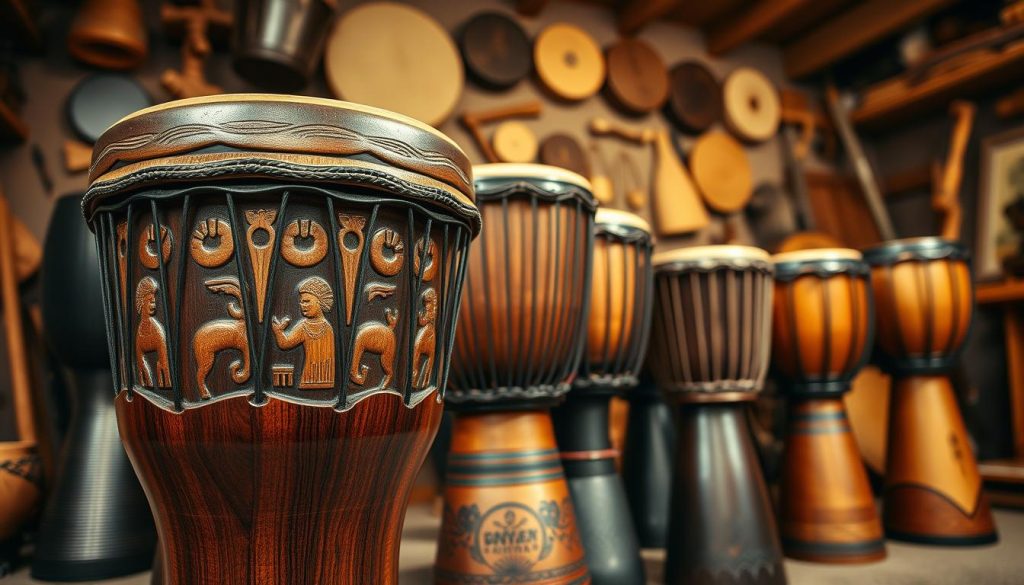
Modern instruments often use synthetic heads and shells to withstand humidity.
This helps musicians who play outdoors and ensures a consistent response.
- Traditional: solid wood, hand carving, and West African authenticity.
- Modern: synthetic materials, resistance to humidity, and reduced maintenance.
In summary, traditional djembes emphasize harmonic depth, while industrial models prioritize consistency and durability.
To choose according to your style and today’s market, consult this practical guide to choosing a quality instrument.
Choosing the Ideal Size for Your Body and Goals
Matching the dimensions of your percussion instrument to your body makes playing easier and improves the result.
The size of your musical instrument should be chosen according to your body. The shell should sit securely between your knees and allow natural, tension-free playing.
Beginners should choose a djembe measuring 40 to 50 centimeters in diameter. It should be easy to handle and help you learn the three basic sounds.
A standard instrument measuring 60 centimeters in height should be chosen if you want to explore several styles. This height provides greater bass depth and a wider tonal range.
- Size affects the clarity of the bass and treble.
- Positioning the shell naturally between the knees reduces fatigue.
- Choosing according to your height makes it easier to develop precise technique.
To compare sizes and comfort before buying, consult our guide on which size to choose. Choosing the right instrument should be a priority if you want to progress with confidence.
Assessing the Quality of the Wood and Skin
Checking the wood and skin often reveals an instrument’s true value.
Start with the shell. Inspect the wood’s grain and density. Lenke and mahogany, two renowned West African hardwoods, provide clear resonance and good longevity.
Recognizing Fine Woods
Find an inconspicuous area of the shell and scratch it lightly to assess its density. A quality wooden djembe feels firm and has a surface free from deep pores.
Detecting Structural Defects
Look for cracks or poorly executed repairs. A handmade repair may be acceptable if it reinforces the shell.
The Importance of Goatskin
The skin should be smooth and free from holes or cracks. Check the tension and rope system: most modern instruments have 24 to 30 strands to ensure stable tension.
| Element | Indicator | What to check |
|---|---|---|
| Wood | Density and resonance | Lenke or mahogany, no cracks |
| Skin | Sound clarity | Goatskin, without cracks |
| Ropework | Stable tension | 24–30 strands, strong system |
“Regular care and protection from humidity extend the instrument’s life and preserve its authentic sound.”
Sound Criteria for Identifying a High-Performance Percussion Instrument
An instrument’s ability to distinguish three sounds clearly is often the best sign of its musical value.
Mastering the Three Fundamental Sounds
The deep bass should be round and present, without sounding muddy. The midrange tone should retain warmth and definition.
The crisp slap requires quality goatskin and suitable tension. This produces clear projection with every strike.
Playing technique releases the natural resonance of the wood and skin. Poor tuning can choke the overtones.
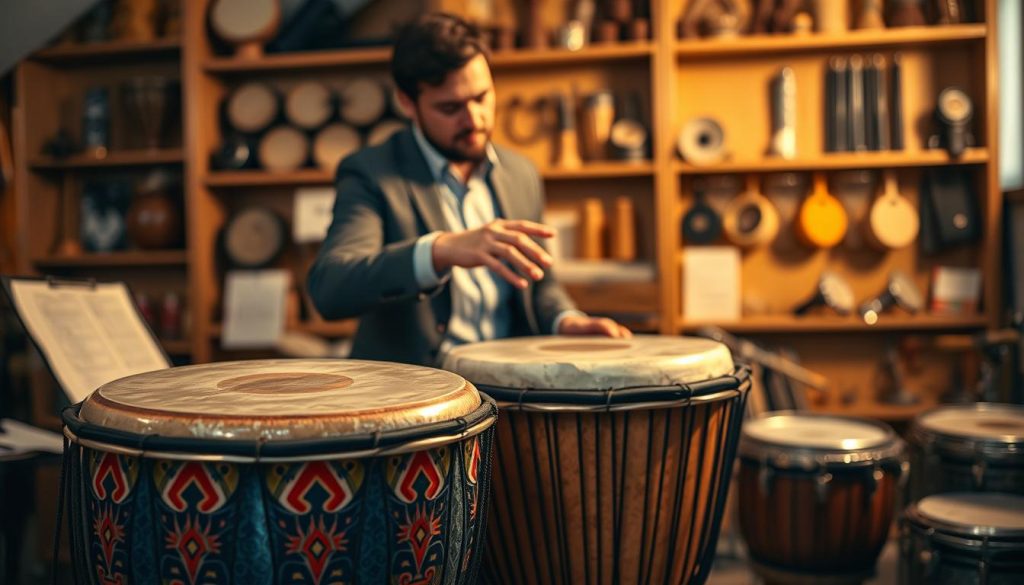
“A good rope system allows precise tension adjustments and preserves the instrument’s dynamic response.”
| Criterion | Effect on sound | What to check |
|---|---|---|
| Skin | Projection and clarity | Goatskin, even tension |
| Wood | Resonance and warmth | Dense shell, no cracks |
| Size | Bass depth | Height suited to the player |
| Rope | Tuning stability | Strong system, precise adjustment |
Every instrument has its own acoustic signature. To compare models and choose according to your style, consult this percussion guide.
Managing Your Budget for a Lasting Investment
Planning your budget helps prevent regrets and lets you choose a durable instrument.
For beginners, a budget of €50 to €100 is enough to buy a first djembe suited to introductory exercises and lessons. These products are reasonably easy to handle, but the quality of the wood and skin is often limited.
If you want longevity and a richer sound, plan to invest more than €300. A handmade mahogany instrument retains resonance and a tone that improves over time.
The quality of the skin and precision of the tuning often justify this additional cost. Stable tension and strong ropework improve projection and dynamic response for developing musicians.
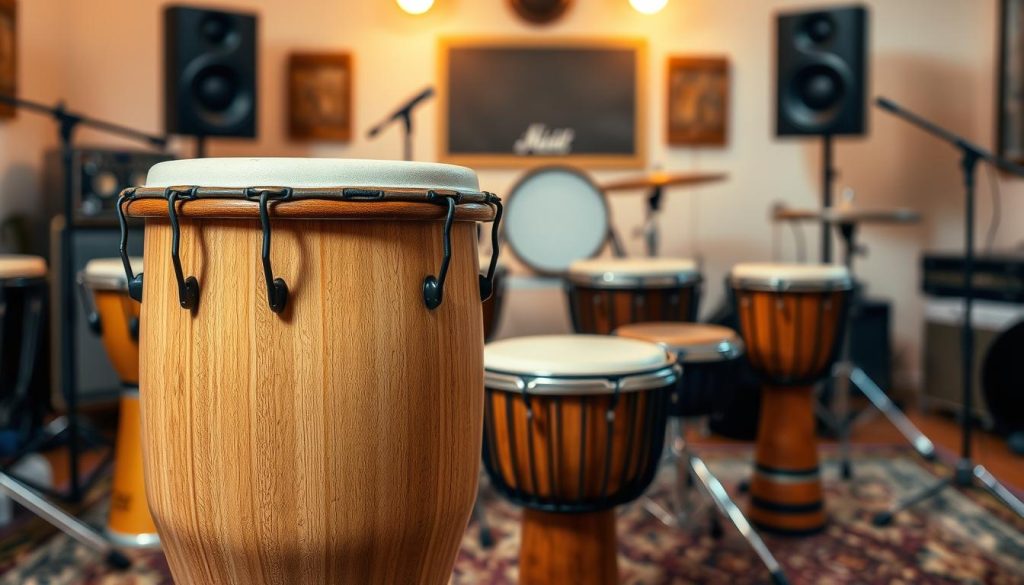
“Investing in good materials and regular maintenance protects the instrument’s value and authentic sound.”
Practical advice: start with an affordable model if you are a beginner, then move to a solid-wood instrument once your style and needs are clear. To find a good balance between quality and price, consult our buying guide on where to find an affordable, quality djembe.
- €50–€100: ideal for getting started.
- €300 and above: recommended for handcrafted mahogany quality.
- Rope and skin care: extends the instrument’s value.
Practical Advice for Maintaining Your Instrument and Extending Its Life
A few simple steps are enough to preserve your instrument’s response and appearance.
Protection Against Humidity
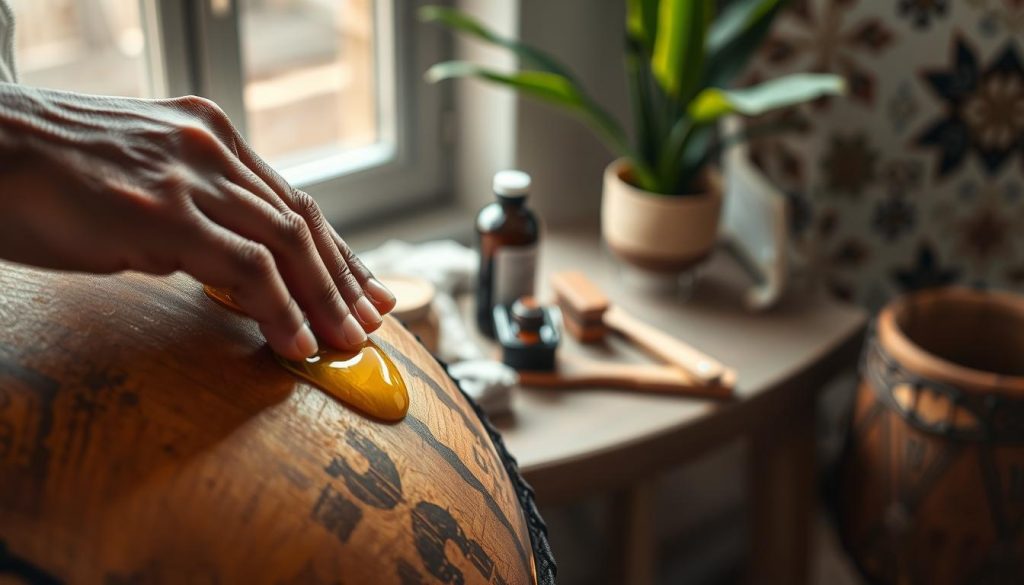
Wood is sensitive to changes in humidity. Exposing your wooden djembe to sudden changes can cause cracks and affect its resonance.
Store the instrument in a padded case when traveling. A suitable case also protects its appearance and prevents impact damage.
Rope-Tensioning Techniques
Learn to adjust the tension gradually. Tightening the rope too quickly may tear the goatskin.
Check the tension after every change in climate and make a small adjustment to maintain a consistent sound response.
“Regular care and protection from humidity extend the lifespan and preserve sound quality.”
| Action | Frequency | Expected effect |
|---|---|---|
| Clean the skin | After every session | Preserves sound clarity |
| Inspect the mahogany shell | Once a month | Detects cracks and drying |
| Adjust the ropes | As needed | Maintains tension and projection |
For practical advice and information on where to buy your instrument, consult our resources before traveling or making a purchase.
Conclusion
Above all, remember the criteria that affect the instrument’s sound and longevity. This article summarizes the essential points for assessing the wood, skin, size, and construction before buying.
This guide has helped you define your priorities according to your budget and playing habits. Test the instruments and listen to the bass, midrange tones, and slaps so that you can make an informed choice.
Do not forget regular maintenance: rope tension, protection from humidity, and careful transportation extend the instrument’s life and preserve its sound quality.
To refine your budget, also consult the feature on prices by size and quality.