

The djembe is an iconic West African instrument, known for its powerful sound and rhythmic richness.
Choosing a good model affects both your enjoyment and your progress. This guide helps you make your choice based on size, quality, and materials.
Before buying from our site, check the essential points to ensure a lasting investment.
We also cover routine maintenance that will help preserve your instrument’s sound and lifespan.
Practical tip: start by defining your needs, then compare models to choose the djembe that suits how you intend to use it.
Finally, please note that we use cookies to improve your browsing experience and personalize recommendations.
Beginner Djembe: What to Look For
Before buying, you need to identify the factors that genuinely affect sound quality. This step helps you assess durability, drumhead quality, and the finish of the shell. It can prevent many regrets after a few months of use.
Technical points to check:
- The precision of the craftsmanship, which determines the instrument’s response and richness of sound.
- The tension and thickness of the drumhead, which determine the bass and treble tones.
- The quality of the wood or alternative materials and their impact on projection.
Understanding these criteria helps you avoid the pitfalls of both the new and secondhand markets. Every djembe has its own sound signature. Choose a model whose range and power match your musical expectations.
To refine your selection and compare models that remain true to traditional craftsmanship, see our guide to choosing a djembe or a cajon.
Understanding the Instrument’s Origins and Structure
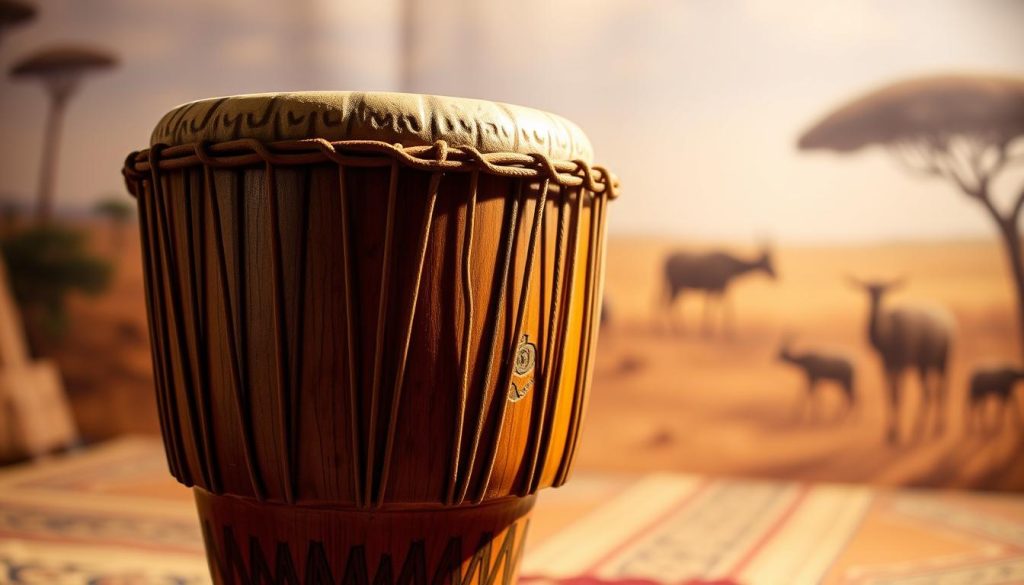
West African musical traditions shaped this instrument’s form and sound.
It originated in regions such as Guinea, Mali, Burkina Faso, and Côte d’Ivoire. Since the 1950s, African ballets and masters such as Mamady Keïta have spread its influence around the world.
History and Cultural Heritage
The traditional structure consists of a carved wooden shell and a goatskin head tightened with an intricate rope system.
The goblet shape and the density of the wood promote good projection. Striking techniques use the hand and fingertips to produce precise bass and treble tones.
The teachings of Famoudou Konaté and other masters remain essential for anyone undertaking serious study.
| Component | Origin | Function |
|---|---|---|
| Wooden shell | Guinea, Mali | Resonance and projection |
| Goatskin head | West Africa | Quality of bass and treble tones |
| Rope system | Traditional | Tension and stability |
To learn more about its history and construction, see our dedicated page. We also use cookies to provide enhanced content.
Essential Materials for Quality Sound
The nature of the materials directly affects the warmth and precision of the sound. The choice of wood and drumhead determines projection, response to strikes, and the instrument’s longevity.
Choosing the Wood
Choose lenke, iroko, or mahogany for their density. These woods provide a rich, lasting sound.
They withstand humidity better and reduce the risk of cracks on the shell’s surface.
The Importance of Goatskin
The goatskin should be free of cracks and properly tensioned. Good tension improves both treble and bass tones.
A diameter of around 34 cm is often recommended for quality approaching a professional standard.
- The rope plays a key role in tension, much like the strings of a guitar.
- The drumhead is a consumable component: it can be replaced after extensive playing.
- Always inspect the shell’s surface to rule out any cracks that could weaken it.
| Component | Recommendation | Impact |
|---|---|---|
| Wood (lenke, iroko, mahogany) | Solid, dense wood | Projection, warmth, lifespan |
| Goatskin head | Free of cracks and properly tensioned | Dynamic response, tone |
| Rope | Stable, adjustable system | Tension, tuning stability |
Choosing the Right Size for Your Build
The instrument’s size determines the depth of its bass and how easy it is to play. A standard model measures about 60 cm in height and 34 cm in diameter. These dimensions provide optimal ergonomics for most adults.
Height and diameter directly affect bass depth and treble clarity. A goatskin head properly fitted to the shell ensures even tension and better sound.
Learning progresses faster when the instrument is proportionate to your hand. A natural finger position makes striking easier and limits unnecessary strain.
Check the rope regularly as well: humidity can alter drumhead tension and damage the shell’s surface. As with a guitar, resonance quality depends on the right match between size and materials.

- Standard size: about 60 cm high and 34 cm in diameter for comfort and sound.
- A properly fitted drumhead ensures precise tension.
- Monitor the rope and humidity to maintain quality.
To learn more about the effect of dimensions, see our technical guide. We use cookies to personalize these recommendations.
Differences Between Traditional and Modern Models
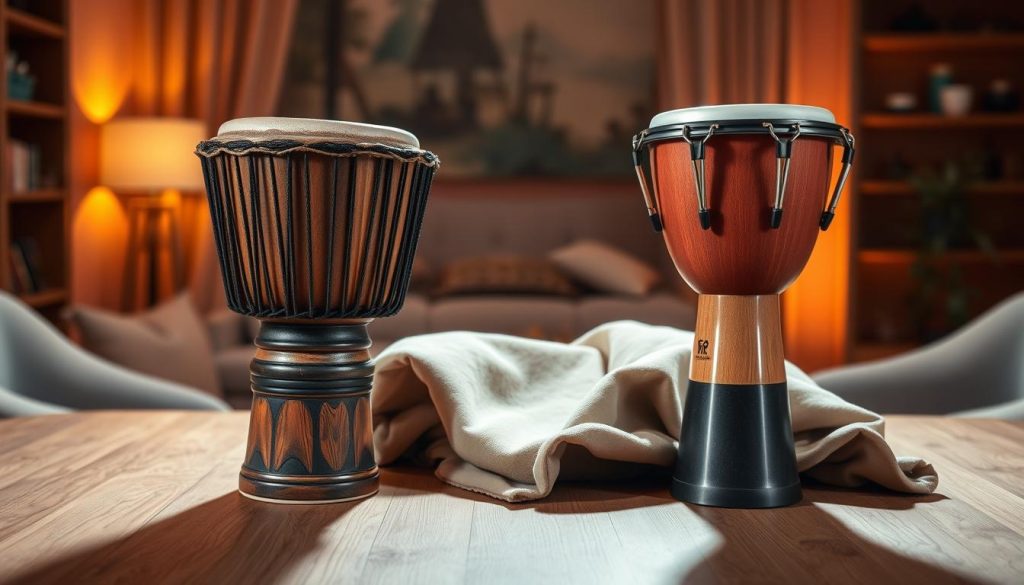
Between authenticity and practicality, each model offers its own acoustic and technical trade-offs.
Advantages of solid wood
Solid wood delivers a warm sound and rich harmonics typical of West Africa. A well-carved shell enhances projection and bass depth.
A diameter of 34 cm remains a benchmark for preserving traditional form and acoustic balance.
Rope tension can be adjusted manually. This allows the drumhead to respond sensitively to the fingers and each strike. However, a wooden instrument requires careful maintenance in humid conditions.
Benefits of Synthetic Materials
Modern instruments made from synthetic materials better withstand changes in climate. They maintain consistent sound quality and require less maintenance.
A synthetic head provides a consistent tone that is useful for outdoor performances.
Practical choice: if you often play outdoors or travel, a synthetic model extends the life of your equipment and simplifies maintenance.
| Feature | Solid wood | Synthetic materials |
|---|---|---|
| Sound | Warmth, rich harmonics | Consistency, stable tone |
| Sensitivity to humidity | High — precautions required | Low — more stable |
| Maintenance | Inspect the rope and shell | Simple cleaning, few adjustments |
| Outdoor lifespan | Less suitable | Often longer |
For a complete guide to choosing by size and construction, see our dedicated page.
Maintenance and Longevity Tips
Your instrument’s longevity depends as much on its storage as on its maintenance routine.
Tensioning and Storage Techniques
Check the tension regularly. A loose drumhead reduces sound quality and puts strain on the rope.
Store your djembe in a dry place with a moderate temperature. Humidity attacks the wood and loosens the drumhead over time.
The three fundamental sounds — bass, tone, and slap — are developed through precise strikes with the hand or fingertips.
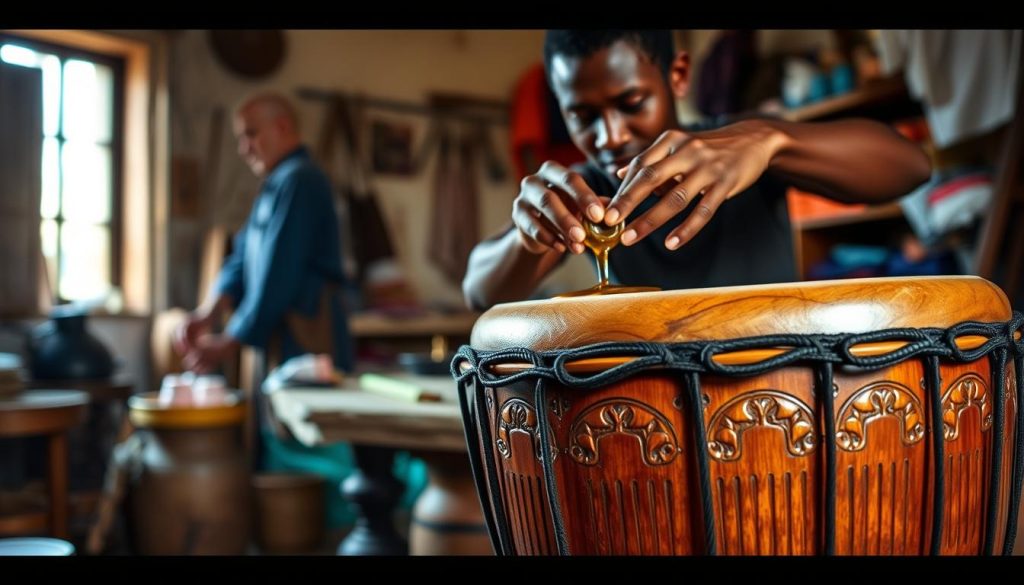
“A simple weekly check is enough to preserve sound quality.”
Maintain the rope after every session: clean it and retighten it if necessary. As with a guitar, tension determines the quality of the tone.
- Check the tension and rope
- Store away from humidity
- Practice striking with relaxed hands
To learn more about repairs or replacing the drumhead, see our practical guide. We use cookies to offer tutorials tailored to you.
Conclusion
This overview helps turn your purchase into a genuinely musical and lasting choice.
This guide has presented the essential criteria for choosing a djembe with confidence. Its origin and craftsmanship determine its longevity and richness of tone.
Regular maintenance preserves the unique sound of your percussion instrument. Investing in good equipment from the outset makes progress easier and increases the enjoyment of playing.
Explore our selection and buying guide on the site to find models suited to the way you play.