
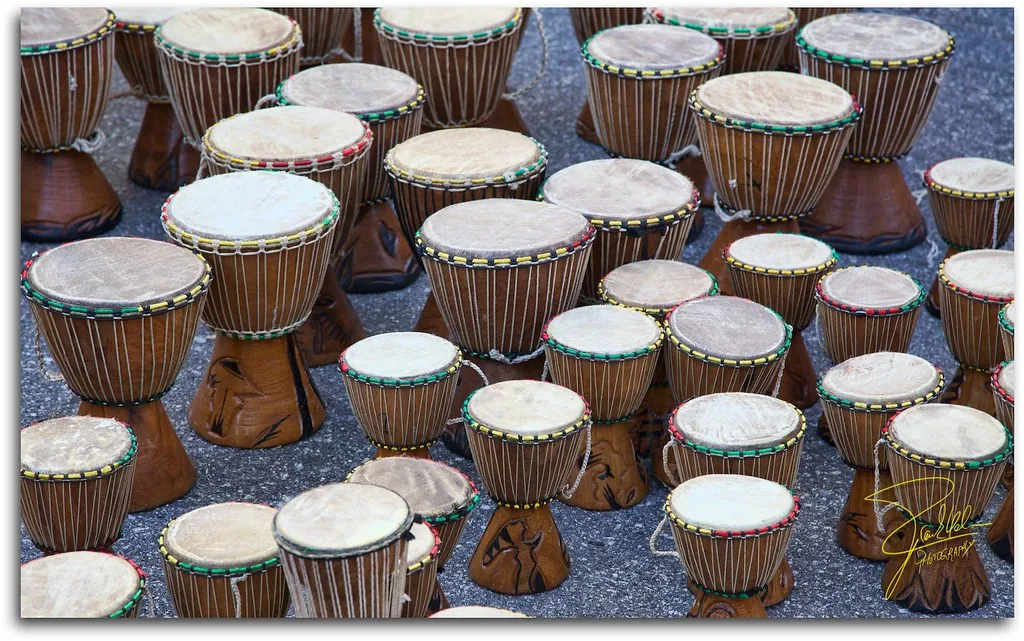
Welcome to this practical guide. With more than 20 years of experience advising musicians, I will help you select a percussion instrument suited to your needs.
This article explains the essential criteria: materials, dimensions, tone and playing comfort. You will learn how to recognize a quality head, well-crafted wood and the right size for a beginner.
We compare traditional and modern versions so that every instrument matches your level and musical goals. The differences in resonance and tuning stability are explained simply.
My selection is intended for beginners and intermediate players in France. It makes it easier to navigate the current range and reduces the risk of an unsuitable purchase.
African Djembe: Which Model Should You Choose?
Knowing how to identify the differences between instrument types makes it easier to choose one suited to your playing.
Choosing an instrument depends first on the nature of the available types. On the market, this percussion instrument comes in traditional solid-wood versions, lightweight stage variants and electronic models for quiet practice.
With more than 20 years of experience, you can quickly identify the features that affect sound and durability. The wood, head quality and tuning system define the instrument’s character.
Practical advice: test its open resonance, check the finish of the shell and assess the rope tension. These simple steps will guide you toward a sensible, long-lasting purchase.
To explore the subject further and find a selection suited to beginners, read our guide on how to choose the right instrument.
- Recognizing its distinctive features helps you choose an instrument suited to your style.
- Choose quality materials to ensure that it lasts.
Differences Between Traditional and Modern Instruments
The material and tuning system often determine an instrument’s sonic personality.
Solid Wood and Natural Heads
Instruments carved from mahogany or iroko offer warm harmonic richness.
Goat or buffalo heads provide deep bass and delicate overtones. Their tension is adjusted using ropes, which requires some technique to stabilize the sound.
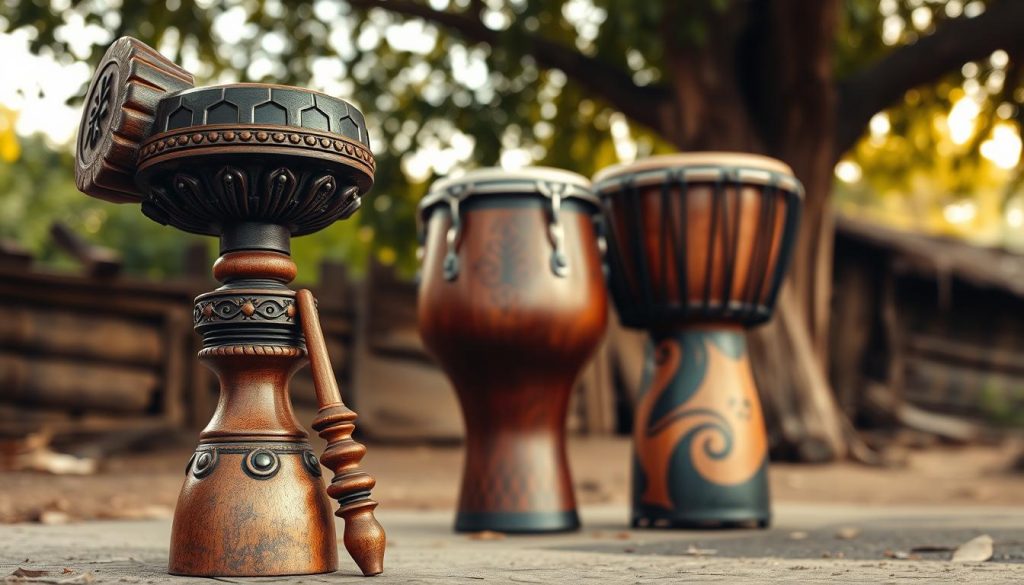
Synthetic Materials and Tension Rods
Modern versions use ABS plastic or fiberglass. They are lighter and more resistant to climate variations.
Mechanical tension rods make it easier to tighten the head. This is particularly useful for outdoor performances or beginners seeking quick stability.
- Handcrafted (wood): warmth, maintenance and sensitivity to humidity.
- Industrial (fiberglass/ABS): durability, easy adjustment and consistent response.
| Criterion | Solid wood | Fiberglass/ABS |
|---|---|---|
| Sound | Warmth and depth | Clarity and projection |
| Tension | Manually tensioned ropes | Mechanical tension rods |
| Durability | Sensitive to the weather | Resistant during outdoor performances |
| Maintenance | Requires regular maintenance | Low maintenance |
To learn more about the different types of instruments and suitable techniques, read the rest of this article.
The Importance of Choosing a Size Suited to Your Build
The size of your instrument affects both its sound and your playing comfort.
How Dimensions Affect the Sound
Medium-sized instruments (40 to 50 cm) are well suited to beginners. They are easy to handle and offer a balanced sound range.
A standard shell measuring 60 cm in height produces more bass. This height is recommended for performances that require deep low tones.
The tension of the head varies according to the shell’s dimensions. It directly affects the clarity of the high notes and the resonance of the bass.
Choosing a suitable size improves your playing technique and prevents muscle strain during long sessions. Smaller instruments are easier for people with smaller builds to handle.
| Dimension | Use | Sonic advantage |
|---|---|---|
| 40–50 cm (diameter) | Beginners, ease of handling | Mid-range tones, crisp highs |
| 60 cm (height) | Performances, stage | Deep bass, broad range |
| Different types | Exploration | Variety of tones depending on the shell |
For a precise recommendation based on your height and playing style, consult the recommended size and adapt your choice to your percussion goals.
Set a Budget Suited to Your Goals
Establishing a price range helps you focus on instruments suited to your playing.
Entry level (€50–€100): sufficient for starting out and discovering the instrument. These instruments remain suitable during the first few years.
Mid-range (€100–€300): better sound quality and playing comfort. Ideal if you are progressing and want a more stable instrument.
High-end (> €300): made by craftspeople, these instruments offer a rich sound and meticulous finish. They are suitable for enthusiasts and concerts.
- Set your spending limit before buying to avoid regrets.
- Each price range offers distinct benefits as you progress.
- Consider how you will use it: home practice, stage performance or intensive learning.
To compare brands and find options suited to your budget, see our selection of the best brands. This section of the article helps you align your goals and different uses with your budget.
Advice for Choosing a Djembe for a Child
A good instrument for a child should be light, sturdy and a comfortable height.
Lightweight criteria
For young percussionists, a height of about 40 cm makes handling and learning easier.
Choose lightweight plastic or fiberglass models: they are easier to carry and more resistant to impacts.
Benefits of compact models
Compact models offer a good response during the early years. Moderate head tension produces clear sounds without requiring excessive force.
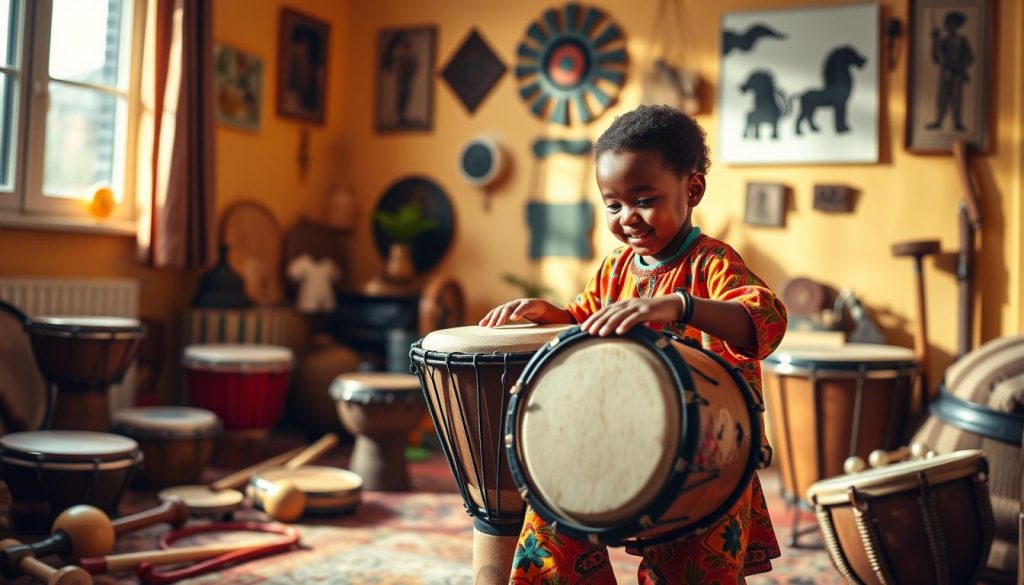
Choose a sturdy, lightweight instrument to ensure durability despite frequent use. Look for finishes with no sharp edges and a weight suited to the child’s build.
- 40 cm: ideal height for comfort and ease of handling.
- Lightweight: easy transport and practical for school use.
- Clear sound response thanks to moderate tension.
Goal: make percussion fun and safe to encourage regular practice.
Essential Accessories for a Confident Start
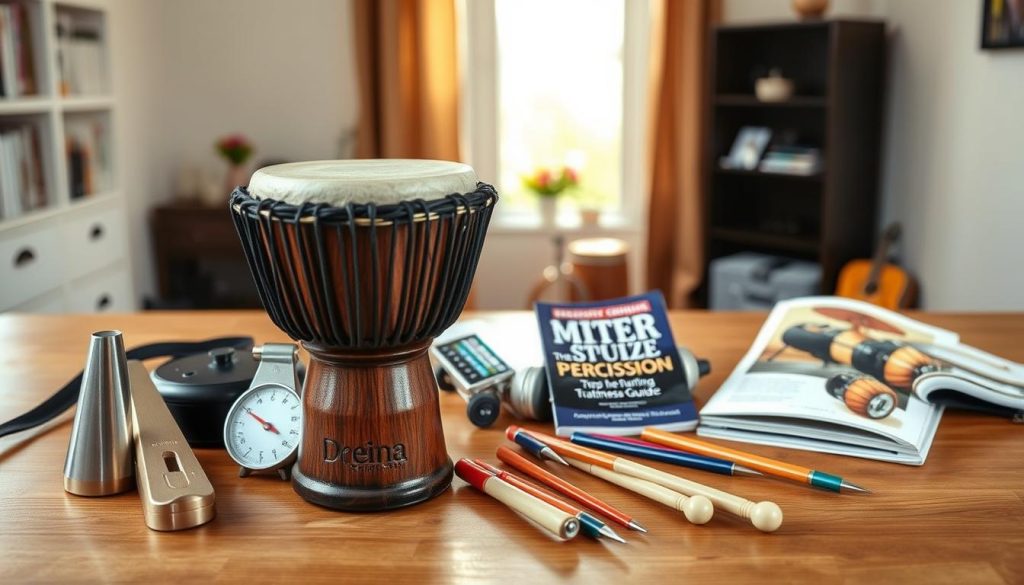
Essential accessories make playing, maintenance and outdoor performances easier.
A carrying strap secures your instrument on journeys to lessons or performance venues. It protects it from falls and makes it more comfortable to carry.
A protective case protects the finish from impacts and changes in humidity. This limits the risk of changes to the head’s tension and extends the life of your equipment.
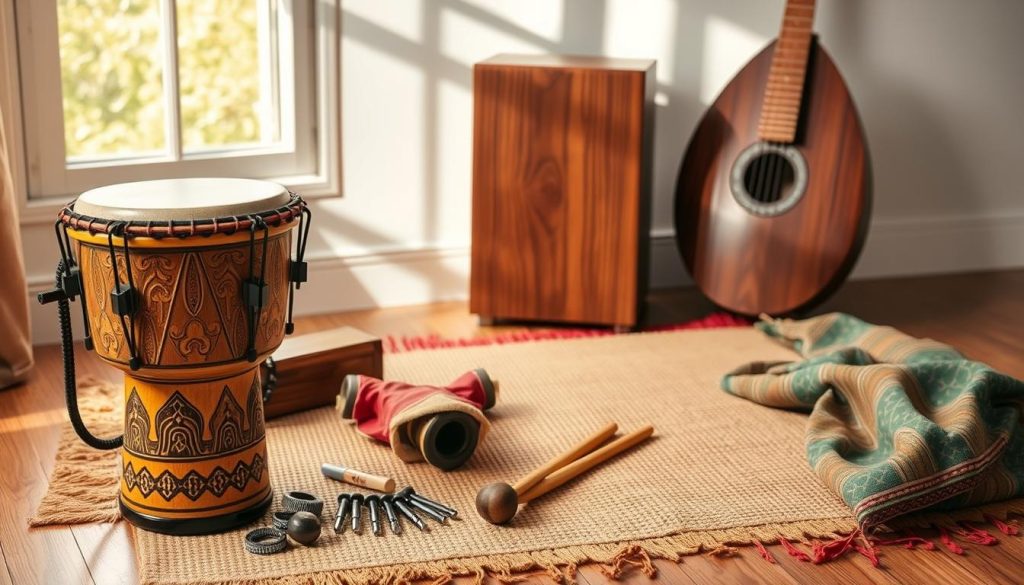
Keep replacement heads available to maintain optimal tension and avoid interruptions to your practice. Different types of keys and maintenance kits allow you to make adjustments yourself.
- Choose durable accessories for travel and performances.
- A simple maintenance kit ensures consistent sound quality.
- Investing in quality equipment makes learning easier and encourages independence.
“The right accessory often makes the difference between an average session and genuine progress.”
Conclusion
In summary, the balance between comfort, sound and maintenance should guide your final decision.
By following the advice in this article, you now have the information you need to find the right instrument. Your selection should be based on budget, size, materials and head tension.
The Instruments du Monde store offers more than 50 options to meet every need. To discover the collection and compare models, see the dedicated selection: practical guide and comparison.
Tip: maintain your instruments regularly to preserve their sound and value. Choose a model that inspires you and makes you want to play every day.