
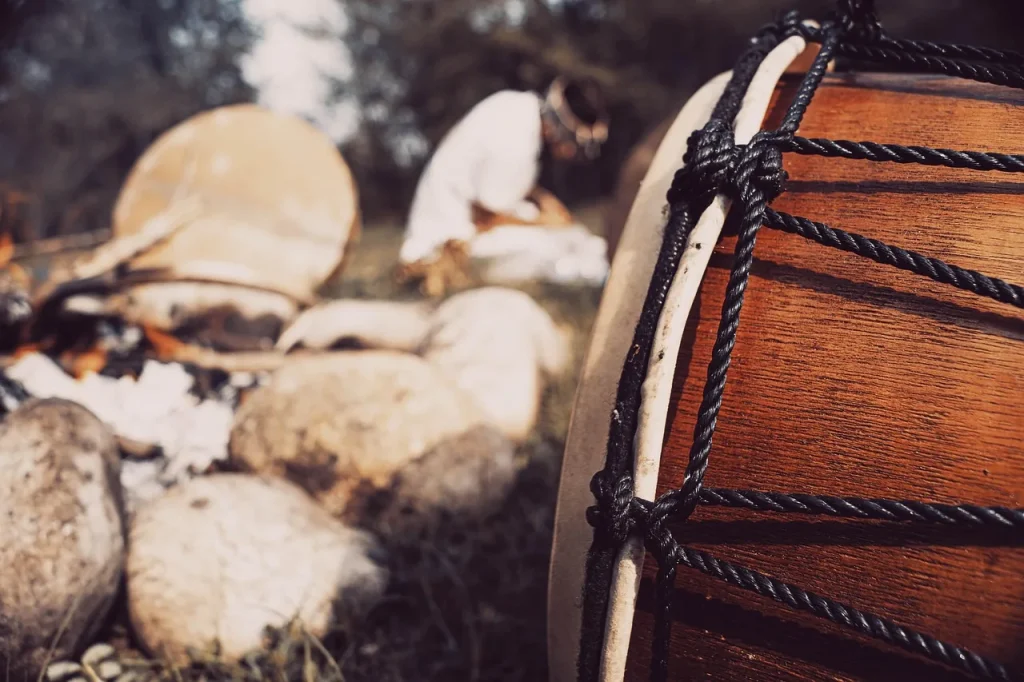
The djembe is a percussion instrument that emerged more than seven hundred years ago in Saharan Africa. Its presence has shaped celebrations, rituals, and community gatherings.
This wooden drum is fitted with a taut skin that gives it a clear, deep voice. It has endured through the centuries to become a symbol recognized around the world. Its rhythms accompany weddings, naming ceremonies, and regional ceremonies.
As a traditional musical instrument, it combines artisanal craftsmanship with precise playing techniques. This instrument remains a bridge between heritage and modernity, admired by percussionists around the world.
To learn more about its origins and legends, read our complete article on the origins of the djembe.
The ancestral origins of the Malian djembe: history, craftsmanship, and sound
Its origins date back to the 13th century, when the Manding Empire, founded by Sundiata Keita, brought together peoples of West Africa.
This instrument originated in West Africa and traveled through cultural exchange. The Malinke, Wassoulounke, Soninke, Khassonke, and Bambara peoples shaped how it was used.
Manding roots
Within the Empire, the drum was used to celebrate, communicate, and coordinate community life. It accompanied ceremonies and storytelling, going far beyond the status of a mere object.
Founding legends and myths
Legend has it that a skin stretched over an old mortar gave rise to the first sacred sound.
- The djembe symbolizes the unity of African communities.
- Skin, wood, and gesture unite traditions and practices.
- This percussion instrument influences African music and resonates around the world.
To explore the origins of the djembe in greater depth, read our dedicated article.
Cultural symbolism within the Manding Empire
The instrument holds a major ritual and social role. Through rhythm, it connects the living with their ancestors.
The materials carry profound meaning: the skin symbolizes the organic realm; the wood, the plant realm; and the iron, the mineral realm. Together, these elements reflect the Manding worldview.
At the heart of the West African Empire, the djembe features in wedding and naming ceremonies. It supports dance and collective speech.
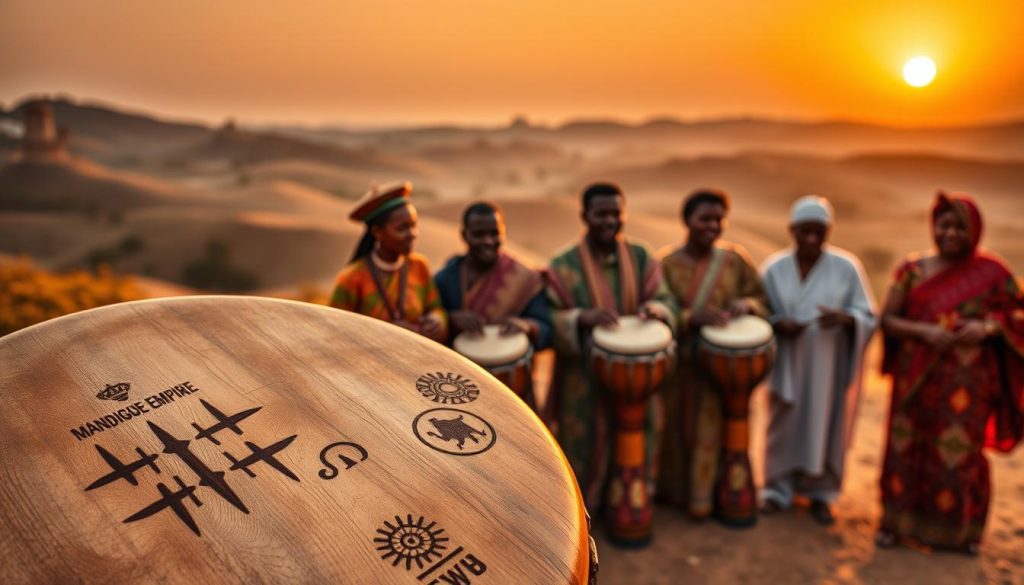
African music served as a common language across the western regions, from Senegal to Côte d’Ivoire and Guinea. Traditions passed down knowledge and social rules.
- Rhythm = community memory.
- Instrument = intergenerational connection.
- Skin and wood = connection to nature.
| Symbolic element | Material | Meaning | Ceremonial use |
|---|---|---|---|
| Plant | Wood | Life, rootedness | Weddings, agricultural rituals |
| Organic | Skin | Body, sensitivity | Naming ceremonies, family ceremonies |
| Mineral | Iron (rings) | Strength, permanence | Symbols of ritual authority |
| Social | Rhythm | Cohesion | Community gatherings |
To explore its origins and traditional role further, visit our page on the origins of the djembe.
Traditional craftsmanship and drum making
Artisans carve each shell into a goblet shape that directly influences its timbre.
Selecting the wood is the first step. Master craftspeople hollow out the trunk to achieve the desired shape. This goblet shape stabilizes resonance and sound projection.
The skin plays an essential role. The goatskin is prepared and then carefully stretched.
Tension and ropes
The goatskin is held in place by braided ropes. These ropes ensure optimal tension.
- Making a djembe remains a complex craft in which the wood and skin determine sound quality.
- The goblet shape is carved according to tradition to honor the spirit of the tree.
- The braided ropes produce powerful, clear vibrations.
“More than an assembly of parts, this instrument is a work of art requiring great expertise.”
| Element | Role | Effect on sound |
|---|---|---|
| Wood (shell) | Structure, shape | Depth and warmth |
| Goatskin | Vibrating surface | Clarity and attack |
| Braided ropes | Tension | Stability and note duration |
On our what-is-a-djembe page, you will find details about this musical instrument’s techniques and history. Traditional African craftsmanship keeps this percussion instrument alive as far more than a simple drum.
Mastering striking techniques to bring out the sound
A percussionist reveals the full range of sounds through three main strokes. These gestures define the clarity of the timbre and the dynamics of the rhythm.
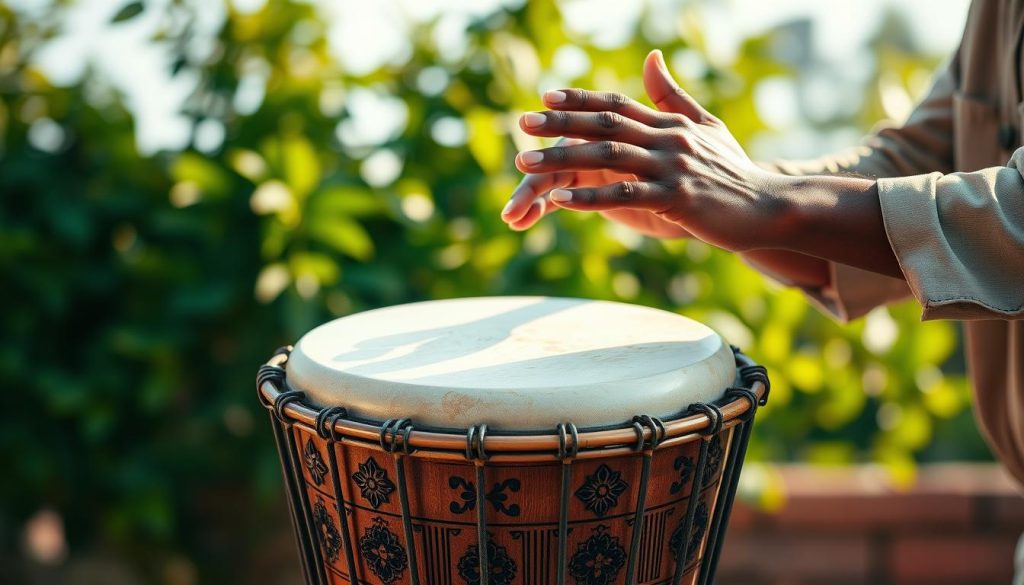
The bass
The bass is played in the center of the skin. A clean, relaxed stroke produces a deep, sustained sound.
The tone
The tone is played at the edge. The hand should glide slightly to produce a clear, rounded sound.
The slap
The slap requires a sharp rebound of the hand. It produces a crisp, prominent accent in rhythmic phrases.
The striking techniques—bass, tone, and slap—allow the instrument to sing. The djembe offers rare expressiveness in traditional and contemporary music.
- The precision of each strike on the skin shapes every nuance.
- Mastering these techniques takes years of practice.
- Modern percussion incorporates these gestures to enrich arrangements.
“Every stroke is an invitation to explore new rhythmic colors.”
Global expansion and the influence of African ballets
Touring ballets introduced the world to a new rhythmic voice. In the 1950s, Fodéba Keïta took these groups to major stages and introduced the instrument to international audiences.
Thanks to these tours, African music reached festivals and concert halls. The skin and playing techniques were observed, imitated, and taught beyond the continent.
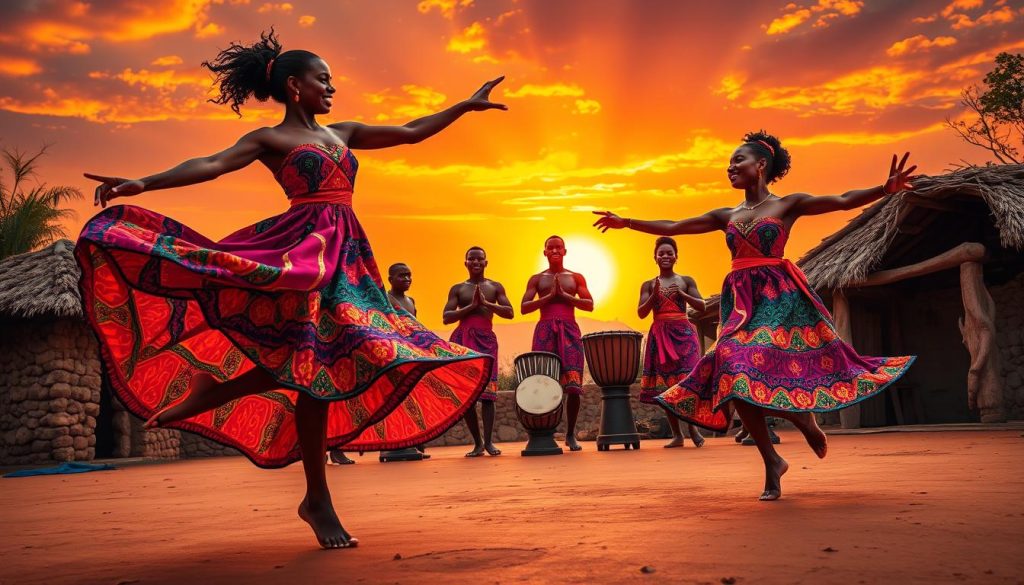
In the 1980s, masters such as Famoudou Konaté continued this expansion. They traveled and trained percussionists around the world, cementing the instrument’s place on international stages.
“African ballets did more than entertain: they opened cultural doors.”
- Fodéba Keïta popularized African ballets in the 1950s.
- The instrument won over the world, championed by master teachers.
- Through this drum, African music has found a voice now heard on every continent.
To learn more about its origins and historical journey, read our article on the origins of the djembe.
The instrument’s contemporary role in modern music
On contemporary stages, the instrument finds its place alongside the electric guitar and bass.
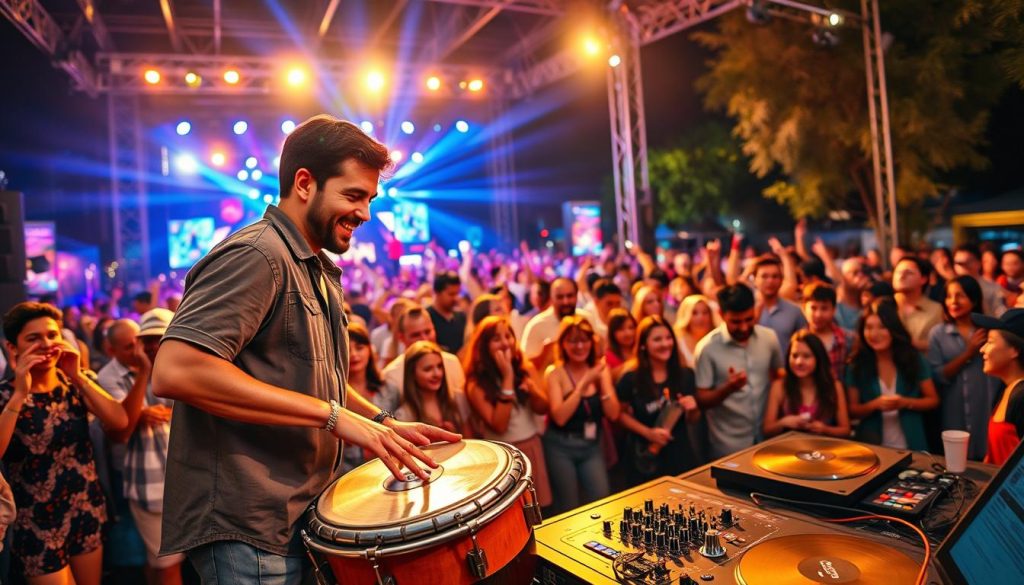
Artists such as Noel Toca Rivera and Jason Mraz have recently incorporated the djembe into pop-rock songs. These collaborations show that this percussion instrument can enrich mainstream productions.
Famoudou Konaté also fostered exchanges across continents. His work paved the way for projects with a worldwide reach.
- Today, the djembe offers endless sonic possibilities, from intimate grooves to amplified textures.
- The skin interacts with bass and guitar to create a modern rhythmic foundation.
- The instrument inspires young musicians seeking to fuse tradition and innovation.
“Percussion remains a source of innovation in contemporary music.”
| Use | Context | Impact |
|---|---|---|
| Pop-rock concerts | Acoustic and amplified arrangements | Rhythmic warmth, organic accents |
| Fusion projects | International collaborations | Blend of traditions and contemporary sounds |
| Music education | Workshops and courses | Transmission and renewal |
To discover instrumental variations and their modern uses, explore our resources on types of djembes.
Conclusion: the timeless legacy of the djembe
The traditional drum remains a living voice that connects generations.
The djembe remains far more than a simple drum: it embodies the origins and traditions of the Manding Empire in West Africa.
This musical instrument accompanies ceremonies, celebrations, and the life of African communities. Its presence evokes sharing, dance, and the passing down of knowledge.
The music carried by this djembe travels around the world and celebrates a timeless heritage. To discover objects connected with this world, see the Top 10 Souvenirs.
We hope this guide has shown you how this instrument is far more than an object: it is a universal voice.