
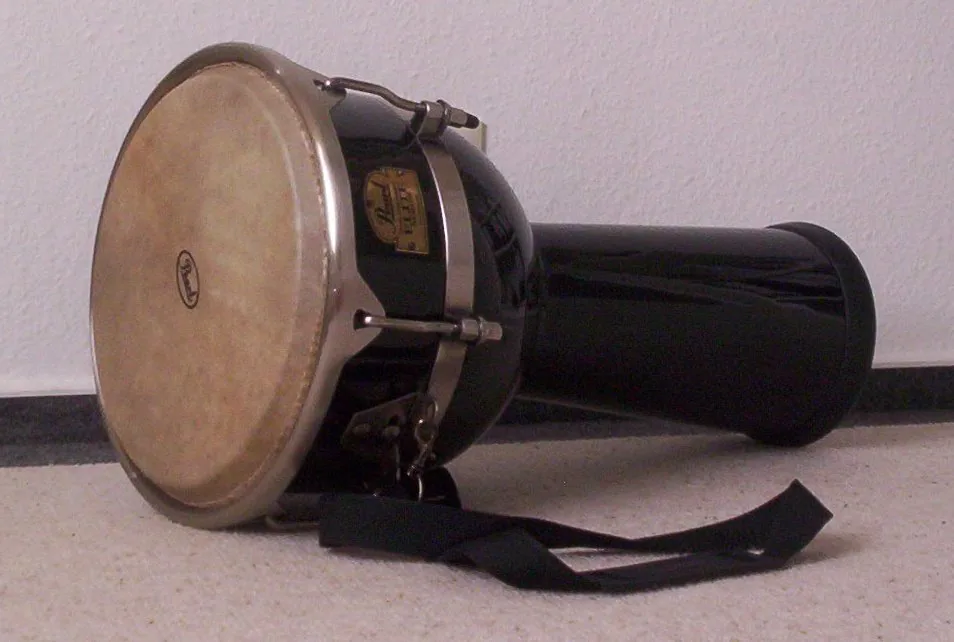
More than 20 years of experience guiding percussionists has allowed us to identify the mistakes commonly made during a first purchase. This article will help you choose an instrument suited to your playing.
Understanding the technical criteria — shell size, head type, and materials — is essential to avoid a disappointing purchase. We explain how to distinguish a good djembe from a low-end model.
You will find practical advice for testing the sound: strike the center for bass, the rim for tone, and the edge for slap. These simple techniques help you choose an enjoyable, durable instrument.
To learn more, consult this selection created for beginners and discerning musicians: recommended instrument selection.
Understanding the basics of buying a djembe: a complete beginner’s guide
Originally from West Africa, the djembe offers a unique range of sounds. It comes from regions such as Guinea, Mali, and Côte d’Ivoire and remains a powerful symbol of rhythm.
Build quality directly influences the depth of the sounds. A well-made, carefully crafted djembe produces rounded bass notes, clear tones, and crisp slaps.
Your choice should account for how the instrument responds to your playing. A responsive instrument makes learning easier and allows you to explore rhythmic nuances.
Since the 1950s, these instruments have spread worldwide. Their success reflects their adaptability and ability to enrich any repertoire.
For a well-considered first purchase, compare the materials and test the sound at the center and edge. To learn more and choose your first instrument, consult this specialist page.
Choosing between a traditional model and a modern instrument
Choosing between tradition and modernity affects the sound, weight, and maintenance. This choice depends on your style and intended use.
Solid wood and natural heads
Traditional models are carved from solid wood, such as mahogany or iroko. They offer rich resonance and a tonal character sought after by purists.
A natural goatskin head produces an organic tone. It requires regular tensioning with braided ropes to preserve the quality of the sound.
Advantages of synthetic materials
Modern instruments made from ABS or fiberglass withstand climatic changes better. They are lightweight, easy to maintain, and suitable for travel.
“The quality of the head and the precision of its tension determine the lifespan of your djembe.”
- Solid wood: authentic sound, more demanding maintenance.
- Natural head: warm tone, regular adjustments required.
- Synthetic: stability and convenience for beginners and outdoor playing.
| Feature | Traditional | Modern |
|---|---|---|
| Shell material | Mahogany, iroko | ABS, fiberglass |
| Head | Natural goatskin | Synthetic head |
| Maintenance | Regular (tensioning, conditioning) | Low |
| Use | Studio, acoustic concerts | Outdoors, travel |
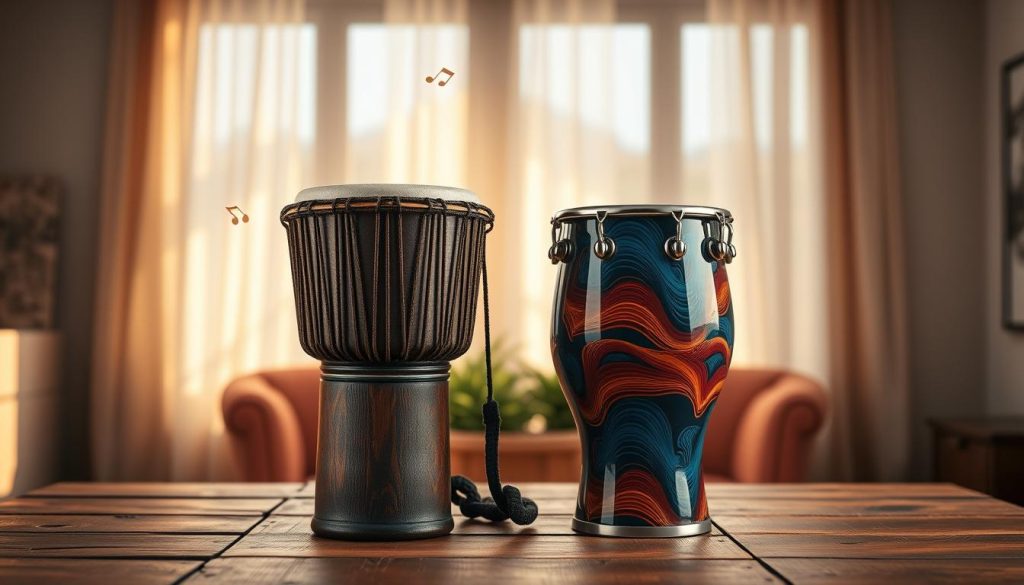
The choice depends on your musical commitment. To compare the options and choose your first instrument, consult this resource.
Determining the ideal size for your body type and goals
A well-chosen diameter makes playing easier and improves overall resonance. For most adults, a head diameter between 40 and 50 centimeters offers a good balance of comfort and tonal richness.
If the drum is too large, you may experience tension in your arms and lose rhythmic agility. Conversely, a model that is too small reduces bass depth and projection.
Matching the diameter to age and skill level
For children, choose more compact instruments. A thinner goatskin head is easier to strike and supports faster learning.
The choice of diameter affects the range and ability to play complex rhythms. Whatever your style, check that the wood of the shell is properly proportioned to ensure optimal resonance.
- Adult beginners: a 40–50 cm head for a good balance.
- Advanced players: choose the diameter according to the desired range.
- Children: compact sizes and thin heads for easier playing.
Setting a realistic budget for your first drum
Establishing a price range makes it easier to choose the materials and construction method.
For a first instrument, plan on spending €50 to €100. This range can provide a functional, sturdy djembe suitable for initial learning.
If you want better quality, choose a mid-range budget of €100 to €300. In this range, the wood is often better quality, while the finish improves projection and durability.
Experienced percussionists seeking a handcrafted piece should expect to spend more than €300. In this range, the quality of the materials and craftsmanship explains the difference in price.
- €50–€100: practical and sturdy for beginners.
- €100–€300: better wood and richer sound.
- > €300: high-quality handcrafted instruments.
| Budget | Feature | Recommended use | Key benefit |
|---|---|---|---|
| €50–€100 | Synthetic or basic head | Learning, leisure | Affordable price |
| €100–€300 | Better-quality wood | Regular practice, concerts | Better resonance |
| > €300 | Solid wood, handcrafted | Professionals, collectors | Superior sound and finish |

Set your budget before buying so that you can find the best balance between quality and price and choose your first instrument.
Essential accessories for getting the most from your playing
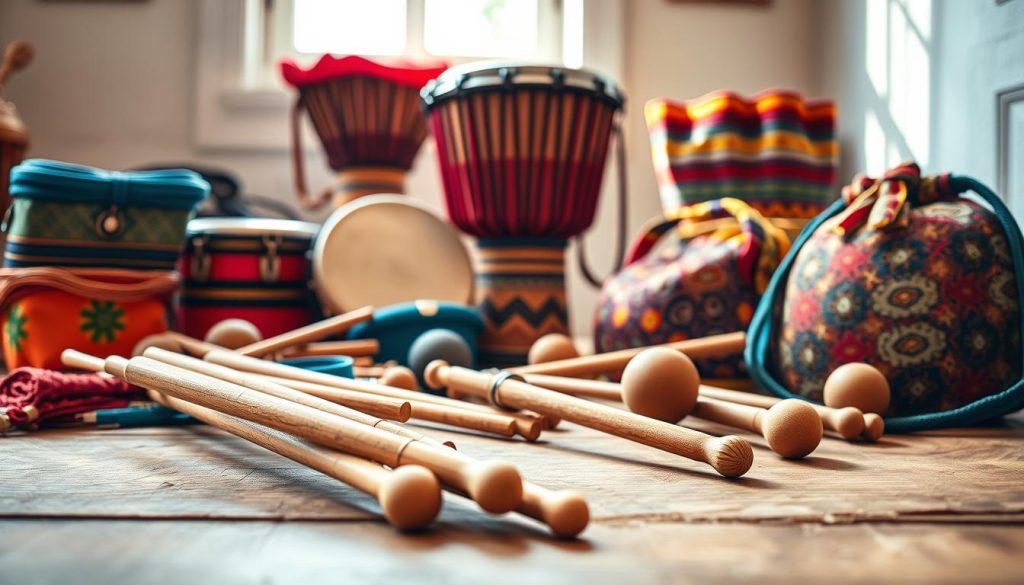
Suitable equipment extends the life of your instrument and makes every playing session easier. Before you even buy, consider accessories that protect it and improve your comfort.
The importance of a quality strap
A sturdy strap distributes the weight and prevents strain during prolonged use. It is essential if you carry your instrument to lessons or rehearsals.
Protection and carrying case
A padded case protects the head and shell from impacts and changes in humidity. Transporting your djembe without a case increases the risk of damaging the head and finish.
- Keeping replacement heads available helps prevent interruptions if one breaks.
- Adjustable tensioning systems make maintenance easier and keep the sound stable.
- Investing in quality accessories improves comfort during intensive or group playing.
Advice for maintaining your instrument and extending its life
A few simple steps are enough to preserve clear sounds and keep the head in good condition. Regular maintenance prevents repairs and preserves the richness of the tone.
Rope-tensioning techniques
Check the tension of the ropes after every journey and during major temperature changes. Evenly distributed tension ensures balanced resonance.
If the head has a large diameter, check the ropes more frequently. Readjust them gradually to avoid deforming the head.
Conditioning the wood
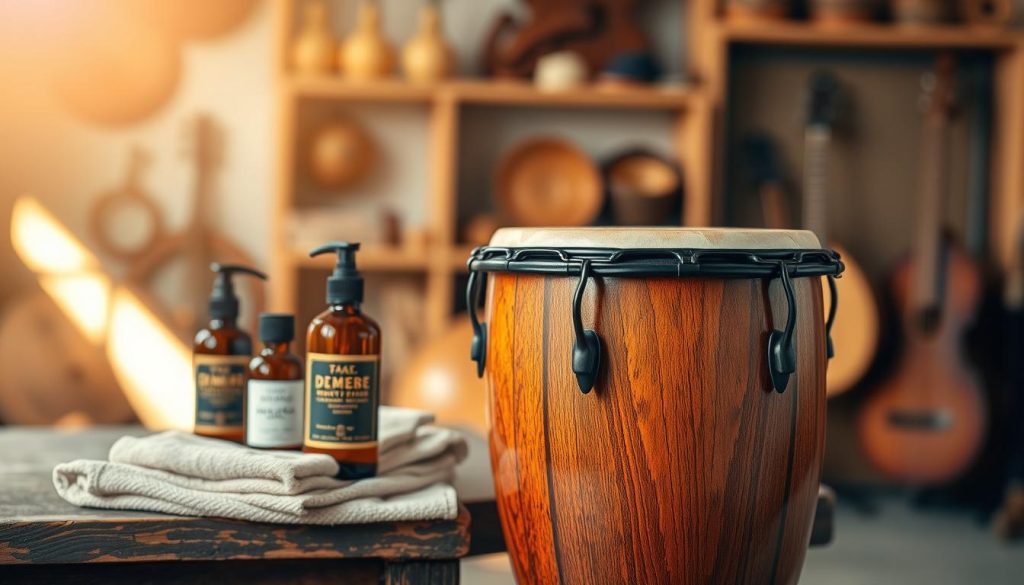
Protect the wood by applying a natural oil once or twice a year. This prevents cracks and preserves the appearance of the shell.
Store the instrument away from excessive humidity and direct sunlight to optimize its use.
Replacing the head
Maintaining the goatskin head is crucial for preserving the three sounds: bass, tone, and slap. When it becomes worn, replacing the head requires mastery of rope tensioning techniques.
If you prefer to use a professional, look for a local repair service or follow this link to discover purchasing and maintenance options: choose the right instrument.
Conclusion
These final thoughts bring this guide to a close and give you the essential information needed to make the right choice and find a good djembe suited to your preferences.
Keep in mind that the final choice should reflect your musical style and your desire to progress with African rhythms.
Regular practice and continued lessons remain the best ways to refine your playing. To discover a varied selection, consult the page featuring several models and options.
By following this guide, you can move forward with confidence and begin your musical adventure today.