

A concise introduction to a vibrant instrument at the heart of West African music. This guide presents its history, cultural role, and the basics you need to start playing with confidence.
You will learn how to choose a solid shell, identify suitable wood species, and understand the importance of shell size and head tension.
We also explain the essential hand movements used to produce the bass, tone, and slap. These techniques form the foundation of smooth, rhythmic playing.
Finally, the article offers simple care tips: regular maintenance, head replacement, and rope care. This will give you the knowledge you need to preserve your instrument’s sound and longevity.
Senegalese Djembe: What You Need to Know About Its Origins
The origins of this instrument lie in several West African countries: Guinea, Mali, Burkina Faso, and Côte d’Ivoire. For generations, it has accompanied ceremonies, dances, and oral traditions.
Cultural role: it was also used to convey messages and unite communities during rituals. Its social importance makes it a living symbol of regional traditions.
History and culture
In villages, its rhythms accompanied births, weddings, and harvests. Craftspeople worked with wood and hide to produce distinctive sounds.
Worldwide expansion
Its international expansion began in the 1950s through African ballet companies. The wider public became especially familiar with the instrument from the 1980s onward.
- Deeply rooted in West African history, it accompanies ceremonies and communication.
- Ballet companies brought it recognition beyond Africa beginning in the 1950s.
- This article traces its journey from villages to major stages around the world.
- The family of traditional instruments is varied: some models have a flared base, while others are more cylindrical.
The Essential Criteria for Choosing a Quality Instrument
Choosing the right instrument begins with examining three simple but decisive features. These factors help ensure a clean sound and a long lifespan.
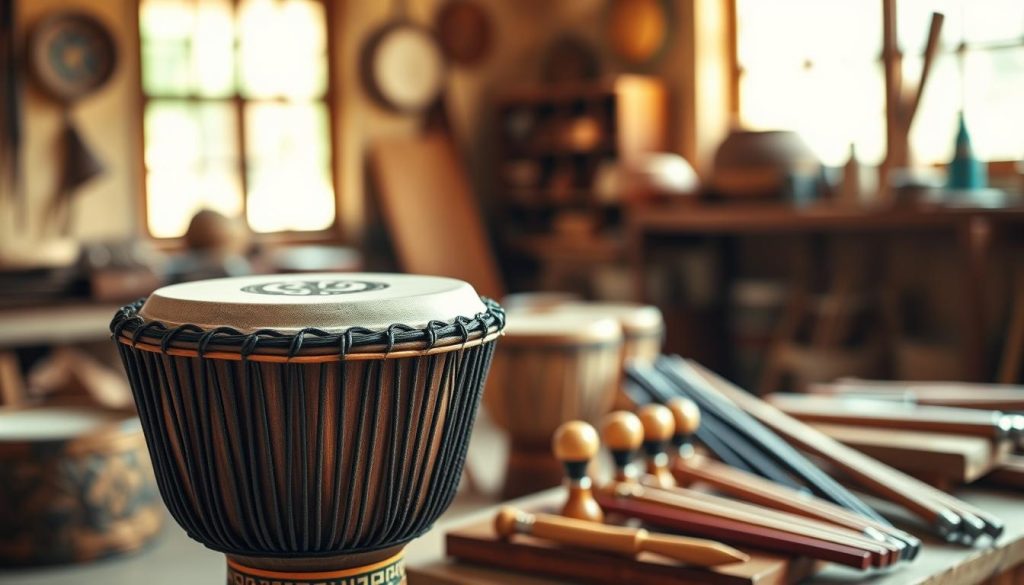
Selecting the wood
Choose dense wood species such as lenke, djala (mahogany), dugura, iroko, or cassia. These woods provide better resonance and resist impacts.
Check the bowl for cracks. Some lighter woods may warp over time and affect the tone.
The importance of size
For optimal resonance, the standard size is approximately 60 cm high and 34 cm in diameter.
Proper dimensions make the instrument easier to play and produce deep bass tones without excessive effort.
Choosing the rope
Tension depends on the rope. A diameter of approximately 5 mm is recommended to maintain stable, lasting tension.
- Check the quality of the knots to prevent slipping.
- Choose ropes that resist moisture.
In summary: this guide helps you identify the right wood, size, and rope so you can select a reliable, well-made instrument.
How Wood Species Affect Sound
The type of wood profoundly changes your instrument’s voice.
Iroko is known for its density. It produces a punchy sound with strong projection. It is ideal for outdoor concerts and ensemble playing.
Mahogany offers remarkable tonal balance. It produces deep bass and clear highs. This wood suits musicians seeking a rich tonal palette.
Several specialist articles confirm that the chosen species affects the sound and durability of the shell. Vène wood provides deep resonance, but it must be sourced responsibly to help preserve forests.
- Density: directly affects projection, as with iroko.
- Tonal balance: mahogany produces a full, versatile sound.
- Durability: the species determines longevity and maintenance needs.
To learn more about the different materials and how to choose the wood, read our detailed guide.
Comparison of the Different Types of Djembes on the Market
From wooden instruments to amplified versions, the range of options has expanded considerably. Today’s market offers solutions suited to concerts, studios, and travel.
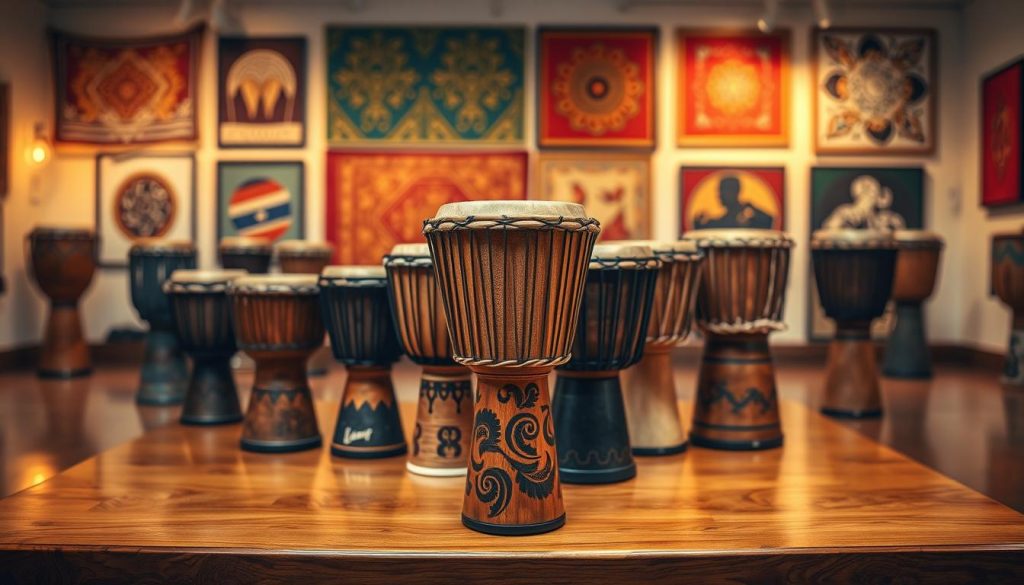
Modern and electronic models
Mechanically tuned models use systems inspired by Cuban congas. They are easier to tune than traditional rope-tuned instruments.
Electronic versions incorporate microphones and sound simulators. They allow you to amplify the percussion and add effects during performances.
- Convenience: quick, stable tuning with mechanical lugs.
- Versatility: electronic models for the studio and stage.
- Alternative materials: fiberglass or aluminum, which are lightweight and weather-resistant.
Tip: compare authenticity and playing comfort before buying a new instrument. For a more comprehensive buying guide, read our selection guide.
Fundamental Striking Techniques for Beginners
Begin with three essential strokes to produce clean, precise tones.
The bass is played at the center of the head with the palm. Relax your wrist to produce a deep sound without forcing it.
The tone is produced by placing the hand flat near the edge. The movement should come from relaxation, not tension in the shoulders.
The slap requires a quick movement with the fingertips. Aim for the sensation of a light slap to produce a sharp, punchy high note.

Many educational articles recommend learning slowly. Practice each sound separately, then combine them into simple patterns.
- Keep your hands flexible and your shoulders relaxed.
- Start at a slow tempo and increase it gradually.
- Practice in front of a mirror to correct your posture.
Benefit: mastering these movements allows you to play different types of instruments, whether traditional or modern, with precision.
To build on these skills, take a beginner’s course suited to your pace.
Tips for Maintaining and Replacing the Head
The head wears out over time, but a few simple steps are all it takes to replace it correctly. Proper care extends the life of your instrument and preserves its sound quality.
Replacement steps
1. Soak the goatskin to soften it, then clean the ring and ropes. Work cleanly to prevent dirt from becoming trapped beneath the head.
2. Fit the skin over the ring, making sure it lies evenly. Allow it to dry completely before applying the final tension.
3. Increase the tension gradually and carefully until you reach the desired tone.
Tension precautions
Make sure the rings remain balanced: uneven tension weakens the structure and may cause cracks in the wooden shell.
| Step | Duration | Risk if performed incorrectly |
|---|---|---|
| Soaking | 1 to 3 hours | Stiff head |
| Drying | 24 to 48 hours | Warping |
| Gradual tensioning | 30–60 minutes | Cracks in the shell |
Regular maintenance: check the tension periodically. This article explains the necessary steps and also points to resources for selecting a suitable head, such as this practical guide: choosing a drumhead.
The Importance of Consistency in Learning
Practicing every day helps you progress more than occasional long sessions. Consistency drives your passion and helps you develop reliable muscle memory.
To improve your performance, combine individual practice with group playing. Group sessions help correct posture and develop listening skills, while a teacher provides a structured approach.
Learning the dunduns as a complement enriches your understanding of rhythm. This combination reinforces the overall tempo and improves cohesion with other percussionists.

Start slowly, then gradually increase the tempo. This method, used by master players, protects your hands and provides precise control over each stroke.
- Practice briefly every day instead of holding long, irregular sessions.
- Alternate solo practice with group rehearsals.
- Incorporate dunduns to better understand rhythmic frameworks.
Perseverance and consistency turn practice into a profound musical experience. To discover resources and techniques, consult a recommended method or take a course with a qualified teacher.
The Iconic Figures Who Shaped Djembe Playing
Certain performers transformed individual techniques into genuine musical signatures. Their influence extends to technique, repertoire, and teaching.
Masters such as Mamady Keita, Famoudou Konaté, and Soungalo Coulibaly established the foundations of a recognizable traditional playing style. They emphasized profound musicality and clear attacks.
The new generation of virtuosos
Harouna Dembélé and Petit Adama Diarra represent the next generation. They bring greater technical skill and spectacular sequences.
These artists modernize rhythmic structures. They introduce complex breaks that push the instruments’ technical limits.
| Category | Name | Contribution | Impact |
|---|---|---|---|
| Master | Mamady Keita | Teaching and repertoire | Standardization of the style |
| Master | Famoudou Konaté | Rhythmic power | Oral transmission |
| New generation | Harouna Dembélé | Speed and virtuosity | Contemporary stages |
| New generation | Petit Adama Diarra | Creativity and breaks | Influence on performances |
Conclusion
In summary, sound quality depends primarily on the wood species, the head, and properly adjusted tension.
This article has guided you through the instrument’s origins, striking techniques, and the maintenance required to preserve its voice.
Whether you are a beginner or an experienced player, consistency remains the best way to sustain your passion and improve your playing. Short, frequent practice sessions, group lessons, and a good teacher all accelerate progress.
Investing in a well-made instrument provides a rich tonal palette, from mahogany to iroko, and makes your musical journey easier. To learn more about its benefits and uses, visit our dedicated page: benefits and uses.