
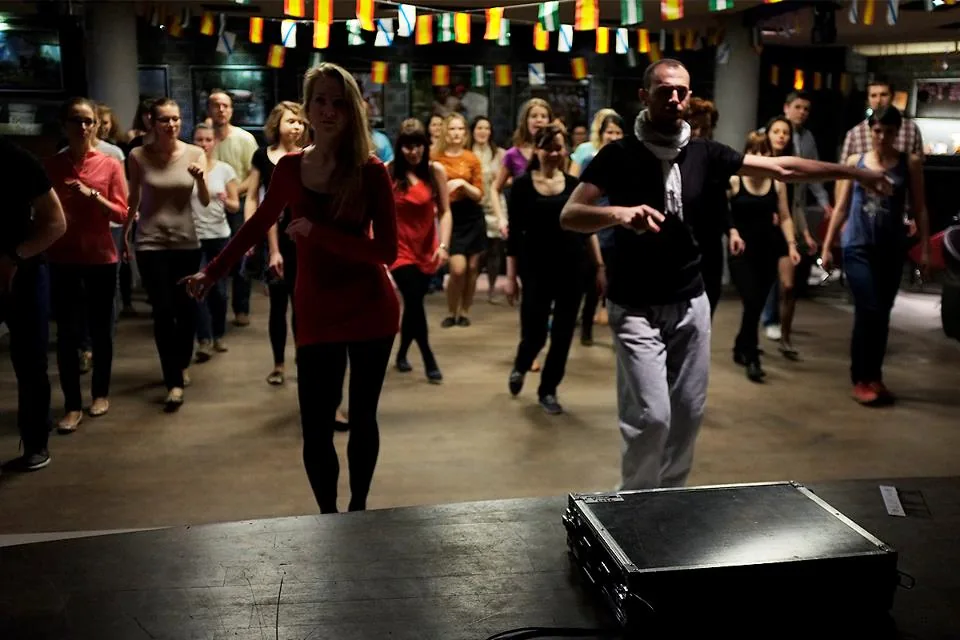
Dance is an ideal way to express yourself and have fun. Among Latin dances, one stands out for its accessibility: bachata. Originating in the Dominican Republic, it appeals to dancers with its fluid movements and captivating musicality.
To get off to a good start, mastering the basic steps is essential. They form the foundation of this discipline. With a little practice, you will progress quickly and enjoy moving to mesmerizing rhythms.
This guide offers practical exercises and advice to help you improve at your own pace. Besides being fun, this activity improves coordination and helps you meet people. So, are you ready to get started?
Do not be discouraged by the first challenges. Perseverance is the key to improving and enjoying every moment on the dance floor.
Introduction to bachata: an accessible Latin dance
Its success in France can be explained by its quick learning curve. According to the data, 72% of schools now offer classes specifically for beginners. Interest has tripled since 2015.
Unlike salsa or tango, this discipline focuses on natural movements. The eight-count rhythm, with its distinctive “tap,” makes the music easy to follow. No previous experience is required.
Originating in the Dominican Republic, it appeals to people because of its intuitive nature. As one instructor confirms:
“After four sessions, my students can perform a complete sequence.”
Comfortable clothing is all you need to begin.
| Dance | Difficulty | Learning time |
|---|---|---|
| Bachata | Easy | 2 to 3 weeks |
| Salsa | Intermediate | 1 to 2 months |
| Tango | Advanced | 3 months or more |
The benefits go beyond technique. Swaying your hips relieves stress, as shown by a study on Latin dances. It is genuine movement therapy.
The vibrant origins of bachata
The roots of this dance can be traced to working-class neighborhoods in the Dominican Republic. Born in Santo Domingo in the 1960s, it was then associated with the lower-income classes. Today, it shines on dance floors around the world.

From the Dominican Republic to dance floors around the world
Long marginalized, bachata eventually earned widespread recognition. In 2019, the Dominican Congress officially recognized it as the national dance. It was a tribute to its cultural heritage.
The group Aventura played a key role in bringing it to the rest of the world. Its hit “Obsesión” won over Europe and Asia in the 2000s. France, Spain, and Japan embraced it enthusiastically.
“Bachata is the soul of our people set in motion.”
Cultural evolution and modern styles
Three main styles stand out today:
- Dominican: close to its roots, with quick steps.
- Modern: influenced by salsa and hip-hop.
- Sensual: focused on fluid movements and connection.
| Style | Characteristic | Popularity |
|---|---|---|
| Dominican | Lively rhythm, footwork | Latin America |
| Modern | Urban fusions | Europe |
| Sensual | Circular movements | Worldwide |
Innovative fusions such as bachatango prove that this Latin dance continues to evolve. It is an invitation to explore its richness.
Easy bachata for beginners: mastering the basic steps
Discover how the basic movements open the door to this Latin dance. Once you have learned them, you can link steps together smoothly and focus on bodily expression.
The fundamental eight-count movement
The lateral movement follows a precise pattern: left-right-left-tap / right-left-right-tap. Count the beats in your head to synchronize your feet with the rhythm.
| Count | Action | Tip |
|---|---|---|
| 1 to 3 | Step left, right, left | Keep your body weight on the balls of your feet |
| 4 | Tap (light touch) | Relax your knees |
| 5 to 7 | Step right, left, right | Avoid looking at your feet |
| 8 | Tap | Add a hip movement |
The role of the “tap” and the hips
The tap marks the rhythmic pause. Women can emphasize a circular hip movement during this pause. One effective exercise is to slowly draw circles with your pelvis while standing sideways to the wall, in front of a mirror.
Practical exercises for training alone
- 15 minutes a day: alternate between traveling steps and hip exercises.
- Use a progressive playlist (110 to 130 BPM) to adjust your rhythm.
- Use a mirror to check your posture and the range of your movements.
“Consistency matters more than duration. Five minutes every day is better than one hour a week.”
Essential techniques for getting started
Progress in this Latin discipline rests on three pillars: suitable posture, active listening to the rhythm, and correcting common mistakes. These elements turn learning into a smooth and enjoyable experience.

The ideal posture
Your body should form a harmonious line from your shoulders to your feet. Keep your knees slightly bent and your weight on the balls of your feet. This position encourages fluid movements and prevents tension.
One effective exercise is to stand with your back against a wall to check the alignment of your head, pelvis, and feet. As one expert points out:
“Relaxed posture strengthens the connection between partners and frees up movement.”
Understanding musical rhythm
At first, 85% of beginners lose the beat. To avoid this:
- Identify the first beat by listening to the guitar or percussion.
- Count “1-2-3-tap” in your head over a 4/4 measure.
- Start with slow songs (110 BPM).
Mistakes to avoid
Here are the most common pitfalls:
| Mistake | Solution |
|---|---|
| Stiff shoulders | Breathe deeply and relax your arms |
| Steps that are too large | Favor compact movements |
| Forcing the lead | Use light pressure, not pulling |
To learn more, read this complete guide designed for your first few months of practice.
Tips for progressing quickly
Accelerating your learning requires the right method. By combining regular practice with relevant tools, you will become more fluid within a few weeks. Here is how to make the most of every session.
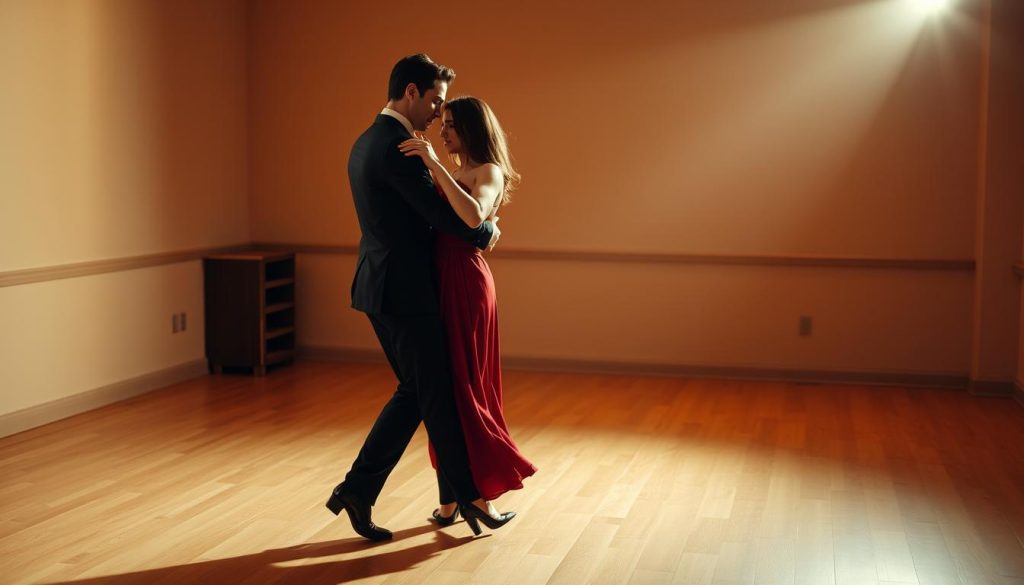
How long should you practice each week?
Instructors recommend two to three sessions per week for noticeable progress. Divide them as follows:
- 1 group class to learn techniques
- 1 independent session to repeat sequences
- 1 practice session at home with tutorials
“Fifteen minutes every day is better than a long session once in a while.”
Choosing your first group classes
Choose groups with fewer than 15 students per instructor. Here is a comparison of schools in Paris:
| School | Monthly fee | Student-to-instructor ratio |
|---|---|---|
| Latin Motion | €90 | 12/1 |
| Ritmo Tropical | €75 | 15/1 |
| Danse Passion | €110 | 10/1 |
Additional online resources
Platforms such as Bachata Academy offer more than 50 free tutorials. Mobile apps make practice easier:
- BachiLearn (4.7/5): interactive exercises
- Step-by-Step Bachata: progressive playlists
- Video Feedback: record your movements
With these tools, learning to dance bachata becomes a game. Confidence comes with perseverance!
Dancing bachata as a couple: connection and leading
Harmony between partners turns this dance into a physical dialogue. Physical and emotional connection creates a unique bond on the dance floor. Here are the keys to synchronizing your movements and fully enjoying the experience.

The basic positions (open and closed)
Two main positions structure the interaction:
- Closed position: contact at the torso and knees, with the leader’s right hand on the partner’s back.
- Open position: a short distance between partners, with a left-hand-to-right-hand connection for turns.
One effective exercise is to alternate between these positions during a slow song to feel the transitions.
The roles of the leader and follower
The leader initiates the movement 0.5 seconds before the follower, as movement studies show. The follower interprets the signals while retaining their own expression.
Essential technique:
“Light pressure from the right hand guides turns effortlessly.”
Tips for your first steps together
Discover ways to make your practice more fluid:
| Challenge | Solution |
|---|---|
| Height difference | The leader bends their knees slightly |
| Losing the rhythm | Synchronize your breathing |
| Limited space | Use circular movements |
To explore these techniques in greater depth, read these five professional tips on nonverbal communication between partners.
Conclusion: your bachata adventure starts now
Your journey begins here, with solid foundations and a fun approach. 90% of students notice progress within one month: confidence comes from dancing!
Three pillars ensure your success: consistency, listening to the music, and enjoyment. As Marco, a former beginner who became an instructor, says: “By daring to try, we discover our own grace.”
Try your first steps with our free checklist, or enjoy 20% off your first class. Festivals such as Bachata Fever are waiting for you to put your talents into practice.
So, are you ready to embark on this bachata adventure? The dance floor is waiting for you.