
Discover an effective method for learning the fundamentals of this vibrant dance. Originating in the Dominican Republic, it captivates dancers with its mesmerizing rhythm and sensual movements.
Our “Master It in 30 Days” program guides you step by step. With just 10 minutes of daily practice, you will see rapid progress.
As with building a house, learning depends on solid foundations. The challenge’s first video explains the basic step, which is essential for becoming more comfortable.
Take advantage of two free courses to refine your technique. Let the music carry you away and set your body free!
Why dance bachata solo?
Did you know that practicing alone can transform the way you move? According to professionals, 90% of dancers underestimate this stage. Yet it is essential for developing natural ease.
Practicing alone offers unique benefits:
- Coordination: refine your movements without relying on a partner.
- Musical awareness: identify the nuances of the rhythm so you can interpret it more effectively.
- Spatial awareness: learn to use the space gracefully.
A professional dancer says: “It was by dancing alone that I found my freedom. It strengthened my confidence before social dance nights.”
The Body Movement Program guides you through isolating each part of your body. The result? Ideal preparation for partner dancing, where every gesture becomes intentional.
Beyond technique, this approach reduces stress and cultivates the pure joy of moving. Try it and feel the difference!
The essential basics for beginners
Mastering the fundamentals opens the door to harmonious physical expression. Whether you are a beginner or looking to improve, these key elements will help you progress with confidence.
The basic step in detail
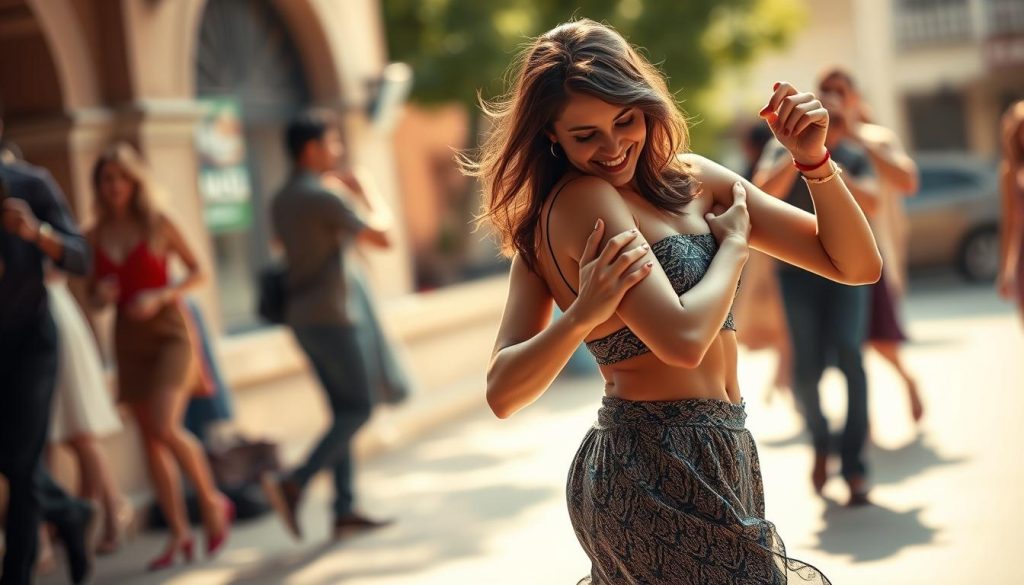
The foundation of this dance is an eight-count movement. Discover three variations suited to different tempos:
- Slow: ideal for isolating each movement.
- Medium: a balance between precision and fluidity.
- Fast: a challenge for synchronizing your feet and hips.
Our slow-motion video breakdown reveals subtleties that are often invisible to the naked eye.
Coordination and isolation
Improving coordination involves targeted exercises:
- Marking the rhythm separately with your hands and feet.
- Isolating the upper body from the pelvis to develop natural mobility.
A common mistake? Neglecting shoulder alignment. Correct it by filming yourself while you practice.
The art of feeling the music
You can master the rhythm with the “8 counts” method. Identify key instruments, such as the güira or bongo, to anticipate breaks. Try this exercise:
- Listen to a song while focusing on just one instrument.
- Mark the beat with your feet, then add your hands.
In seven days, this progressive program will transform your listening into instinctive movement.
Advanced exercises for refining your technique
Moving to the next level requires precision and a methodical approach. These techniques will help you refine your style and become more fluid.
Mastering solo turns
Complex turns become accessible with the “Spinning Underground” program. Begin with a double turn while controlling your gaze: focus on a point in front of you to maintain your balance.
Key tip: bend your knees slightly and engage your abs. This stabilizes your body during the rotation.
Using space creatively
Experiment with traveling steps by exploring five different patterns. Alternate circular and diagonal movements to add energy to your choreography.
- Draw imaginary lines on the floor
- Change direction every eight measures
- Use the walls as visual reference points
Adding arm and hand movements
Your arms add elegance to every step. Practice a four-count wave flowing from your torso to your arms, synchronizing it with the rhythm.
For shines, try this sequence:
- Stamp your feet on the strong beats
- Draw circles with your hands
- Finish with a fluid pose
Accessories such as scarves can enhance your expression. Let go and allow the music to guide you!
Tips for dancing with ease and enjoyment
You can turn your practice into a relaxing experience while making rapid progress! Here are some tips tested and approved by enthusiasts.
Creating a personalized routine
The “Shine Builder” method offers 15 pre-choreographed combinations. Adapt them to your space and skill level.
Key technique:
- Put movements together like LEGO bricks
- Vary the tempos to become more versatile
- Write down your favorite sequences
| Routine type | Ideal duration | Benefits |
|---|---|---|
| Warm-up | 5 min | Prepares the muscles |
| Pure technique | 10 min | Improves precision |
| Free expression | 5 min | Develops creativity |
Filming yourself to improve
This is a powerful tool for identifying your strengths and areas for improvement. Follow this checklist:
- Posture and alignment
- Fluidity of transitions
- Rhythmic precision
The “20/10” method (20 minutes of practice + 10 minutes of analysis) produces visible results in 30 days.
Useful resources: videos and online classes
Explore our catalog of more than 50 tutorials organized by level. To complement your learning, discover how to master the basics on your own.
Top three types of platforms:
- Interactive classes with personalized feedback
- Educational videos filmed from multiple angles
- Communities where dancers can share their experiences
Conclusion
Three months of regular practice can transform your dancing, as shown by a study reporting a 70% improvement. Users of online programs report high levels of satisfaction with both their technique and their enjoyment.
The benefits extend beyond rhythm: better posture, self-confidence, and the joy of movement. Join our community challenges so we can progress together!
Keep the three pillars in mind: consistency, analyzing your movements, and seeking enjoyment. Our next “Fusion” challenge will incorporate virtual partners to add variety to the styles.
Download your bonus resources now to take your practice further. On days when inspiration is lacking, remember that every small step counts.
Let the music guide your body and celebrate every improvement. Now it’s your turn!