
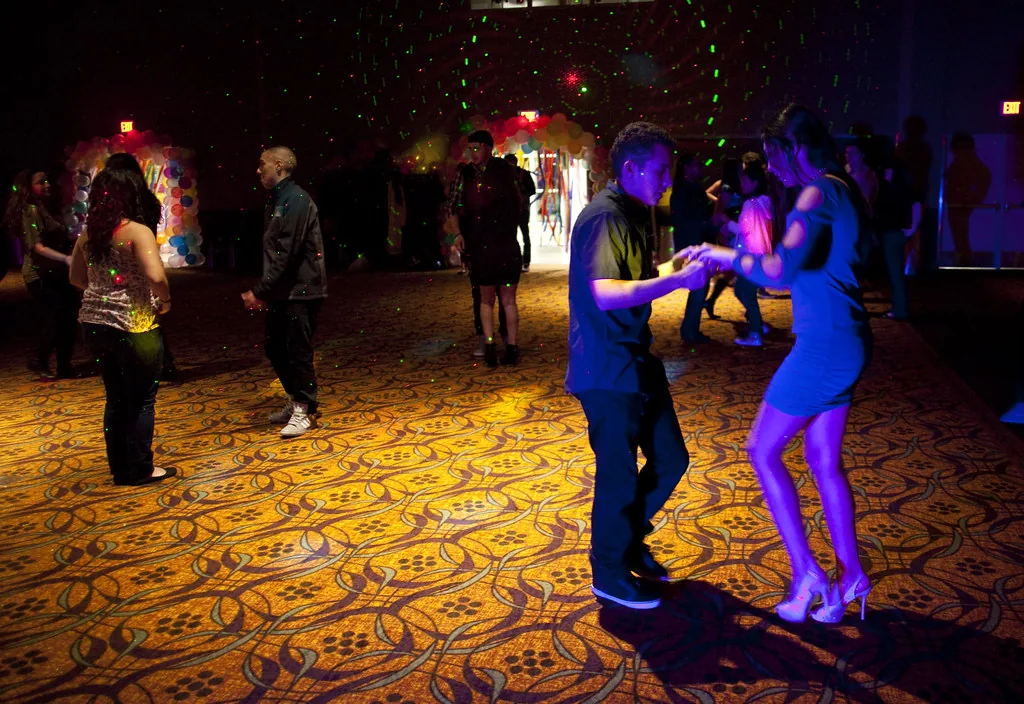
Immerse yourself in the captivating world of Latin dance, where every step tells a story. Rich in emotion, this style requires perfect harmony between the body and the music. For those seeking to improve, the path to excellence requires rigorous practice.
Complex movements cannot be learned in a day. They require a deep understanding of rhythm and mastery of the body. Suitable classes help you acquire the essential solid foundations.
Artistic expression plays a key role. A good dancer does more than reproduce steps. They create their own unique and recognizable style. Consistent training is the key to achieving this.
Whether you are a beginner or an experienced dancer, every session brings its own challenges. What matters is progressing at your own pace while always retaining the joy of dancing.
The fundamentals of mastering advanced bachata
Fluid movement begins with impeccable posture. In Latin dance, every gesture should reflect both technique and emotion. Achieving this requires proper body alignment and control of balance.
Perfect posture in closed position
Good alignment begins with the shoulders, knees, and heels. Keep your weight on the balls of your feet to make weight transfers easier. The abdominal muscles play a key role in the connection with your partner.
Practice these exercises:
- Synchronize your breathing with your steps
- Use proprioception exercises to improve stability
- Keep your knees flexible during turns
Balancing tension and relaxation
The dancer must find the right balance between control and fluidity. Too much rigidity restricts movement, while excessive relaxation reduces precision. Work on your center of gravity to achieve smooth transitions.
Avoid these common mistakes:
- Hunching your back in closed position
- Distributing your weight unevenly
- Holding your breath during moves
Advanced bachata moves: precise leading techniques
The secret of successful leading lies in subtle communication. In Latin dance, every cue must be clear while remaining imperceptible to the audience. This finesse distinguishes experienced dancers.
Invisible body micro-signals
The body communicates through tiny signals. Slight hand pressure or a shift in weight is enough to direct the movement. These cues are perceived by the partner’s peripheral nervous system.
To develop this sensitivity:
- Practice exercises with your eyes closed to refine tactile awareness.
- Vary resistance during connections to adapt your response.
- Try turns with different levels of pressure to understand their impact.
Variations in connection pressure
Modulating pressure is a powerful tool. Too much restricts fluidity; too little becomes ineffective. The ideal? A dynamic balance adjusted in real time.
Tips for harmonious leading:
- Use your contact with the floor to amplify your cues effortlessly.
- Synchronize your breathing with your partner’s for better coordination.
- Isolate impulses in your forearms to produce clearer signals.
Complex footwork that impresses
Precise steps make all the difference in choreography. In Latin dance, footwork transforms a routine into a show. It combines rhythm and creativity to captivate the audience.
Advanced rhythmic syncopation
Working with offbeats adds dynamism. Bachata’s 4/4 rhythm allows accents to be placed on the first, second, and fourth beats. This creates a striking visual effect.
To improve:
- Break sequences down into micro-movements.
- Practice slides with control.
- Syncopate your steps with the instruments.
Smooth transitions between patterns
Musicality guides changes of direction. Use pauses to link patterns seamlessly. The hips amplify the effect, adding dimension to the footwork.
Key tips:
- Anticipate musical breaks.
- Keep your body weight centered.
- Vary styles to match the melody.
High-speed turn techniques
High-speed turns transform a dance into a breathtaking performance. Every detail matters, from muscular engagement to visual spotting.
Preparing the body for multiple rotations
A successful turn begins with a well-prepared body. The obliques and deep muscles stabilize the rotation. Keep your weight on the balls of your feet for optimal balance.
Key tips:
- Engage your abdominal muscles before initiating the movement.
- Practice vestibular exercises to reduce dizziness.
- Control centrifugal forces by keeping your arms close to your body.
Managing spotting and balance
Spotting is the key to avoiding dizziness. Choose a fixed point and return your gaze to it quickly after each rotation.
Avoid these mistakes:
- Turning your head too late.
- Neglecting weight distribution between your feet.
- Holding your breath during the movement.
“A perfect turn is invisible. The audience should see only fluidity, not effort.”
For advanced techniques, combine turns and lifts. Work with a partner to synchronize impulses. Active recovery—slow walking and stretching—helps prevent dizziness after rotations.
Body isolations for a sensual style
Elegance in Latin dance comes from mastering body isolations. These segmented movements add a sensual dimension, transforming every gesture into artistic expression. The body then becomes an instrument capable of translating musicality into captivating waves.
Controlled torso waves
Body waves require precise muscular mechanics. Work in segments: pelvis, abdomen, then chest. Use a metronome to synchronize each phase with the rhythm.
Tips to heighten the effect:
- Engage the deep muscles to produce fluid waves.
- Vary the range of motion according to the melody’s intensity.
- Direct your gaze toward your hands to guide attention.
Separating hip and upper-body movement
This technique creates a striking visual contrast. The upper body remains stable while the hips follow the tempo. To achieve this:
- Practice isolation exercises slowly, then speed up.
- Maintain a connection with your partner through the forearms.
- Match isolations to musical breaks to create a dramatic effect.
“The power of a movement lies in its restraint. A well-executed isolation speaks louder than an abrupt gesture.”
By incorporating these techniques, you develop a unique style. The key? Harmonize isolations with the song’s musicality and emotions.
Spectacular lifts performed safely
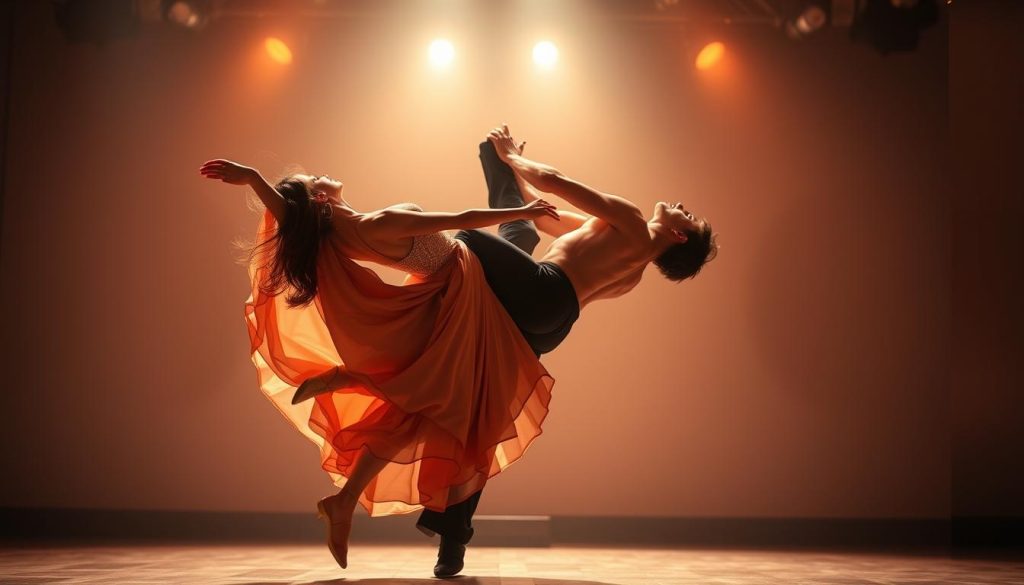
Mastering lifts requires perfect synergy between strength and precision. These aerial moves elevate choreography but demand rigorous preparation to minimize risk.
Necessary physical preparation
A strong body is essential. Stabilizing muscles—the abdominals and back muscles—maintain balance. Work these areas with targeted exercises:
- Dynamic planks for the abdominal core.
- Single-leg squats to strengthen your base.
- Vestibular exercises to counter dizziness.
Technique matters more than power. A successful lift depends more on weight distribution than on raw strength.
Support points and landing
Your partner’s safety is paramount. Here are the keys:
- Lock the joints—elbows and knees—during the lift.
- Communicate using verbal signals (“ready,” “go”).
- Land with bent knees to absorb the impact.
| Type of lift | Difficulty | Muscles used |
|---|---|---|
| Basic lift (waist lift) | ⭐ | Abdominals, shoulders |
| Aerial lift (fly) | ⭐⭐⭐ | Back, thighs |
| Rotating lift | ⭐⭐⭐⭐ | Obliques, calves |
“A lift is a silent conversation. If one person speaks too loudly, the other can no longer understand.”
Advanced musicality and interpretation
The true magic of dance lies in its ability to embrace every musical nuance. Reaching this level means going beyond simply counting beats. The body must become a living echo of the music, translating emotions into movements.
Playing with instrumental breaks
Breaks are opportunities to surprise. Anticipate silences or sudden accents to create dramatic effects. Here is how to master them:
- Analyze the song’s structure to identify transitions.
- Syncopate your steps with guitar or piano solos.
- Use poses to emphasize key moments.
Musicality is also fueled by improvisation. Try different physical responses to the same rhythm. This develops your creativity.
Emphasizing melodic changes
An ascending melody may inspire a lift, while a descending one calls for a fluid movement toward the floor. To achieve this:
- Listen to each instrument separately to enrich your vocabulary.
- Practice with songs featuring hybrid time signatures.
- Create dialogues with your partner during harmonic changes.
“A dancer who truly listens does not follow the music—they complete it.”
Your unique style emerges when you fuse technique and emotion. Musicality is the invisible bond between sound and gesture.
Managing space on a crowded dance floor
Dancing on a crowded floor requires particular mastery of space. Experienced dancers transform this constraint into an opportunity to create suitable movements. The key? Keen awareness of your surroundings.
Adapting moves to the environment
In a crowd, every step must be calculated. Use your peripheral vision to anticipate movement. Here are some effective tips:
- Reduce the range of your steps without sacrificing fluidity.
- Favor tight rotations over wide turns.
- Transform linear travel into movements performed in place.
Visual scanning technique is essential. Always keep an eye on the couples around you. Your arms become natural sensors for measuring the available space.
Protecting your partner in motion
Your partner relies on you to move safely. Adopt these habits:
- Position your body as a shield while moving.
- Control impulses to avoid collisions.
- Communicate with subtle pressure to signal obstacles.
“Dancing in a crowd is like driving in a city: you must anticipate, adapt, and protect.”
Skilled dancers know how to modify their movement in real time. Practice mirroring with your partner to achieve a synchronized response. Limited space then becomes a creative asset.
Creative variations on traditional basics
Transforming the fundamentals into a unique expression is the very essence of dance. Basic steps become a blank canvas for your creativity. This dynamic approach lets you develop a personal style while respecting the discipline’s roots.
Reinventing the side step
The classic side step can take unexpected forms. Add offbeats to break the routine. Vary levels—high and low—and directions—diagonal and circular.
Techniques for innovation:
- Break the movement into three distinct beats.
- Experiment with asymmetrical weight transfers.
- Incorporate elements of salsa or kizomba.
To explore these techniques in greater depth, specialized classes offer personalized guidance.
Variations on hip movement
The hips tell the story of the rhythm. Try these variations:
- Slow waves on weak beats.
- Sharp accents synchronized with the bass.
- Full circles during musical pauses.
Guided improvisation is a powerful tool. Set yourself creative constraints:
- Use only 50% of your usual space.
- Change levels with each repetition.
- Alternate fast movements with suspended ones.
“Great innovators do not break the rules—they redraw them in their own image.”
Your library of movements will grow with practice. Record your discoveries and revisit them regularly. The balance between tradition and modernity creates a dance that is both authentic and original.
Smooth transitions between complex moves
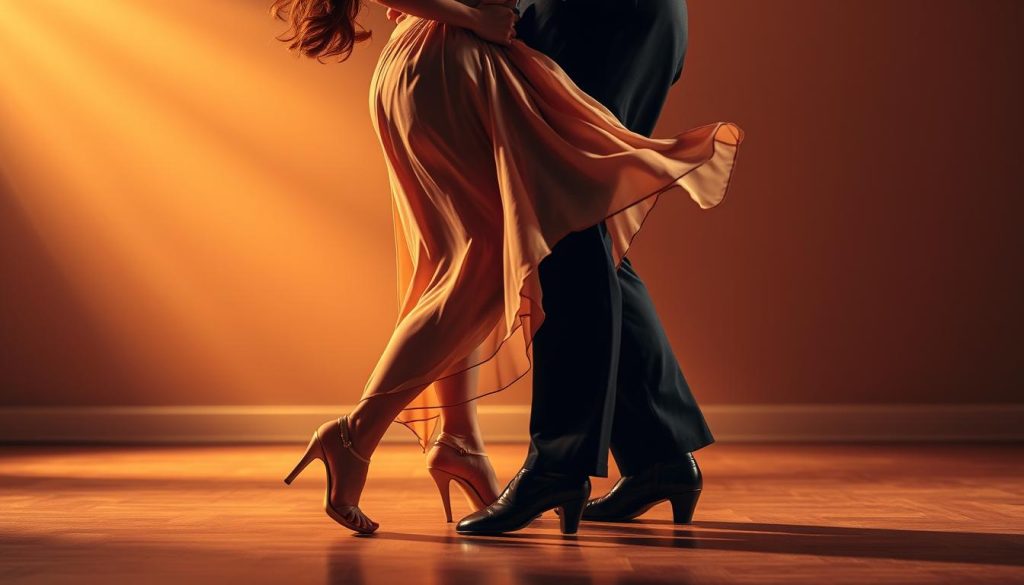
The beauty of choreography often lies in its transitions. These subtle passages between moves transform a sequence of steps into a continuous story. Mastering these combinations requires particular attention to movement and energy.
Preparatory sequences
Every move begins before the first step. Physical preparation determines the fluidity of the sequence. Here are the key principles:
- Anticipate the weight transfer as the previous movement ends.
- Create spirals through the upper body to initiate rotations.
- Maintain slight muscular tension to guide the energy.
Reverse segmentation is an effective method. Learn the end of the movement first, then work backward toward the beginning. This improves your understanding of transitions.
Using body weight
Your body weight is an ally in achieving harmonious changes. Balanced distribution enables more natural movements. Practice these exercises:
- Slow transfers from one foot to the other, controlling each phase.
- Single-leg balance exercises with changes in level.
- Synchronize breathing with changes of direction.
| Type of transition | Key point | Preparatory exercise |
|---|---|---|
| Rotation | Visual spotting | Slow turns with spotting |
| Change of level | Controlled bending | Pliés to music |
| Reversal of direction | Energy transfer | Body pendulums |
“A successful transition is like invisible punctuation—it provides structure without interruption.”
Advanced techniques use the physics of movement. The kinetic energy of one step can power the next. Work with a partner to feel these subtle exchanges.
The role of the gaze in connection
The gaze is far more than a simple movement of the eyes—it is a silent language that brings dance to life. It creates a deep connection with your partner, transforming technical steps into emotional expression.
Intense nonverbal communication
The eyes convey intentions before the first step. A sustained gaze can signal a rotation, while a wink adds a playful touch. To master this language:
- Practice alternating fixation exercises on near and distant objects.
- Synchronize your gaze with musical accents.
- Vary the intensity according to the emotion of the song.
Eye-body synchronization is essential. Your eyes should guide your movements like a lighthouse guiding a ship.
Managing eye contact
In some cultures, an overly intense gaze may be perceived as intrusive. Adapt accordingly:
- In Latin Europe, eye contact is often direct.
- In Asia, alternating between the eyes and shoulders is common.
| Technique | Effect | Ideal duration |
|---|---|---|
| Averted gaze | Creates mystery | 2 to 3 seconds |
| Intense gaze | Amplifies emotion | 4 to 5 seconds |
| Rhythmic blinking | Plays with the music | Syncopated |
“The eyes are the body’s spokespeople. They say what words cannot express.”
For complex moves, use precise viewing angles. An upward gaze prepares for a lift, while lowering the eyelids emphasizes a sensual expression.
Advanced improvisation techniques
Improvisation is the art of dancing without a safety net, where every step becomes a surprise. This freedom requires technical mastery combined with active listening. The best dancers know how to transform the unexpected into an opportunity.
The key lies in harmony between preparation and spontaneity. Your body must react before your conscious mind even perceives the change. This silent dialogue with musicality is learned through experience.
Actively listening to your partner
Dancing together without prior rehearsal requires an exceptional connection. Your partner communicates through often-imperceptible micro-movements. Develop these skills:
- Neuromotor responsiveness through instant-response exercises.
- Predict intentions by reading body language.
- Limitation games—for example, using only three basic steps—to stimulate creativity.
| Signal | Ideal response | Reaction time |
|---|---|---|
| Palm pressure | Reverse rotation | 0.3 sec. |
| Delayed weight transfer | Syncopated step | 0.5 sec. |
Adapting in real time
Successful improvisation transforms obstacles into choreographic elements. Limited space? Create vertical movements. A mistake? Incorporate it as a stylistic variation.
“A good improviser does not correct their ‘mistakes’—they sign them with flair.”
Effective methods:
- Guided themes—for example, imitating a natural element.
- Random constraints, such as a sudden change in rhythm.
- Video analysis of expert patterns.
Risk management remains paramount. Anticipate potentially dangerous movements and establish clear stop signals with your partner.
Managing energy over long periods
Performance in dance depends on a subtle balance between effort and recovery. Managing your energy allows you to link moves without fatigue while maintaining the quality of your movements.
Breathing and endurance
Diaphragmatic breathing is the key to better endurance. Inhale deeply through your nose, expanding your abdomen, then exhale slowly through your mouth.
Techniques to optimize your metabolism:
- Alternate aerobic and anaerobic phases.
- Practice muscle-strengthening exercises.
- Drink regularly to stay properly hydrated.
Recovery between moves
Active breaks help replenish your reserves without allowing your muscles to cool down. Walk slowly while lifting your knees, or perform shoulder rotations.
| Method | Duration | Benefit |
|---|---|---|
| Dynamic stretching | 30 sec. | Maintains muscle warmth |
| Hydration | Every 15 min. | Prevents cramps |
| Controlled breathing | 5 cycles | Reduces breathlessness |
“An intelligent dancer knows that the silences between notes are part of the music.”
To explore these techniques further, discover how dance improves endurance and overall fitness.
Personal style and artistic signature
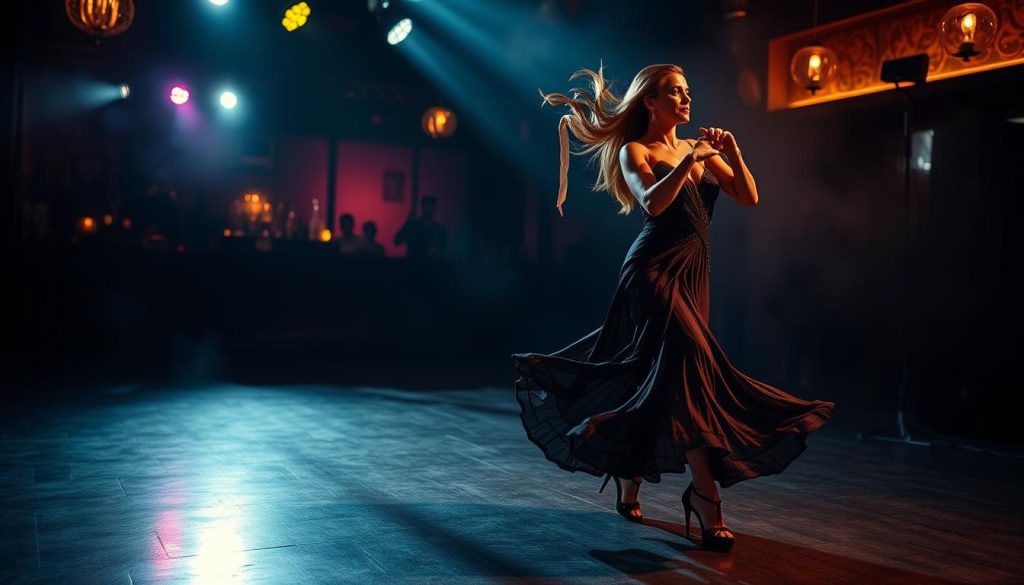
The way you move tells a unique story. In Latin dance, style emerges from the union of tradition and personality. Caribbean heritage provides conventions, but your interpretation creates the magic.
Developing a unique movement vocabulary
Identify your movement signature using these methods:
- Video analysis: identify your recurring movements.
- Guided improvisation: explore without technical constraints.
- Dance journal: record your choreographic discoveries.
Leading names such as Daniel y Desiree and Marco y Sara demonstrate how to blend multiple influences. Their secret? Taking varied elements and creating something new.
| Technical element | Stylistic transformation | Example |
|---|---|---|
| Basic step | Rhythmic variations | Syncopation on the second beat |
| Hip movement | Personalized range | Asymmetrical circles |
| Lifts | Emotional signature | Dramatic stops |
Balancing technique and expression
Technical mastery frees creativity; it does not stifle it. Here is how to find harmony:
- Learn the rules before breaking them.
- Vary intensity according to the music.
- Incorporate biographical elements.
“Your style is like your shadow—you cannot escape it, but you can shape it.”
Artistic development takes time. Test, adjust, and begin again. Your unique expression will emerge naturally from this mindful practice.
Improving through video analysis
Video analysis provides an objective window into your practice. This tool reveals details invisible to the naked eye during performance. A recent study shows that dancers who use this method improve 40% faster.
Identifying weaknesses
Structuring your self-analysis maximizes results. Begin by filming your sessions from different angles. Then compare your movements with those of experts.
Effective methods:
- Breakdown: analyze the arms, legs, and upper body separately.
- Slow motion: detect micro-errors at 0.25× speed.
- Assessment grids: rate fluidity, alignment, and musicality.
For technical improvement, specialized classes provide personalized feedback.
Optimizing posture
The camera reveals invisible imbalances. A 2014 French champion states: “90% of errors come from poor weight distribution.”
Tips for correcting them:
- Position the camera at hip height to see weight transfers.
- Compare your videos before and after each adjustment.
- Use visual guides, such as lines on the floor.
| Tool | Advantage | Frequency of use |
|---|---|---|
| Smartphone | Accessible | Daily |
| Professional software (Kinovea) | Precise measurements | Weekly |
| Drone | Aerial view | Occasional |
“Your worst enemy is not the mistake, but being unaware of it.”
Conclusion: your journey toward bachata excellence
Your journey toward mastery rests on three pillars: precise technique, artistic expression, and physical conditioning. Each reinforces the others. Progress comes from balancing these aspects.
Excellence is achieved through curiosity and consistency. Try new movements, analyze your videos, and connect with other enthusiasts. Your unique style will emerge naturally.
Dance is constantly evolving—and so are you. Share your discoveries and celebrate every milestone. Your progress, however slow, will always take you farther.