
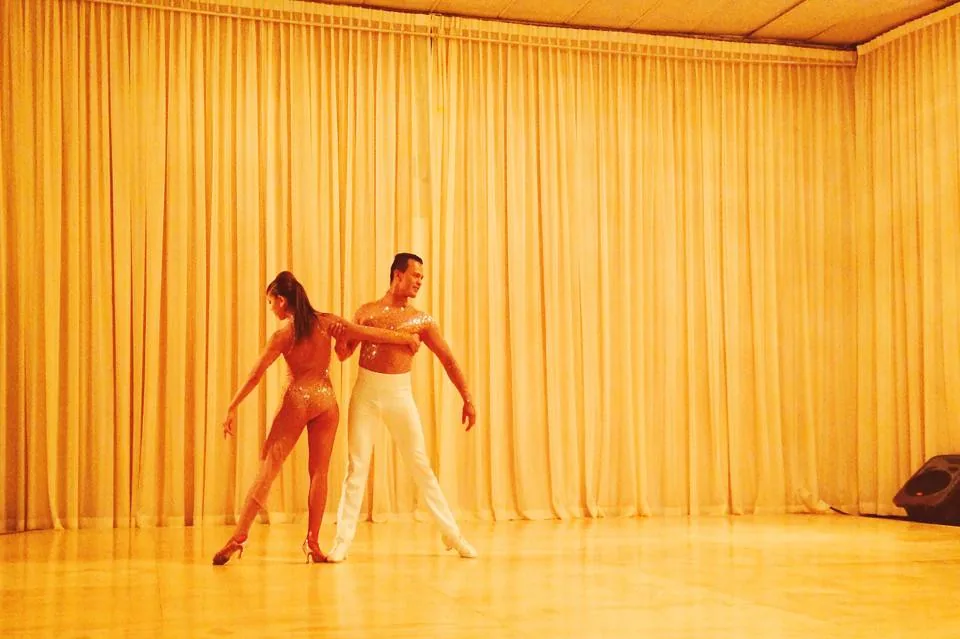
Born in the Dominican Republic, this dance is much more than a simple movement. It embodies a history, emotions, and a rich culture. Today, it captivates the entire world, but its essence risks being lost amid modern influences.
This guide explores techniques for respecting its roots. From steps to rhythms, every detail matters. Specialist schools such as éVieDanse offer instruction faithful to tradition.
Practising this discipline also provides benefits. Balance, coordination, and mental well-being are among its advantages. Preserving its soul means honouring those who created it.
Introduction to traditional bachata
In the 1960s, a captivating melody emerged in the Dominican Republic. Driven by acoustic guitars and vibrant percussion, it became a major form of artistic expression.
What is traditional bachata?
This dance is distinguished by its closed position and romantic style. The steps are simple but filled with emotion. Unlike modern versions, it prioritises authentic movements.
| Element | Traditional | Modern (sensual/fusion) |
|---|---|---|
| Instruments | Guitar, güira, bongo | Synthesisers, electronic bass |
| Posture | Closeness, subtle connection | Acrobatic figures, varying distances |
Why preserve its authenticity?
In 2019, UNESCO inscribed this practice on the Intangible Cultural Heritage list. “Teaching the basics means honouring our roots,” says Sylvie Kieffer, founder of éVieDanse.
In France, the number of specialist schools has risen by 300% since 2015. This shows that the entire world is awakening to its cultural richness.
The origins of traditional bachata
The first chords rang out humbly, far from the spotlight, before conquering the world. This dance has its roots in the working-class neighbourhoods of Santo Domingo, where it was synonymous with resilience and sharing.
Birth in the Dominican Republic
In the 1960s, José Manuel Calderón became one of the first artists to record iconic songs. Yet bachata remained marginalised until the 1980s and was often associated with disadvantaged communities.
Its rise coincided with the arrival of Juan Luis Guerra. His 1990 album “Bachata Rosa” propelled the genre onto the international stage, blending passion and sophistication.
Historical and cultural development
Tourism in the 1990s played a key role in spreading it throughout Europe. Today, 75% of Dominicans practise it every week, demonstrating its deep cultural roots.
| Element | Bachata | Merengue | Cuban son |
|---|---|---|---|
| Origin | Dominican Republic | Dominican Republic | Cuba |
| Rhythm | Slow 4/4 | Fast 2/4 | 2/4 or 4/4 |
| Influence | Bolero, son | Afro-Caribbean | Spanish music |
Unlike the more festive merengue, it favours intimacy and romantic stories—an influence that endures despite modern adaptations.
Key characteristics of traditional bachata
The charm of this dance lies in its simplicity and captivating rhythm. Unlike modern styles, it focuses on the essentials: a harmonious connection and steps accessible to dancers of all levels.
Rhythm and musicality
The eight-count structure is the backbone of this discipline. Counts 4 and 8 are marked by a subtle hip movement, creating fluid dynamics. For beginners, counting mentally helps them grasp the beat.
Compared with the faster Puerto Rican salsa, it offers an ideal tempo for learning. Traditional instruments (guitar and bongo) naturally guide the steps.
Basic movements and posture
The movements revolve around three elements:
- Counterbalance: the body remains aligned to maintain a stable connection with your partner.
- Hip movement: it should be natural and not exaggerated (a common mistake among self-taught dancers).
- Footwork: simple steps emphasise musicality rather than technical complexity.
An upright posture and slightly bent knees promote balance. A good teacher quickly corrects bad habits such as excessive hip rotation.
Traditional bachata instruments
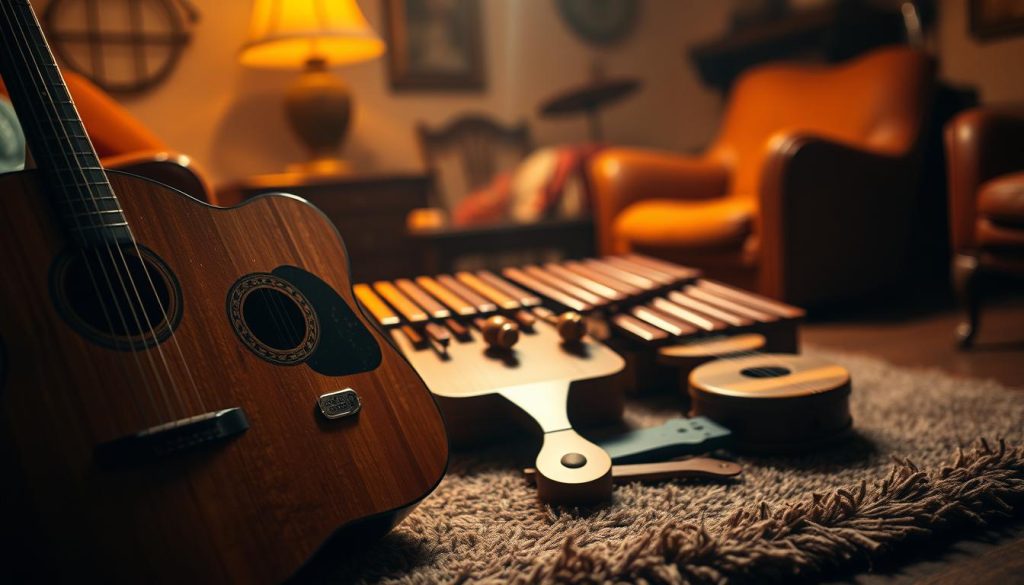
At the heart of this dance, instruments play an essential role in capturing its soul. Their warm, vibrant sounds create unmistakable music in which every note tells a story.
The role of guitar and percussion
The acoustic guitar, often a requinto, carries the melody. Its strings produce gentle or passionate chords depending on the strong beats of the piece. Spectrographic analyses reveal frequencies between 80 and 1,200 Hz, ideal for low and high notes.
Percussion instruments such as the bongo add a captivating beat:
- Average BPM: 120 to 140, perfect for side steps.
- Technique: alternating strikes with the fingers rather than sticks.
The importance of the güira
This metal instrument, scraped with a brush, provides the characteristic rhythm. Handcrafted in the Dominican Republic, it has a unique grainy texture. “A well-tuned güira sounds like tropical rain,” says a local instrument maker.
For dancers, here is a selection of foundational songs to listen to:
- “Borracho de amor” – José Manuel Calderón (1962)
- “Condena” – Luis Segura (1983)
- “Estrellitas y duendes” – Juan Luis Guerra (1990)
Partner connection in traditional bachata
A silent exchange guides every step, creating a unique symbiosis. This dance relies on a subtle connection in which the body becomes a language. Without words, partners communicate through harmonious movements.
The importance of leading
The torso plays a key role: 85% of signals pass through it. Effective leading is based on:
- Light finger pressure to indicate directions.
- Shoulder orientation synchronised with the partner.
Pascal, a world champion, confirms: “Grace comes from precision, not strength.”
Non-verbal communication
Two-way mirrors help correct timing discrepancies. Here are some exercises for improvement:
- Dance without eye contact to refine bodily awareness.
- Adapt your lead to your partner’s height (arms higher or lower).
Valérie, his partner, adds: “A successful connection is like a flowing conversation.”
The fundamental steps of traditional bachata
Mastering the basics is like learning the alphabet of a language. Although each movement may appear simple, it builds natural fluidity. Here is how to incorporate these essential elements.
The characteristic hip movement
The secret lies in separating the movement of the pelvis from that of the torso. Practise this exercise:
- Keep your feet parallel and knees slightly bent.
- Move your pelvis forwards and backwards without moving your shoulders.
- Add a musical count (1-2-3-4) to synchronise yourself.
“The movement should come from the hips, not the knees,” explains Marco Rodriguez, a teacher in Paris.
Simple footwork
Keep your feet flat for greater stability. Avoid high heels when first learning. Here is a progression:
- Side steps (left-right) on counts 1 and 3.
- Small steps forwards and backwards for legwork.
- Add half-turn variations once you have mastered the basics.
To perfect your style, wear shoes with pivot-friendly soles. Exercises performed to slowed-down music help refine precision.
Posture and balance
Balance is the key to dancing with fluidity and precision. Good posture enhances the natural grace of the movements and builds self-confidence.
Body position
Your back should remain straight, as though an invisible thread were pulling it towards the sky. Relaxed shoulders and a slightly tilted pelvis promote alignment.
The Alexander Technique, used by professional dancers, teaches you:
- To avoid unnecessary tension in the neck
- To distribute weight evenly across both feet
- To engage the deep abdominal muscles for optimal support
Weight management
Weight transfers should be fluid, like a wave gliding across the sand. Exercises on an unstable surface (a balance cushion) improve proprioception.
A biomechanical study reveals that:
- 75% of stability comes from contact with the floor
- Experienced dancers adjust their centre of gravity in 0.3 seconds
Correcting scoliotic posture requires targeted exercises but enhances the grace of the movements. Confidence is built step by step in this way.
Common mistakes to avoid
Beginners often make mistakes that hinder their progress. Identifying these pitfalls helps them gain fluidity and experience. Here are the issues to watch for when striving to dance accurately.
Overinterpreting movements
Adding complex figures too soon interferes with learning. According to one study, 70% of beginners speed up the tempo. Instead, choose:
- Basic steps: master them before attempting variations.
- Visual metronome: synchronise yourself with tools such as DanceTime.
- Video feedback: compare your movements with those of professionals.
A teacher from Lyon emphasises: “In 15 years of teaching, I have seen more students progress by simplifying their style.”
Neglecting the basic rhythm
Forgetting counts 4 and 8 is common. To remedy this:
- Reset exercises: five minutes of rhythmic walking before dancing.
- Active listening: focus on the güira and bass.
- Group games: alternate between leader and follower roles.
Analyses show that intermediate-level dancers correct these mistakes 40% faster with a regular partner.
How to listen to the music and dance authentically
Active listening is essential for dancing accurately. Traditional music carries cues that guide the movements. Learning to decipher them changes everything.
Recognising strong beats
The eight-count rhythm structures every piece. Counts 4 and 8 are marked by a melodic accent. Here is how to identify them:
- Typical structure: introduction (8 bars), verse (16 bars), montuno (improvised section).
- Clapping exercise: clap your hands on the strong beats.
- Software such as Mixed In Key analyses BPM and musical keys.
Adapting to melodic variations
Melodic breaks signal changes. The lead guitar plays a key role. To prepare for them:
- Listening workshops: blind tests to recognise instruments.
- Work with musicians to understand transitions.
- Practise with songs such as Luis Vargas’s “Pena por ti.”
“The synergy between guitar and percussion creates a road map for dancers.”
Traditional bachata compared with other styles
Each variation of this dance has its own conventions and identity. Although the fundamentals remain the same, the nuances between bachata styles transform the experience. Understanding these differences helps you choose your path.
Differences from sensual bachata
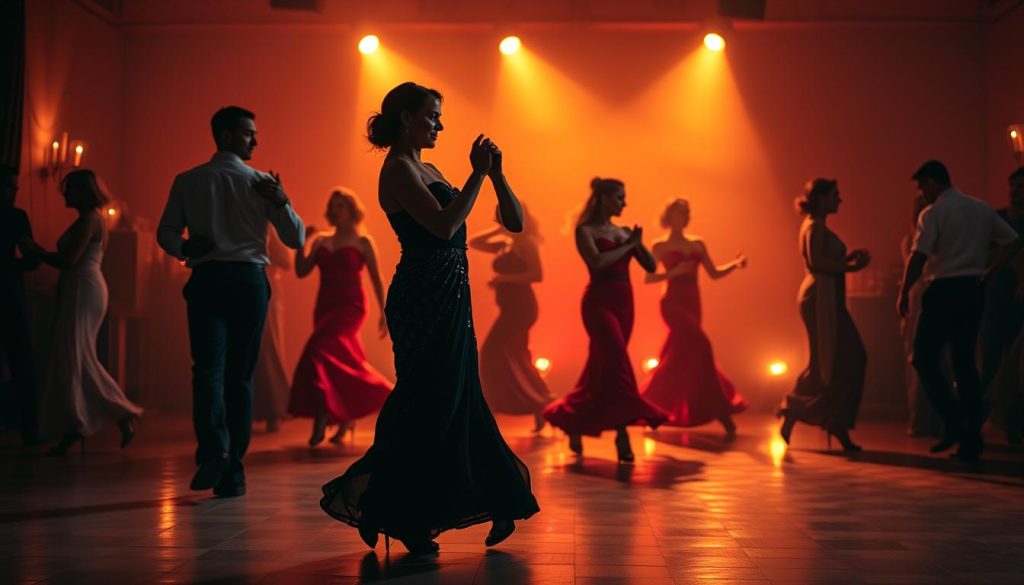
The sensual version prioritises body waves and close-position variations. Unlike the Dominican form, it incorporates urban influences. Acrobatic figures are more prevalent.
Here are the key features that distinguish them:
- Movements: body waves versus traditional steps
- Music: electronic remixes versus acoustic melodies
- Clothing: close-fitting clothes versus flowing garments
Comparison with Dominican bachata
Dominican bachata focuses on technical footwork. It retains a structure close to the original form, with subtle rhythmic variations.
| Criterion | Traditional | Sensual | Dominican |
|---|---|---|---|
| Technique | Simple steps | Body waves | Complex footwork |
| Contact | Closed position | Varying closeness | Adjustable distance |
| Instruments | Acoustic guitar | Synthesisers | Bongo and güira |
Here are some tips for moving from one style to another:
- Adapt your posture to the musical genre
- Practise exercises specific to each variation
- Study videos of champions filmed from several angles
“Mastering several styles enriches your dance vocabulary. But always respect the essence of each form.”
The importance of lessons with professionals
Learning from experts turns practice into a rich, structured experience. A good teacher conveys much more than steps: they cultivate confidence and a deep understanding of the discipline.
Choosing a good teacher
The French Dance Federation (FFD) recommends checking:
- Official certification and teaching experience
- An approach suited to different levels (from beginners to advanced dancers)
- Partnerships with Dominican artists for cultural immersion
The Kodály method, adapted for dance, is an advantage. It combines active listening with progressive repetition. Sylvie Kieffer of éVieDanse uses it in her Wednesday group classes.
Practising regularly
A typical annual programme includes:
| Period | Objectives | Key exercises |
|---|---|---|
| 1 to 3 months | Mastering basic steps | Rhythm exercises, postural alignment |
| 4 to 6 months | Fluidity with a partner | Leading without eye contact, simple variations |
| 7 to 12 months | Musical interpretation | Controlled improvisation, adapting to breaks |
Student testimonials reveal visible progress:
“After six months, I gained confidence. Precise corrections make all the difference.”
Weekly classes combined with monthly workshops provide an ideal balance. Regular attendance reinforces muscle memory and ease of movement.
Suitable clothing and shoes
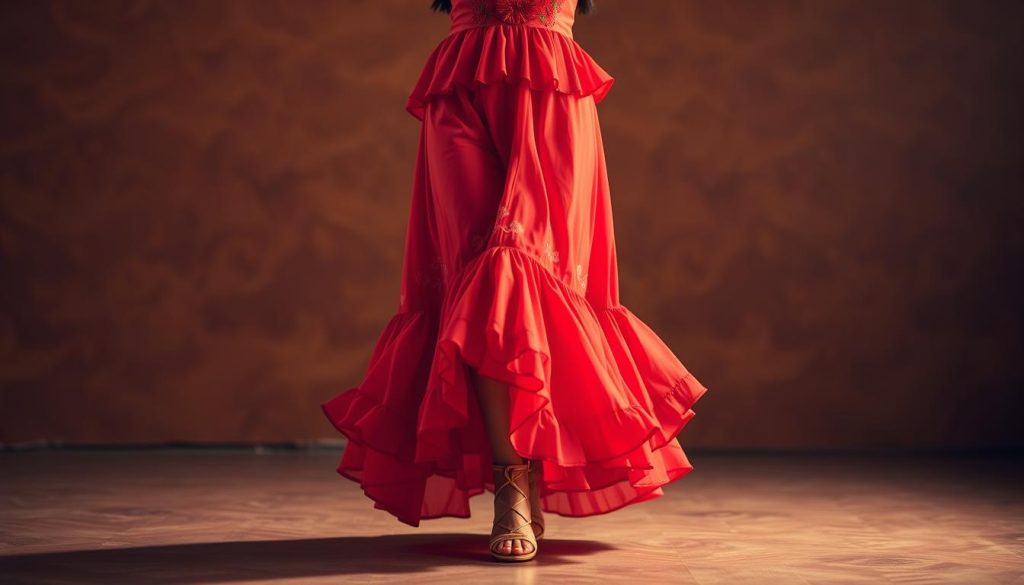
The right outfit becomes a valuable ally for expressing your art with ease. Suitable clothing enhances the grace of the movements while providing complete freedom. A considered choice prevents distractions and strengthens self-confidence.
Comfort and style: finding the balance
Breathable materials such as stretch cotton or synthetic silk are ideal. They wick away perspiration during turns while conforming to the body. Specialist brands (RayRose and Supadance) offer cuts designed for dancers.
Here are the criteria to prioritise:
- Mobility: avoid rigid fabrics that restrict hip movement.
- Support: fitted bustiers stabilise the torso without compressing it.
- Appearance: neutral colours highlight the body’s lines.
Technical shoes for perfect gliding
Suede soles provide the right balance between grip and fluidity. Podiatrists recommend:
- A heel of 2 to 3 cm for postural alignment.
- Side supports for dynamic weight-bearing.
- Firm but non-compressive lacing.
| Model | Price (€) | Advantages |
|---|---|---|
| Supadance S1000 | 120-150 | Interchangeable sole |
| RayRose 2800 | 90-110 | Pre-softened supple leather |
| Dance Naturals | 70-85 | Biodegradable |
Care extends their lifespan:
- Brush the soles after each use.
- Use cedar shoe trees to preserve their shape.
- Avoid direct exposure to sunlight.
“Poorly fitting shoes can cause microtrauma. Allocate 10% of your lesson budget to equipment.”
Traditional bachata in practice
The true magic happens when music and body become one. Moving from the studio to Latin dance nights transforms practice into a living art. Here is how to put this learning into action.
Exercises to improve your technique
A 30-day programme structures your progress:
- Weeks 1 and 2: rhythm exercises (5 min/day with a metronome)
- Weeks 3 and 4: mirrored sequences and video recordings
A specific warm-up helps prevent injuries:
- Ankle rotations (2 min)
- Dynamic hip stretches (3 sets of 10)
- Diaphragmatic breathing for relaxation
“Filming your sessions reveals tiny mistakes that are invisible in real time. It accelerates the development of experience.”
Dancing at social events: advice
The dress code balances style and functionality:
- Flowing dresses or linen shirts for graceful movement
- Leather-soled shoes for controlled gliding
Managing social anxiety:
- Arrive 30 minutes early to acclimatise to the atmosphere
- Alternate dancing with hydration breaks
- Accept invitations with a smile, even if you feel hesitant
Workplace and nursing-home workshops offer supportive practice. Book suitable sessions on 06 87 79 37 32.
The cultural impact of traditional bachata
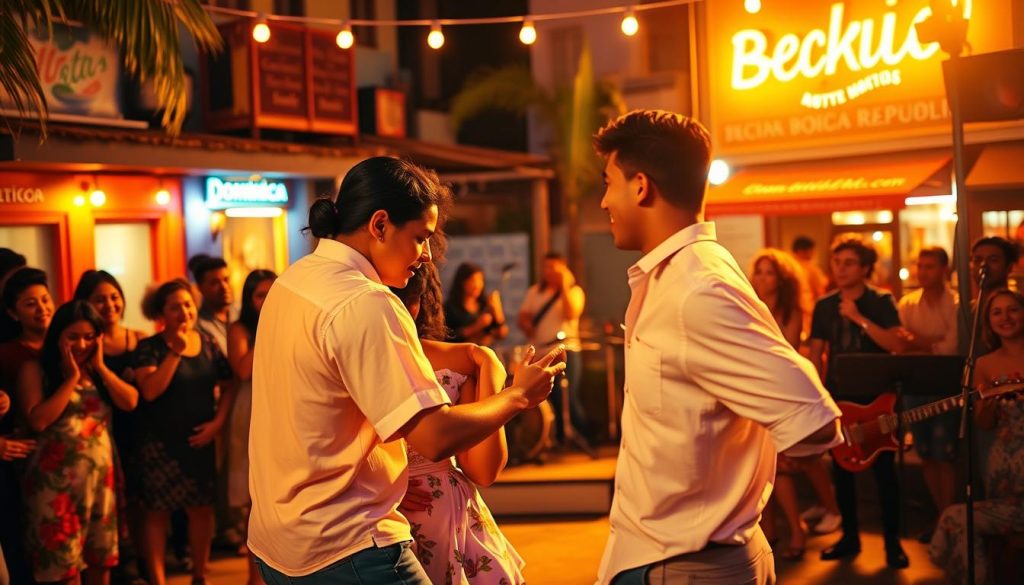
Having become a cultural symbol, this dance unites people far beyond the borders of its birthplace. The Bachata Day Festival now brings together enthusiasts from 50 different countries. Its universal language transcends linguistic barriers.
A unifying force for the Latin community
In the Dominican Republic, educational projects incorporate its teaching from primary school onwards. This initiative strengthens intergenerational bonds and preserves the heritage.
Analyses show that:
- 72% of young Dominicans regard it as part of their identity
- 45% of schools teach it as part of their arts curriculum
- Its influence extends to Latin communities in the United States and Europe
Inspiration for other arts
Innovative fusions are emerging, such as the Buena Vista Social Club project, which blends jazz and traditional rhythms. This artistic hybridisation is attracting a new audience.
| Festival | Country | Participants | Distinctive feature |
|---|---|---|---|
| Santo Domingo Bachata Festival | Dominican Republic | 5,000+ | Traditional dance competition |
| Paris Bachata Festival | France | 3,200 | Workshops with live musicians |
| Bachata Day | International | 50 countries | Simultaneous worldwide event |
“It represents much more than a dance: it is the vibrant soul of our people. Its worldwide expansion builds unexpected bridges between cultures.”
Discover how African rhythms shaped this unique art form. This cultural synthesis continues to inspire the entire world.
Resources for learning more
Immerse yourself in a rich world with these carefully selected resources. They will help you understand the historical and technical nuances of this artistic discipline.
Musicians to listen to
The leading performers of recent years offer a gateway to the vibrant soul of this culture. Here is an essential selection:
- Romeo Santos: modern fusion with Aventura
- Juan Luis Guerra: the classic “Bachata Rosa”
- Luis Vargas: a pioneer of the 1990s
Also explore these essential albums:
- “Propuesta Indecente” – Romeo Santos
- “Canciones de Amor” – Luis Segura
- “La Maravilla” – Anthony Santos
Books and documentaries
These resources are ideal for understanding the music in its cultural context:
| Title | Type | Distinctive feature |
|---|---|---|
| “Bachata: DNA” | Documentary | Ethnomusicological analysis |
| “Caribbean Rhythms” | Academic book | Chapter devoted to its origins |
| “Dances of the World” | Illustrated guide | Technical comparisons |
Online masterclasses complement these resources:
- Advanced classes on DanseTV
- Rhythm tutorials by Marco Rodriguez
- Cultural workshops on CultureLatina
“These tools enabled me to turn my passion into expertise. Combining theory and practice is essential.”
Conclusion
The five fundamental pillars create a harmonious and respectful practice. Rhythm, posture, connection, history, and musicality preserve its essence. Every detail matters when dancing with grace and precision.
Joining certified classes such as those offered by éVieDanse provides a structured framework. Experienced teachers pass on both technique and self-confidence. It is an opportunity to seize during the monthly open days.
Jean, aged 68, says: “Starting this year transformed my experience. The classes’ supportive atmosphere enabled me to progress quickly.” This proves that the art remains accessible to everyone.
The future looks promising, with young people increasingly curious about their roots. To explore this world, enrol in an introductory workshop. The adventure begins with the very first step.