
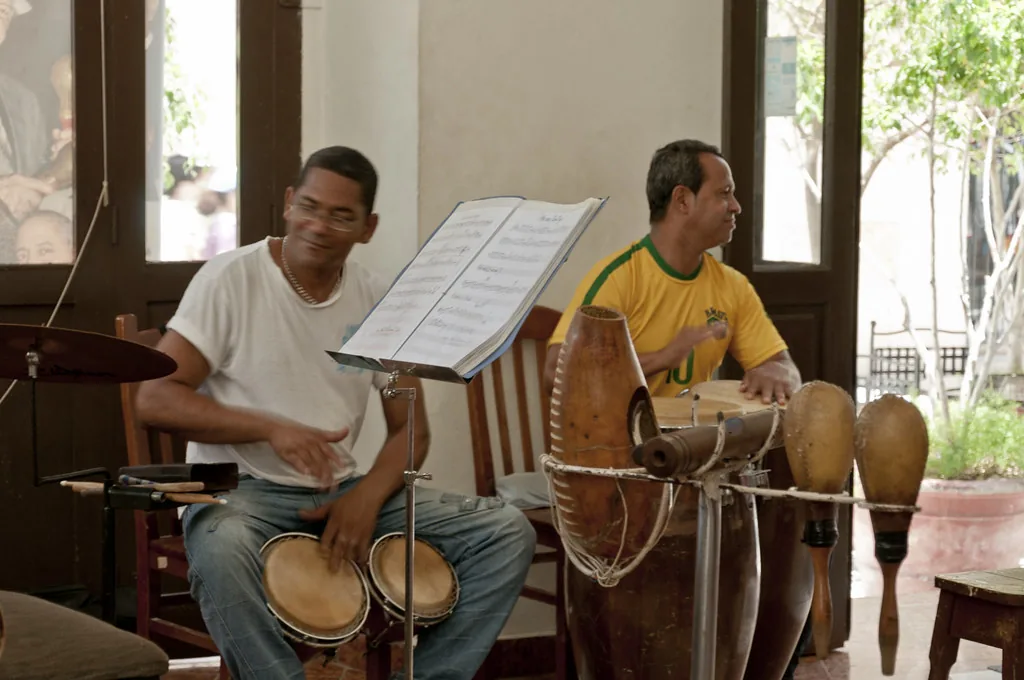
Cuban music emerged from a rich blend of cultures. Its origins lie in the displacement caused by slavery. Genres such as cha-cha, rumba, and mambo reached Africa via the Atlantic coast.
They enjoyed tremendous success. Local groups adopted them, and they experienced their heyday from the 1940s to the 1970s. Enslaved Africans, especially those from the Kingdom of Kongo, influenced Cuban music.
Introduction
The African influence on Cuban music is clear. From the 16th century onward, the arrival of the first enslaved Africans left its mark on Cuba. They brought their percussion, rhythms, songs, and dances. These elements profoundly shaped Cuban music.
Genres such as mambo, cha-cha, and son have African roots. The clave used in Cuban rumba illustrates this influence, which shaped Cuba’s unique musical identity.
The African influence on Cuban music
From the 16th century onward, enslaved Africans brought their musical traditions with them. These traditions blended with Spanish, Indigenous, and Creole influences, giving rise to Cuban music.
Genres such as Cuban son, rumba, and mambo have roots in West Africa as well as in the Kingdom of Kongo. This African influence shaped Cuban music’s unique identity.
This influence continued to evolve over the centuries. It contributed to the worldwide renown of Cuban music.
“Cuban music is a fascinating blend of African, Spanish, and Creole traditions that gave rise to unforgettable genres such as mambo, cha-cha-cha, and rumba.”
What Are the Different Types of Afro-Cuban Music?
Cuban music is a fascinating blend of European and African traditions. This combination gave rise to unique musical genres such as Cuban son, mambo, cha-cha-cha, Cuban rumba, and Cuban bolero. Deeply rooted in Cuban culture, these genres have influenced popular music worldwide.
Cuban son
Cuban son emerged in the late 19th century. It forms the basis of contemporary Cuban music and is regarded as the precursor of salsa. Influenced by African rhythms, this genre is characterized by its lively tempo and instrumental arrangements.
Cuban son achieved worldwide recognition through artists such as Buena Vista Social Club.
| Afro-Cuban musical genre | Characteristics |
|---|---|
| Cuban rumba | Strongly influenced by African percussion, particularly the clave. |
| Mambo | A blend of Cuban jazz, Afro-Cuban rumba, and Cuban guaracha. |
| Cha-cha-cha | A Cuban rhythm combining melody on the beat with accompaniment on the offbeat. |
These Afro-Cuban musical genres, born from the fusion of African and Spanish traditions, became essential parts of Cuban culture. They shaped the development of popular music around the world.
“Cuban music is the product of cultures from around the world coming together, combining Europe, Africa, and the New World.”
Expansion in Africa
Cuban music won over Africa because of its African influences. As early as the 1930s and 1940s, Cuban 78 rpm records known as GVs flooded African markets. This gave rise to numerous cover versions in African languages.
Congolese rumba emerged from this blend. It became an extremely popular genre thanks to artists such as Franco Luambo and his band OK Jazz. Afro-Cuban music also enjoyed great success in Senegal. Groups such as Orchestra Baobab left their mark on the music scene.
Congolese rumba
Congolese rumba is a genre that emerged in the 1950s in the Democratic Republic of the Congo. It combines Cuban music with Congolese rhythms. This music became highly successful in Africa and influenced other genres, including Afrobeat.
| Artist | Group | Year |
|---|---|---|
| Franco Luambo | OK Jazz | 1950s |
| Tabu Ley Rochereau | Virunga | 1960s |
| Papa Wemba | Viva la Musica | 1970s |
These Afro-Cuban groups played a key role in popularizing Cuban music in Africa. They influenced African music and helped create new musical forms such as Congolese rumba.
“Congolese rumba, a blend of rural Congolese music and Cuban rumba, became a leading genre championed by artists such as Franco Luambo and his band OK Jazz.”
Conclusion
Cuban music, whose roots are connected to the African influence on Cuban music, enjoyed great success in Africa. Genres such as rumba, mambo, and cha-cha were adopted by local orchestras. They became essential parts of the African musical landscape.
Afro-Cuban heritage is crucial to Cuban music in Africa. In 2001, the Cuban carnival was recognized by UNESCO as part of humanity’s heritage. This reflects the global impact of these musical traditions.
Despite economic challenges, music holds an important place in Cuban life. The drum, in particular, plays a central role. Celebrating this cultural heritage demonstrates the importance of African roots in Cuban musical identity.
FAQ
What are the main genres of Afro-Cuban music?
What is the African influence on Cuban music?
How did Cuban music spread through Africa?
Source Links
- https://origins.osu.edu/index.php/article/year-of-africa-1960-rumba-pan-africanism-Kariba
- https://www.pbs.org/buenavista/music/timeline_1900.html
- https://www.metmuseum.org/exhibitions/listings/2015/kongo/blog/posts/kongo-music-past-and-present
- https://teachersinstitute.yale.edu/curriculum/units/files/97.01.05.pdf
- https://www.allmusic.com/genre/son-ma0000002586
- https://visit-latin-america.com/en/cuban-son-at-the-roots-of-latin-music/
- https://www.cambridge.org/core/books/abs/cuba-and-africa-19591994/atlantic-voices-imagination-and-sound-dialogue-between-congolese-and-cuban-singers-in-the-1950s/4D5079C095BBC3ABD5BCB9A74DEA3F32
- https://www.pbs.org/buenavista/music/a_rumba.html
- https://africanmusiclibrary.org/genre/Congolese%20Rumba
- https://www.unesco.org/sites/default/files/medias/fichiers/2023/11/EN_Caribbean%20Cultural%20Resources.pdf
- https://journals.openedition.org/etudesafricaines/pdf/161/