
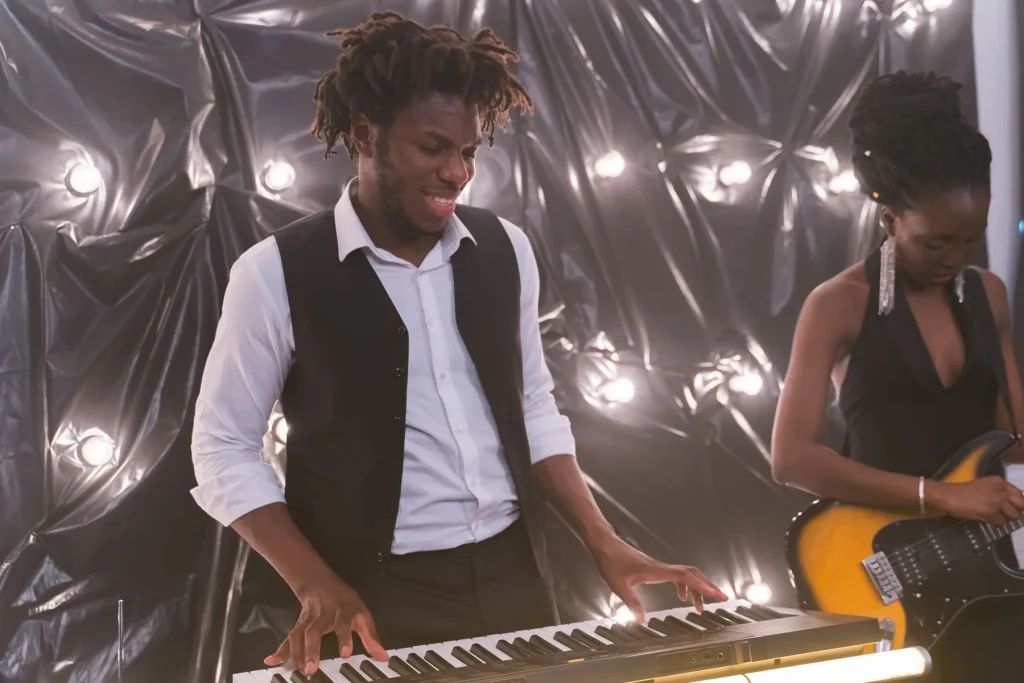
Cuban music is full of life and makes you want to move. It blends Indigenous, European, African, and American music. It includes iconic genres such as son, Cuban bolero, and rumba.
The Buena Vista Social Club helped introduce Cuban music to audiences around the world.
Origins and characteristics of Cuban music
Cuban music is a unique blend. It combines African percussion with the Spanish guitar. Claves and maracas, which came from South America, add their own distinctive touch. Indigenous, European, African, and American cultures merged to create this music.
The fusion of African percussion and the Spanish guitar
Enslaved Africans brought their musical traditions to Cuba. They introduced African percussion. Spanish colonists introduced the guitar, a key instrument in Iberian culture. This encounter created a unique musical style blending African and European influences.
The influence of Indigenous, European, African, and American cultures
Cuban music was enriched by many cultures. Indigenous peoples contributed the maracas and the güiro. The Spanish influenced guitar music and contradanza. Africans added their rhythms and dances. Americans also left their mark on this music.
Cuban music is rich and diverse. It is the result of a unique encounter between different musical traditions.
Iconic musical genres
Cuban music is rich and diverse. Its iconic genres have influenced music around the world. Cuban son and Cuban bolero are especially well known.
Son, the forerunner of Cuban salsa
Cuban son emerged toward the end of the nineteenth century. It gave rise to Cuban salsa. In Cuba, Cuban son became a musical mainstay in the early twentieth century.
Musicians such as Miguel Matamoros, Sindo Garay, and Joseíto Fernández shaped Cuban son.
Cuban bolero and its origins in Santiago
Cuban bolero originated in Santiago de Cuba during the second half of the nineteenth century. It has a thirty-measure structure with an introduction and an interlude. Many artists, including Compay Segundo and Osdalgia, have performed Cuban bolero.
Cuban son and Cuban bolero have made their mark on world music. Their legendary artists have left an indelible legacy.
What are the best-known Cuban music styles?
The Buena Vista Social Club is famous worldwide. This documentary reintroduced Cuban music to the entire world. It celebrated its 25th anniversary in 2024 and has won numerous awards.
Son Cubano is an important part of the group’s style. It revealed the beauty of Cuban music to audiences everywhere.
Cuban rumba, Cuban conga, and Cuban changüí are also very well known. They have endured for centuries and influenced contemporary Cuban music. These genres demonstrate the richness and diversity of well-known Cuban music.
| Cuban musical genre | Characteristics | Iconic artists |
|---|---|---|
| Buena Vista Social Club | Worldwide rediscovery of Cuban music, blending son cubano with other traditional styles | Compañía Segundo, Rubén González, Ibrahim Ferrer, Omara Portuondo |
| Cuban rumba | Ancient African rhythms, percussion, and a cappella singing | Los Papines, Ekobio Yomí, Los Muñequitos de Matanzas |
| Cuban conga | Derived from rumba, with Afro-Cuban and Spanish influences | Celia Cruz, Benny Moré, Compay Segundo |
| Cuban changüí | A blend of guitar, percussion, and singing originating in the Guantánamo region | Eliades Ochoa, Guillermes Portabales, Pío Leyva |
These genres made Cuba famous around the world. They offer a glimpse of the richness and diversity of Cuban music.
Famous Cuban musical instruments
Cuban music is a treasure trove of instrumental innovation and development spanning centuries. Among its most iconic instruments is the Cuban tres, a guitar with three pairs of strings. Other instruments include congas, claves, maracas, and the güiro.
The tres, the Cuban guitar
The tres is a small guitar with three pairs of strings. It originated in the province of Santiago de Cuba. Over time, it became essential to traditional music ensembles.
Percussion: congas, claves, maracas, and güiro
Percussion plays a central role in Cuban music and reflects its African heritage. Congas, Afro-Bantu drums, contribute a unique energy.
Claves are essential to Cuban music. They helped enslaved people keep time while working in the fields. Maracas and the güiro, made from gourds, are also indispensable to Cuban rhythms.
“These instruments, which blend European and African influences, have become inseparable from Cuban music.”
Conclusion
Cuban music is rich and highly diverse. It arose from a unique cultural blend combining African percussion, the Spanish guitar, and influences from around the world. Genres such as son, bolero, and rumba are especially well known.
Instruments such as the tres and percussion are essential. They give Cuban music its unique character.
Today, Cuban music is known around the world thanks to groups such as the Buena Vista Social Club. This music has evolved while preserving its essence, becoming a worldwide cultural symbol.
Cuban traditions such as riddles and the pregón influenced the music. Cuban poets such as José Martí and Nicolás Guillén were also inspired by Cuban music. Their work demonstrates the richness and diversity of this heritage.
FAQ
What are the best-known Cuban music styles?
What are the origins and characteristics of Cuban music?
What are the iconic genres of Cuban music?
What are the best-known Cuban music styles?
What are some famous Cuban musical instruments?
Source links
- https://www.pbs.org/buenavista/music/timeline_1900.html
- https://www.pbs.org/buenavista/music/timeline_1900.html
- https://www.pbs.org/buenavista/music/timeline_1900.html
- https://www.pbs.org/buenavista/music/timeline_1900.html
- https://www.pbs.org/buenavista/music/timeline_1900.html
- https://en.wikipedia.org/wiki/Bolero
- https://www.pbs.org/buenavista/music/timeline_1900.html
- https://www.buenavistasocialclub.com/story/
- https://www.buenavistasocialclub.com/story/
- https://www.buenavistasocialclub.com/story/
- https://omeka-s.grinnell.edu/s/MusicalInstruments/item/1810
- https://www.pbs.org/buenavista/music/timeline_1900.html
- https://www.pbs.org/buenavista/music/timeline_1900.html
- https://www.timba.life/en/history/modern/timba
- https://ethnomusicologyreview.ucla.edu/content/book-review-rebel-dance-renegade-stance-timba-music-and-black-identity-cuba-umi-vaughn
- https://oncubanews.com/en/chronicles/tribulations-guantanamera/