
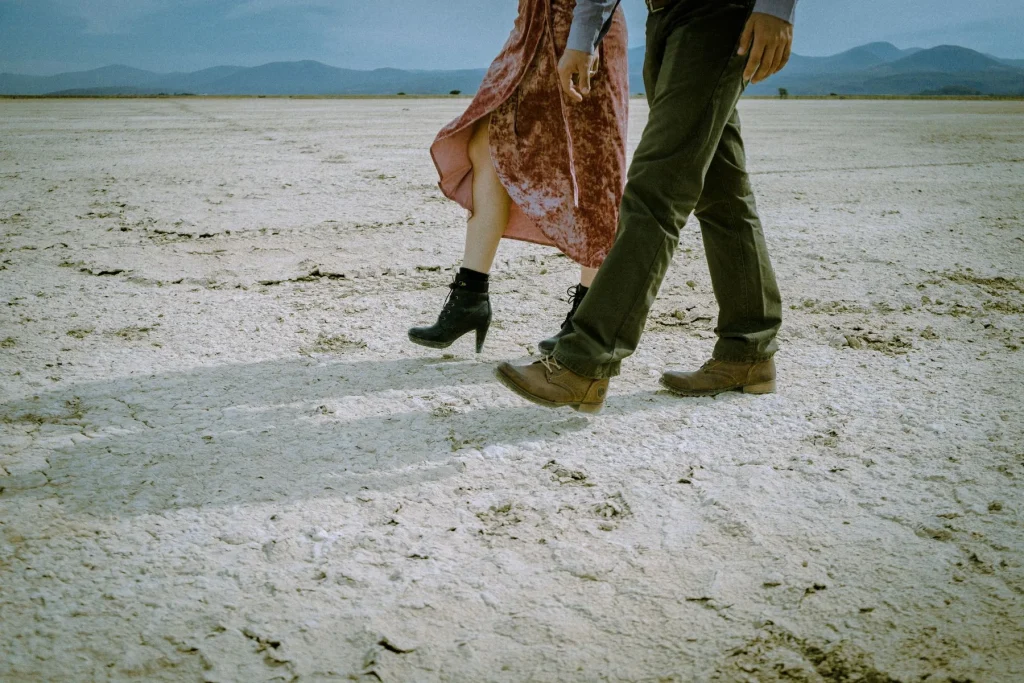
Born in the Dominican Republic, bachata captivates dancers with its unique blend of infectious rhythms and sensual movements. Inspired by bolero and merengue, this dance has become a worldwide phenomenon.
In France, 85% of schools offer classes tailored to newcomers. Fiona Dumez, an instructor in Nice, emphasizes: “Mastering the essential steps opens the door to an enjoyable, social activity.”
Accessible from the very first try, this activity can also be practiced alone through lady styling. Hits such as Aventura’s “Obsession” have contributed to its international success.
Whether you want to have fun or hone your skills, learning the basics offers endless possibilities.
Introduction to bachata: an accessible Latin dance
In the 1960s, an enchanting rhythm emerged from working-class neighborhoods in the Dominican Republic. Originating in the Dominican Republic, this dance has its roots in bolero and merengue. Banned until 1990, it is now taught in 120 countries.
Unlike salsa, which follows an 8-count pattern, bachata is distinguished by its 4-count structure. Here are the main differences:
| Characteristic | Bachata | Salsa |
|---|---|---|
| Count | 4 counts | 8 counts |
| Style | Circular movements | Linear steps |
| Popularity in France | 70% of schools | 90% of schools |
According to a recent study, 70% of learners master the essential step in just 3 sessions. This rapid progress makes this Latin dance particularly accessible.
For those looking to get started, several French festivals offer free introductory sessions:
- Paris Bachata Festival
- Lyon Sensual Week
- Bordeaux Bachata Congress
The School of Latin and Tropical Dance also offers a no-obligation trial class. It is an ideal opportunity to try the discipline in real-life conditions.
The fundamentals of bachata
Mastering the key elements of this Latin dance allows you to progress quickly while having fun. Two aspects are essential: step technique and musical harmony.

The 4-count basic step
The structure is based on a simple rhythm:
- Men: left-right-left-tap (right foot slightly raised)
- Women: right-left-right-tap (a mirrored reversal)
One crucial technical detail: transfer your body weight onto the ball of your foot on the 4th count. Fiona Dumez explains: “Many beginners keep their arms stiff. This limits bodily expression.”
| Step | Action | Tip |
|---|---|---|
| 1 | Step left | Foot flat |
| 2 | Step right | Smooth weight transfer |
| 3 | Step left | Knees relaxed |
| 4 | Rise onto the ball of the foot | Heels light |
Moving in harmony with the music
To develop your timing, start with a metronome set between 100 and 120 BPM. Here is an effective progression:
- Listen carefully to the percussion
- Mark the beats with your head
- Gradually add foot movements
A professional tip: maintain eye contact with your partner to anticipate changes in direction. To see these techniques in action, the Salsa Contigo tutorial features slow-motion demonstrations.
Bachata styles you should know
Bachata is constantly evolving and offers unique styles around the world. Each version reflects distinct cultural and technical influences that enrich this Latin dance.
Dominican bachata
Originating in the Dominican Republic, this traditional style is distinguished by its intricate footwork. JaysDance, a recognized expert, notes: “Fast movements and turns require excellent coordination.”
In 6 months, dancers learn an average of 60 figures, compared with 120 for sensual bachata. Choose shoes with leather soles to make pivoting easier.
Sensual bachata
Popularized in Europe, this version focuses on connection with your partner and fluid movements. Preferred by 65% of European dancers, it is taught at more than 300 specialist schools.
Clothing tip: choose flowing dresses or fitted pants to accentuate the undulating movements.
- Comparison playlist: 5 tracks per style on Deezer
- Equipment: soles suitable for turns
Practical tips for making rapid progress
Improving your technique and confidence in dance relies on proven methods. A structured approach speeds up learning while minimizing common mistakes.

Warm-up and fluidity exercises
Before each session, spend 15 minutes stretching. The French Dance Federation recommends this routine:
- Gentle shoulder and hip rotations
- Seated hamstring stretches
- Circular ankle movements
To develop fluidity, master the body roll:
- Stand with your knees slightly bent
- Engage the lower body forward
- Carry the movement up to the shoulders
Avoid raising your heels too high while moving. This common mistake reduces stability.
Choosing your first songs
Your choice of music directly affects your level of comfort. Start with slow tempos (100 to 110 BPM).
Top 5 suitable tracks:
- “Darte un Beso” – Prince Royce
- “Propuesta Indecente” – Romeo Santos
- “Te Espero” – Joseph Fonseca
- “Eres Mía” – Dominic Marte
- “Promise” – Usher feat. Romeo Santos
The Bachata Initiation playlist on Spotify is updated monthly with specially selected tracks. To learn more, see our complete guide to the fundamentals.
Invest in suitable dance shoes, such as those in Bloch’s Latina series. Their soles allow precise pivots without excessive effort.
Where can you learn bachata in France?
Learning bachata in France offers options to suit every budget and learning style. Between in-person classes and digital courses, each method has unique advantages.

Dance-school classes or online tutorials: a comparison
Traditional schools provide immediate posture correction, which is ideal for beginner levels. In contrast, online platforms offer great scheduling flexibility, with subscriptions starting at €49 per month.
Benefits of hybrid formats:
- Access to premium videos in addition to group classes
- Personalized monitoring with digital tools
- Average savings of 30% compared with traditional plans
Top French schools
The Marseille Latin Dance Academy stands out for its 12-week program. Its special offer includes one free private class with the purchase of 10 sessions.
“In 4 months, I went from beginner to intermediate level thanks to the weekly workshops.”
2023 ranking of the best schools in Paris:
- Studio Harmonic (€15 per group class)
- Latino Motion School
- Bachata Fusion Academy
To find a certified organization, consult the AFD directory, which lists 50 addresses.
Conclusion: get started with confidence!
Bachata Open Day, held on the first Saturday of every month, is the perfect opportunity to try this discipline. A survey reveals that 92% of participants experience a greater sense of well-being.
Three major benefits await you:
socializing, improved coordination, and freedom of artistic expression. Marie, 54, is living proof: she became a regional champion after just two years of practice.
Take advantage of the referral offer: 30% off when two people sign up together. As Fiona Dumez says: “Mistakes are part of learning.” So dare to dance bachata and discover the joy of movement!