
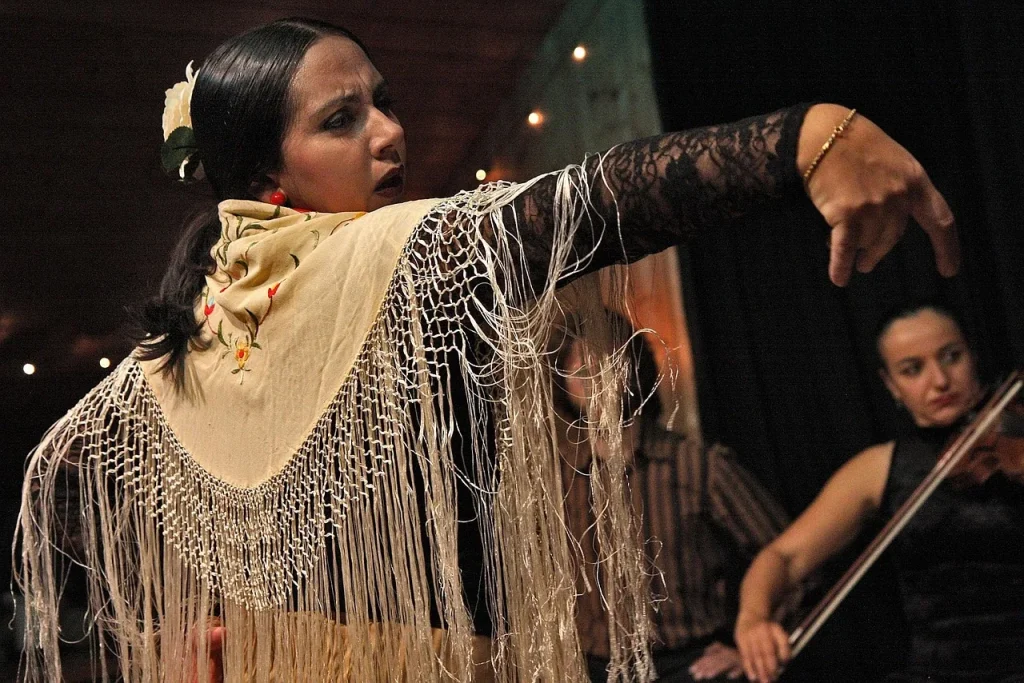
Would you like to learn to dance with fluidity and style? This article offers practical advice to help you improve your movements. Whether you are a beginner or an experienced dancer, the tips shared here will help you progress.
Dance is an excellent way to express yourself while improving your coordination. Thanks to free courses, such as those available on the “Dance at Home” YouTube channel, you can practice at your own pace.
Easily adapt your practice to your space, whether in your living room or your kitchen. Also discover our special video for beginners: an ideal resource for mastering the basics.
Feel free to share your feedback in the comments so that you can benefit from even more personalized content!
Bachata choreography: mastering the essential basics
Bachata, which originated in the Dominican Republic, requires a good understanding of rhythm. Its metallic instruments and eight-count structure make it a unique dance. To get off to a good start, focus on three pillars: steps, ease of movement, and consistency.
The basic step and eight-count rhythm
The musical count follows a 1-2-3-pause / 5-6-7-pause sequence. Shift your body weight on the accented beats, counts 4 and 8. A beginner lesson, such as video #01 in our series, can guide you.
Developing ease of movement on your own
Practice in front of a mirror to isolate your hips from your torso. The song Sin temor by Raulin Rodriguez is ideal for breaking down the movements. The goal? To become more comfortable before dancing with a partner.
Practice for 10 minutes a day to improve
Progress comes with consistency. Use a mobile metronome to steady your tempo. Our courses include testimonials from students who achieved rapid results with this method.
Advanced movements to enrich your choreography
Improve your dancing with more technical and stylish movements. These elements will add depth to your physical expression and captivate your partner or audience.

Left and right turns (leader/follower)
To execute a turn successfully, the leader must free their left leg while initiating a rotation under the arm. The follower, meanwhile, follows the lead while maintaining their balance.
Tip: use a resistance band to work on coordination between your arms and legs. Our YouTube channel offers a detailed tutorial (#19) about common mistakes to avoid.
Footwork and stylized variations
Experiment with combinations such as an offbeat tap-step-cross. These movements energize your style.
- Distinguish between open turns (arms farther apart) and closed turns (close together).
- Add accessories (shawls) for a theatrical touch.
Adapting movements to musical accents
The music guides your interpretation. Identify breaks and fills in songs such as Propuesta indecente.
Our Bachata Mix 2020 playlist helps you vary the tempos. Make sure you have a clear space for wide turns, which is essential for your safety.
Partner bachata choreography: technique and fluidity
Dancing with a partner requires perfect harmony between both dancers. With its sensual movements and infectious rhythm, bachata is particularly well suited to this connection. Here is how to develop your chemistry on the dance floor.
Leading and connecting with your partner
The basic position is crucial: the leader’s right hand is placed beneath the shoulder blade. Use your body weight rather than muscular force to lead. This technique prevents tension and promotes fluidity.
Try the blindfold exercise to improve your nonverbal communication. It builds trust and synchronization without eye contact. The shadow dancing method is also excellent for developing this coordination.
Linking turns and simple passes
A classic sequence combines a right turn, a pass under, and a dip. To master these movements, watch our video dedicated to partner turns.
Tip: gradually add resistance while leading to refine your sensitivity. This lets you adjust the intensity naturally without jolting your partner.
Practicing with varied music
Adapt your training to different tempos: slow for technique, medium for style, and fast for responsiveness. The music directly influences your interpretation.
Organize themed workshops around the lyrics. Translate the emotions of the vocals into movement to enrich your expression. This is ideal preparation for your next dance parties.
Conclusion: dance, improve, and have fun
The joy of dancing can be measured by the progress you make. Whether you are working on the basics or advanced movements, every step counts.
One student saw their progress soar after a 30-day video challenge. Their secret? Consistency, musical awareness, and creativity.
Look out for our upcoming feminine styling and body roll tutorials. You can also take advantage of our free courses to keep improving your dancing.
Share your videos with #DanceAtHome. Write down your achievements in a journal: it is motivating!
Subscribe to follow our live masterclasses. Dance is an adventure: savor every step.